

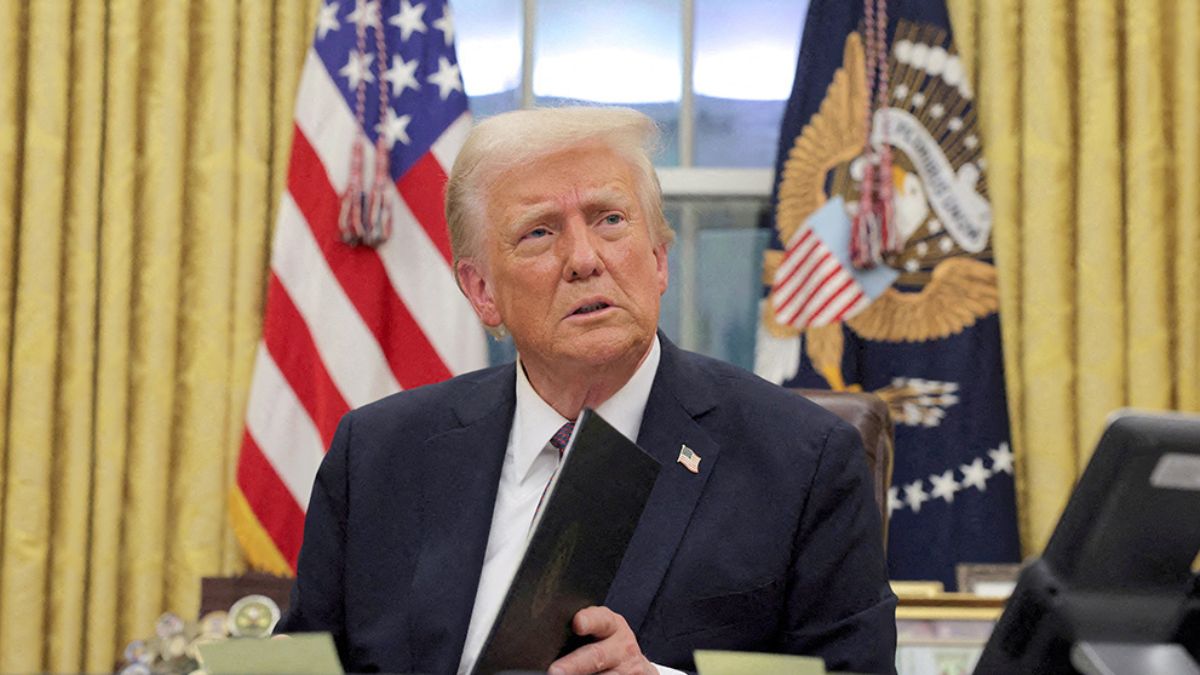
A Theater of Bluster: The Speech That Echoed Isolation
President Donald Trump‘s address to the 80th United Nations General Assembly on September 23, 2025, unfolded like a scene from a bygone era of American bravado, one that clashed sharply with the urgent crises gripping the world. The hall in New York, filled with diplomats from 193 nations marking eight decades since the UN’s founding, expected calls for unity under the session’s theme of “Better together: 80 years and more for peace, development and human rights.” Instead, Trump delivered a 50-minute ramble that veered from personal grievances to sweeping dismissals of global institutions, leaving the red light on the podium blinking in vain. This was his first UN speech in his second term, a moment that should have reaffirmed America’s role as the architect of the postwar order. Yet, it exposed a leader more attuned to domestic applause than international alarm.
The backdrop was dire. In Eastern Europe, tensions had surged to levels unseen since the Cold War’s end. Just a day earlier, Polish Prime Minister Donald Tusk warned that Warsaw would shoot down any foreign aircraft violating its airspace, following a spate of Russian incursions. On September 10, Poland became the first NATO member to fire shots in the Ukraine conflict, downing suspected Russian drones that strayed over its border during a massive Moscow assault on Kyiv. These were not isolated errors; NATO’s Operation Eastern Sentry, launched in response, deployed extra jets from Britain, France, Germany, and Denmark to patrol the skies. Further north, mystery drones—widely suspected to be Russian—disrupted Scandinavia. On September 22, two to three large unidentified craft forced Copenhagen Airport, the region’s busiest hub, to close for four hours, stranding thousands. Oslo’s airport followed suit hours later, with Norwegian Prime Minister Jonas Gahr Støre accusing Moscow of three recent violations near the Russian border. Danish leader Mette Frederiksen called the Copenhagen incident “the most serious attack on Danish critical infrastructure to date,” hinting at hybrid warfare designed to sow chaos without full invasion.
Across the Middle East, Israel’s hints at annexing parts of the West Bank fueled fears of an intifada-style uprising, compounding the devastation in Gaza. A UN report released that week accused Jerusalem of seeking permanent control over Gaza and a Jewish majority in the West Bank through forced transfers and settlement expansion, echoing the 1967 occupation’s unresolved scars. Domestically, the US grappled with inflation’s resurgence; August’s consumer price index hit 2.9% year-over-year, up from 2.7% in July, driven by shelter costs and tariff-induced goods hikes, per Labor Department data. Economists warned of a “comeback,” with apparel and electricity prices spiking amid Trump’s trade policies.
Into this maelstrom, Trump offered no solace. He mocked the UN’s “terrazzo” floors, recalling a rejected real estate bid from his developer days: “I’m going to give you marble floors.” He revived gripes about a stalled escalator that nearly toppled the First Lady, joking, “If the first lady wasn’t in great shape, she would have fallen, but she’s in great shape.” On climate change, his grasp faltered into absurdity: “We have a border, strong, and we have a shape… that shape is amorphous when it comes to the atmosphere.” He blamed China for “rough” air that “blows” over clean American skies and warned of environmentalists’ plot to “kill all the cows.” Britain, fresh from hosting Trump with royal fanfare, endured barbs about Prime Minister Keir Starmer’s renewable push: “Oh, the North Sea, I know it so well… Three days in a row, that’s all he heard, North Sea oil.” Trump falsely claimed London eyed sharia law, a jab at immigration that ignored Starmer’s domestic woes.
This was not mere rhetoric; it was a performance rooted in Trump’s first-term playbook. The 2018 UN speech, where he hailed “America First” and mocked globalism, set the tone, alienating allies while delighting nationalists. Historically, US presidents used the rostrum to rally coalitions—the 1945 Charter’s signers envisioned a body to prevent another world war, with America as guarantor. Truman’s address that year pledged support for human rights; Kennedy in 1961 invoked “peace in the 20th century.” Trump’s version inverted this legacy, questioning the UN’s purpose: “What is the purpose of the United Nations?” His answer: a forum that failed him, ignoring his self-proclaimed end to “seven unendable wars” that barely existed when he took office. The weave, as he calls it, connected personal anecdotes to policy, but left voids where strategy should stand. Allies watched in discomfort, chancelleries likely recalibrating ties to a leader whose words veer between bombast and caprice.
Allies in the Crosshairs: From Flattery to Fury
Trump’s barbs extended beyond the podium, targeting partners who had spent months in appeasement. Europe’s leaders, from Starmer’s obsequious welcome to Macron’s cautious diplomacy, hoped flattery might temper the transatlantic rift. Yet the speech repaid courtesy with contempt, framing allies as naive victims of their own openness. “Your countries are going to hell,” he told them, decrying a “double-tailed monster” of energy policies and immigration that “destroys everything in its wake.” This echoed his support for far-right insurgents, from France’s National Rally to Britain’s Reform UK, positions that undermine democratic systems he once vowed to defend. At home, Trump’s authoritarian leanings—purging critics, expanding executive power—mirror the illiberalism he exports, a hypocrisy that strains the post-1945 order built on shared values.
The Ukraine sidebar illustrated this peril. Post-speech, Trump met Zelensky on the sidelines, emerging with a Truth Social post that stunned observers: Ukraine could “win the war, get back all its territory, and even push further.” He branded Russia a “failed power” and “paper tiger,” pledging NATO weapons via Europe and financial support from the continent. Zelensky called it positive, discussing “good ideas” to “push Russia toward peace.” This marked a pivot from Trump’s campaign hints at quick capitulation, influenced perhaps by Zelensky’s persistence— their fourth meeting since January. Yet caveats abounded. Earlier, Trump endorsed NATO shooting down Russian planes—”Yes, I do”—only to hedge: “It depends on the circumstances.” Secretary of State Marco Rubio clarified US jets would not engage, underscoring ambiguity. Poland’s drone downings and Scandinavia’s incursions tested Article 5’s mutual defense, a pillar forged in 1949 against Soviet threats. Trump’s first term flirted with NATO’s demise, calling it “obsolete”; now, with Putin probing borders, his fickle stance risks deterrence.
Comparisons to past crises highlight the stakes. The 1962 Cuban Missile Crisis saw Kennedy’s resolve unify allies; Reagan’s 1983 “Evil Empire” speech rallied against Soviet incursions. Trump’s approach, blending bravado with retreat, invites exploitation. On Venezuela, he escalated unilaterally, announcing strikes on “cartel speedboats” in international waters: “Please be warned that we will blow you out of existence.” The first, on September 2, killed 11 aboard a Tren de Aragua-linked vessel, per White House claims of fentanyl bound for the US. A second on September 15 claimed three more. Legal experts decry this as overreach; Congress granted no authorization, and self-defense claims against non-state actors stretch the 2001 AUMF thin. Venezuela’s Maduro regime, isolated since the 2019 crisis, decried the attacks as piracy, absent proof of gang ties. This mirrors Trump’s first-term drone wars in Somalia, where extrajudicial strikes bred resentment without congressional oversight, eroding norms.
Allies must now contain the fallout. Britain’s Labour MPs pressure Starmer to condemn Trump, fracturing the “special relationship” born in 1941’s Atlantic Charter. France’s Macron, who praised UN cooperation in his address, faces Trump’s jabs at EU energy transitions. The UN, once America’s creation to embody Wilsonian idealism, now endures its founder’s heir as chief critic. Trump’s Nobel pitch—”Everyone says that I should get the Nobel Peace Prize”—rings hollow amid seven “ended” wars that predated his interventions. Foreign powers parse his “weave” for intent, but the pattern reveals isolation: a US that leads by example in division, not unity. As Russian drones buzz NATO skies and inflation bites, this spectacle signals not strength, but a superpower adrift.
Ghosts of Globalism: Undermining the Pillars of Order
Trump’s UN address was less a policy blueprint than an assault on the institutions that stabilized the 20th century. By questioning the Charter’s essence—international law, human rights, collective security—he echoed isolationist strains from America’s founding, when senators rejected Versailles in 1919, dooming the League of Nations. The UN arose from those ashes, with Roosevelt and Churchill envisioning a forum where great powers checked aggression. Truman’s 1945 pledge integrated it into US strategy, funding 22% of its budget while wielding veto power. Trump’s critique—”The UN is funding an assault on western countries and their borders”—inverts this, portraying the body as enabler of chaos rather than bulwark. His climate denial, calling it a “con job,” dismisses Paris Accords he quit in 2017, ignoring IPCC warnings of 1.5°C tipping points by 2030. The bovine purge quip trivialized methane reductions, vital as livestock accounts for 14.5% of emissions per FAO data.
Geopolitically, this sows doubt. On Gaza and the West Bank, Trump’s silence amid annexation hints—Israel mulling sovereignty over Area C, 60% of the territory—contrasts with his first-term embassy move to Jerusalem, alienating Palestinians without peace dividends. The UN inquiry’s findings of intent for “permanent control” evoke 1947’s partition failure, where vetoes stalled equity. Economically, his tariff revival, fueling 2.9% inflation, recalls Smoot-Hawley 1930, which deepened the Depression by 67% trade collapse. Allies face a US that demands burden-sharing yet undercuts multilateralism, from WTO challenges to WHO withdrawals.
The Zelensky meeting offered fleeting optimism, with Trump’s caustic Russia post suggesting resolve. Yet history cautions: Nixon’s 1972 China thaw built on quiet diplomacy, not bombast. Trump’s volatility—praising Putin as “smart” in 2022—mirrors missteps like 1938’s Munich appeasement, emboldening aggressors. On Venezuela, strikes without proof flout UNCLOS maritime laws, risking escalation with Maduro’s Russia-backed regime. Legal scholars invoke the War Powers Resolution, ignored since 1973’s Cambodia bombing, eroding checks.
This undermines not just policy, but America’s soft power. Post-9/11, Bush’s coalitions toppled the Taliban; Obama’s Iran deal curbed proliferation. Trump’s far-right supremo role—backing Europe’s populists—fuels extremism, as seen in France’s 2024 riots or UK’s post-Brexit woes. The UN’s survival hangs in balance; without US buy-in, it risks irrelevance, like the League amid Abyssinia’s 1935 invasion.
Horizons of Hazard: A World Teetering Without a Steady Hand
Looking ahead, Trump’s rant portends a tumultuous era where ad hoc impulses supplant strategy, amplifying risks in an interconnected globe. Eastern Europe’s drone skirmishes could spiral: Poland’s September 22 vow signals readiness, but NATO’s resolve falters if US leadership wavers. Experts predict Putin testing Article 5 further, perhaps via hybrid ops in the Baltics, echoing 2014’s Crimea annexation that birthed the Ukraine war. Zelensky’s “good ideas” might yield postwar guarantees—US air support atop European troops—but Trump’s hedges invite Moscow’s gambles, potentially costing billions and lives, as Ukraine’s $174 billion reconstruction estimate balloons.
In the Middle East, West Bank annexation could ignite intifada 3.0, displacing thousands amid Gaza’s 2.1 million under siege. Trump’s Israel affinity, per his 2020 plan, might greenlight it, fracturing Arab-Israeli normalization from Abraham Accords. Economically, 2.9% inflation signals stagflation risks; tariffs on China, reimposed in July, could hike goods 10-20%, per IMF models, mirroring 2018’s farmer bailouts. Climate inaction accelerates tipping: 2025’s Atlantic hurricanes, intensified 10% by warming, cost $200 billion already.
Venezuela’s boat wars set precedents for endless low-boil conflicts, straining resources amid domestic probes into strike legality. Allies’ containment—diplomatic flattery turning to quiet decoupling—may accelerate multipolarity, with Europe eyeing autonomous defense and Asia courting BRICS. Trump’s “right about everything” hat, a campaign bestseller, belies contradictions: a leader who ended no wars yet claims peace prizes, champions sovereignty while flouting laws.
The path forward demands recalibration. Historical pivots, like Gorbachev’s 1988 UN speech ending Cold War, show rhetoric’s power for bridge-building. Without it, the world edges toward fragmentation—NATO fractures, trade wars, unchecked annexations. Trump’s spectacle, entertaining as farce, masks a void: no vision for a brink teeming with peril. As he mused, “I’ve been right about everything.” The UN’s founders, peering from history, might disagree.




