

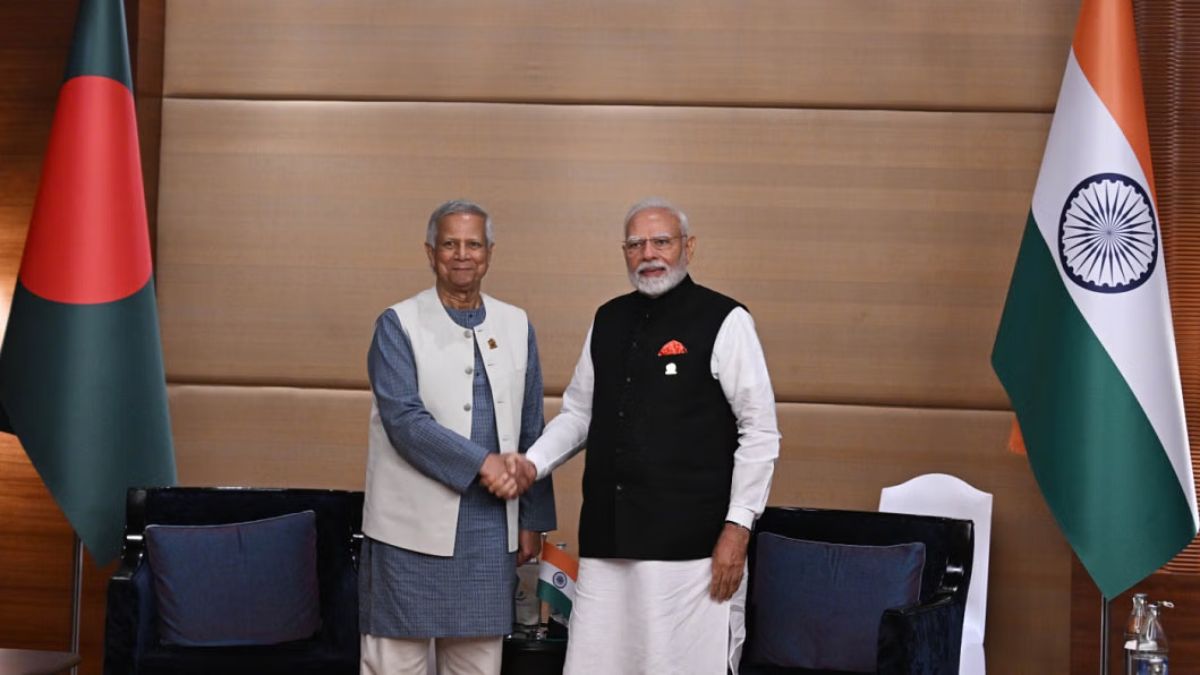
South Asia’s diplomatic playbook has always had a soft spot for symbolic gestures. From Pakistan’s gift of mangoes to India in the 1980s to Bangladesh’s own history of sending hilsa fish and mangoes, these acts are less about fruit and more about signaling intent. On July 9, 2025, Bangladesh’s interim government, under Muhammad Yunus, shipped 1,000 kilograms of Haribhanga mangoes—a prized variety from Rangpur—to Modi, along with consignments to the chief ministers of West Bengal and Tripura. As reported, this was no casual gift but a calculated move by Bangladesh’s Ministry of External Affairs, meant to thaw the frost that’s settled over India-Bangladesh relations since Sheikh Hasina’s ouster in August 2024.
Yet, beneath this sugary surface lies a bitter core. While Bangladesh plays nice with mangoes and Eid greetings—Modi sent warm wishes in June 2025, and Yunus responded with equal grace—Dhaka is simultaneously pressing India to extradite Hasina, who fled to New Delhi after a student-led uprising toppled her government. The interim government’s dual approach raises eyebrows: is this a genuine olive branch or a diplomatic feint to keep India guessing while Bangladesh recalibrates its regional alliances? The answer, as usual, is messier than a politician’s promise.
A Brief History of a Complicated Friendship
To understand this diplomatic dance, we need to rewind. India and Bangladesh share a 4,096-kilometer border, a shared Bengali culture, and a history intertwined since India’s pivotal role in Bangladesh’s 1971 liberation from Pakistan. Under Hasina’s 15-year rule (2009–2024), bilateral ties flourished. Trade soared from $7 billion in 2017–18 to $10.46 billion in 2018–19, per Wikipedia. India became Bangladesh’s top development partner, backing projects like power plants and railway links, while Hasina cracked down on anti-India insurgent groups and resolved border disputes like the Tin Bigha Corridor.
But Hasina’s authoritarian streak—marked by allegations of mass detentions and extrajudicial killings—strained her domestic support. When student protests erupted in July 2024 over government job quotas, her government’s brutal crackdown, which a UN report estimates killed up to 1,400 people, led to her downfall. She fled to India on August 5, 2024, aboard a military plane, landing at a safe house near Delhi under tight security. Since then, India-Bangladesh relations have been on edge, with Dhaka’s new leadership navigating a delicate balance between domestic pressures and regional realities.
The Extradition Thorn: Hasina’s Shadow Looms Large
The biggest sticking point is Hasina. Bangladesh’s International Crimes Tribunal (ICT), ironically established by Hasina in 2010 to probe 1971 war crimes, has now turned its sights on her. She faces charges of crimes against humanity, murder, and genocide tied to the 2024 protests. On December 23, 2024, Dhaka sent a formal “note verbale” to India, demanding her extradition for a judicial process. Foreign Affairs Adviser Touhid Hossain and Adviser for Law, Justice and Parliamentary Affairs Asif Nazrul have even pushed for Interpol red notices, while Hasina’s assets and those of her family are being frozen.
India, however, is in no rush to comply. The 2013 India-Bangladesh extradition treaty, amended in 2016, allows refusal if the offense is deemed political or if the request lacks good faith. Experts argue that India will likely invoke these clauses, citing concerns over the fairness of Bangladesh’s judicial process under an interim government.
Hasina’s presence in India is a diplomatic landmine. Her public statements from exile, criticizing Yunus’s administration, have irked Dhaka. For India, sheltering Hasina is less about loyalty and more about precedent—New Delhi has a history of protecting political refugees, from the Dalai Lama to Hasina’s own family after her father’s 1975 assassination. But this stance fuels anti-India sentiment in Bangladesh, where many see New Delhi as propping up a discredited regime.
Mangoes vs. Missiles: The Geopolitical Balancing Act
While Bangladesh sends mangoes to India, it’s also warming up to China and Pakistan—moves that make New Delhi twitchy. China has long been a player in Bangladesh, with investments like a $1 billion economic package in 2024. Pakistan, meanwhile, is enjoying a thaw in ties after a 15-year chill. In April 2025, Pakistan’s foreign secretary visited Dhaka, and trade, military talks, and eased visa rules followed. Bangladesh’s neutrality during a recent India-Pakistan conflict further underscores its shift toward a more independent foreign policy.
This isn’t just posturing. Bangladesh’s economy depends heavily on India for trade routes, energy, and imports like steel and petroleum. A 2022–23 bilateral trade figure of $15.9 billion makes India Bangladesh’s biggest South Asian partner. A fallout could cripple Dhaka’s garment industry, which saw a 13% export increase from June to December 2024. Yet, Yunus’s government is under pressure to assert sovereignty, especially after Hasina’s perceived subservience to India. Strengthening ties with China and Pakistan is a way to flex that muscle, but it risks alienating New Delhi.
The mango diplomacy, then, is a classic South Asian hedge. As critics quipped, “Can sweetness succeed where strategy fails?” By pairing friendly gestures with hardline demands, Bangladesh hopes to keep India engaged without fully committing to its orbit. It’s a tightrope walk, and Yunus, a Nobel laureate known for his microfinance work, isn’t exactly a seasoned diplomat. His “megaphone diplomacy” has already ruffled feathers in India by criticizing New Delhi’s cozy ties with Hasina.
Why the Mixed Messages? A Domestic and Regional Jigsaw
Yunus’s government faces a tricky domestic landscape. The interim regime, set to hold elections in early 2026, is under fire for lifting a ban on the Islamist party Jamaat-e-Islami and releasing detained leaders, moves that have sparked fears of an extremist shift. Alleged attacks have surged, according to some reports, fueling India’s concerns and straining ties further. Yunus has dismissed these reports as exaggerated, but the damage is done.
The extradition push is partly about appeasing a public baying for Hasina’s accountability. The 2024 protests, which ousted her, were a generational revolt against her iron-fisted rule. The ICT’s charges, backed by leaked audio allegedly showing Hasina ordering lethal force against protesters, have galvanized public opinion. Yunus has little choice but to press India, even if it risks diplomatic blowback.
Regionally, Bangladesh is caught in a great power tug-of-war. China’s growing footprint in South Asia—through loans, arms, and infrastructure—worries India, which sees Bangladesh as a linchpin in its Neighborhood First policy. Pakistan’s renewed engagement adds another layer of complexity, especially given India’s historical sensitivities. Yunus’s mango diplomacy is a nod to keeping India onside while testing the waters with other players. As one analyst put it, “Dhaka’s trying to have its mangoes and eat them too.”
What’s Next for India-Bangladesh Ties?
India faces a dilemma. Extraditing Hasina could win short-term favor with Dhaka but alienate her still-loyal Awami League base, which remains a political force. Refusing risks further straining ties with a neighbor vital to India’s security and trade. All we can say, India is “juggling legal commitments under its extradition treaty with broader geopolitical considerations.” New Delhi’s likely to stall, citing legal technicalities or waiting for a more stable, elected government in Dhaka.
For Bangladesh, the mangoes are a low-cost way to keep channels open. The April 2025 meeting between Yunus and Modi at the BIMSTEC Summit in Bangkok was described as “constructive” by Dhaka, with discussions touching on extradition, border issues, and water-sharing disputes. But gestures alone won’t resolve the underlying tensions. However, the development has the potential to impact bilateral ties—already under strain since Hasina’s arrival—and will need some deft diplomacy.
In the end, whether this sweet outreach can smooth over the sour notes of extradition demands and shifting alliances remains to be seen. For now, it’s a reminder that in South Asia, even a crate of mangoes carries the weight of geopolitics. As one Bangladeshi analyst dryly noted, “Mangoes don’t solve everything, but they’re a start.”




