

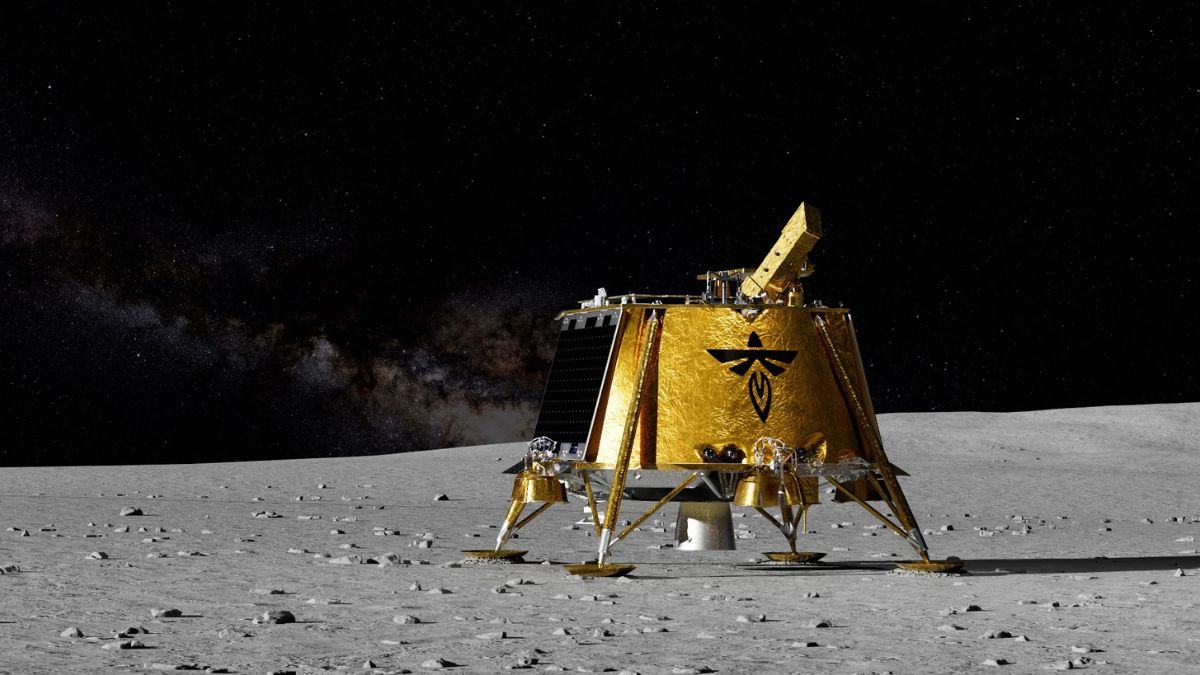
Firefly Aerospace’s Blue Ghost Lands on the Moon, Paving the Way for Commercial Lunar Exploration
Sunday, March 2, 2025, marked a historic milestone in space exploration as Firefly Aerospace became the first private company to successfully land a spacecraft on the Moon. This achievement signals a major leap forward in commercial space endeavors, showcasing the growing role of private industry in deep-space missions traditionally dominated by government agencies like NASA and Roscosmos.
A Pioneering Lunar Mission
Firefly’s Blue Ghost lander launched on January 15, 2025, and followed a calculated trajectory to reach the Moon. After weeks in transit, the spacecraft touched down on the Mare Crisium region at 2:34 a.m. Central Standard Time on March 2. Firefly confirmed that the lander achieved a “soft landing in an upright, stable configuration,” an impressive feat given the immense technical challenges associated with lunar landings.
Blue Ghost landed within 100 meters of its designated target, a precision achieved through a sophisticated hazard avoidance system using vision-based terrain relative navigation. This system scanned the lunar surface in real-time to select a safe landing spot, a critical capability for future autonomous Moon missions.
First Images and Communications Established
Shortly after landing, Firefly Aerospace released the first images captured by Blue Ghost, showcasing its immediate surroundings on the Moon’s surface. The company also deployed an X-band antenna to accelerate the transmission of photos and scientific data back to Earth.
The lander’s high-resolution cameras are expected to provide an unprecedented look at Mare Crisium, an ancient lunar basin known for its geological significance. The images and data collected from this region could yield valuable insights into the Moon’s history, helping scientists refine theories about lunar formation and evolution.
Scientific Payloads and Experiments
Blue Ghost carries ten NASA payloads, each designed for critical scientific objectives, including:
Subsurface Drilling & Sample Collection: Instruments will analyze the composition of lunar soil, searching for water ice and other valuable resources crucial for future human settlements.
X-ray Imaging: Advanced sensors will scan the lunar surface to study its mineralogy and geological properties.
Dust Mitigation Experiments: Scientists will observe how lunar dust behaves in different conditions, a crucial factor in designing long-term lunar habitats and vehicles.
Total Eclipse Observation: On March 14, Firefly plans to capture high-definition images of an Earth-caused solar eclipse as viewed from the Moon, a rare celestial event with potential applications in astrophysics.
Lunar Horizon Glow Investigation: Two days later, the lander will observe how solar radiation causes lunar dust to levitate, a phenomenon first noted by Apollo 17 astronaut Eugene Cernan.
Surviving the Lunar Night – A Major Challenge
Despite its groundbreaking achievements, Blue Ghost faces an enormous hurdle: the frigid lunar night. With temperatures plunging to -280°F (-173°C), few landers have survived the prolonged darkness. Firefly aims to keep the lander operational for at least five hours after sunset, though expectations remain low for long-term survival.
However, even if the lander fails to reawaken, its legacy will endure through the Next Generation Lunar Retroreflector – a cutting-edge instrument that improves upon Apollo-era technology. This device will act as a permanent beacon on the Moon, reflecting laser pulses sent from Earth. By precisely measuring the time it takes for these pulses to return, scientists will refine the lunar coordinate system, aiding future Artemis missions and deepening our understanding of lunar physics, astrophysics, and even dark matter theories.
A New Era for Private Space Exploration
Firefly Aerospace’s success represents a pivotal moment in the rise of private spaceflight. As NASA shifts towards partnerships with commercial entities for lunar exploration under the Artemis program, companies like Firefly, SpaceX, and Blue Origin are proving their capability to conduct complex, high-stakes missions beyond Earth’s orbit.
The implications of this mission stretch far beyond Firefly Aerospace alone. With China’s aggressive lunar ambitions and Russia’s planned Moon missions, the success of private American firms strengthens the U.S. presence in the new space race. Additionally, commercial lunar landers could soon pave the way for resource extraction, space tourism, and even permanent human outposts on the Moon.
Looking Ahead: What’s Next for Blue Ghost?
As Firefly Aerospace closely monitors Blue Ghost’s final days, engineers are already planning future missions. The company aims to launch a second lunar lander in 2026, further expanding its role in NASA’s Commercial Lunar Payload Services (CLPS) program.
Whether or not Blue Ghost survives the punishing lunar night, its mission has already cemented its place in spaceflight history. By demonstrating the viability of private lunar landings, Firefly Aerospace has ignited new possibilities for the future of space exploration, pushing humanity closer to its goal of sustainable Moon operations and, eventually, Mars colonization.




