

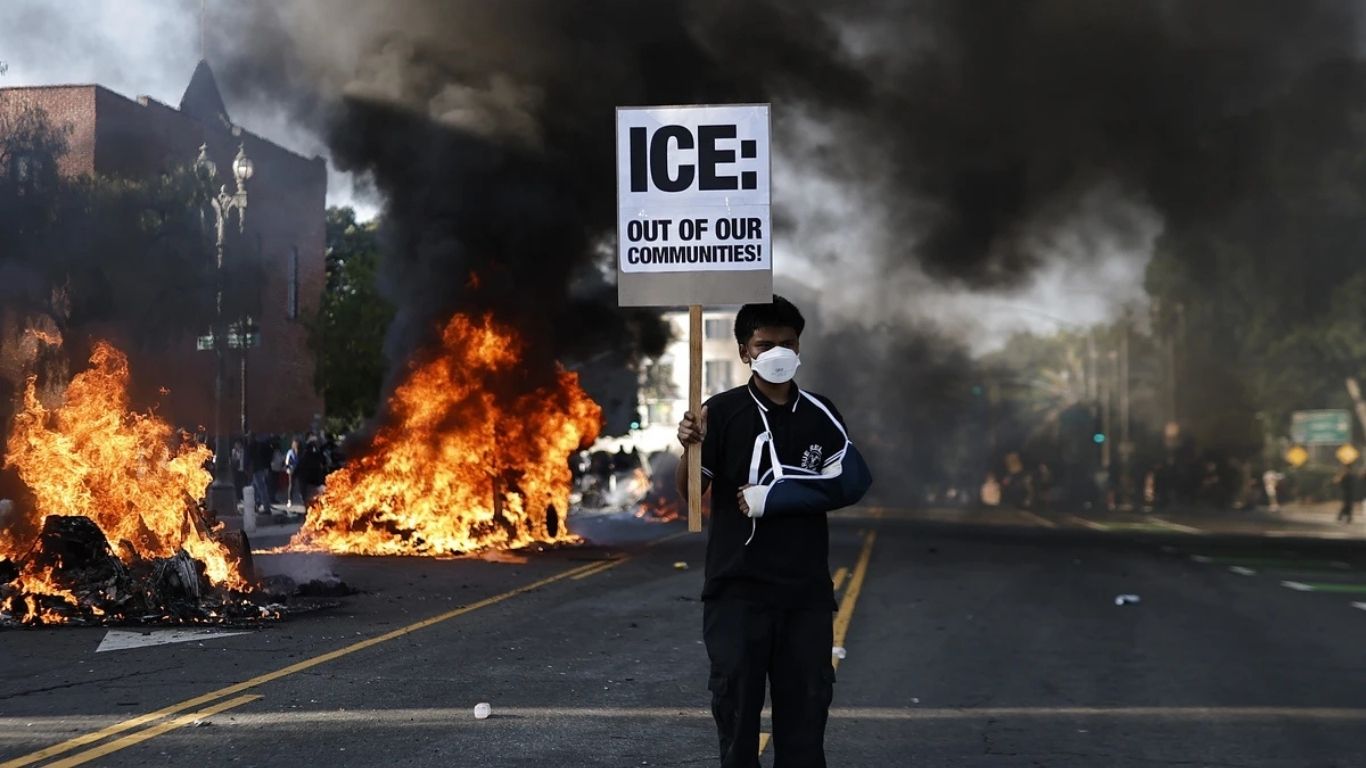
America is hurtling toward a volatile and fractured future as political tensions explode in California, spotlighting the deepening national crisis fueled by President Donald Trump’s aggressive immigration enforcement. The recent confrontations in Los Angeles, including the forcible removal and handcuffing of Democratic Senator Alex Padilla at a Homeland Security press conference, symbolize a disturbing escalation in the country’s polarized political landscape.
The Flashpoint: ICE Raids and Militarized Response in Los Angeles
The crisis erupted on June 6, 2025, when Immigration and Customs Enforcement (ICE) launched a series of sweeping raids across Southern California, targeting undocumented migrants and sparking widespread protests. These operations, conducted in neighborhoods such as the Fashion District and Westlake, led to dozens of arrests and violent clashes between federal agents and demonstrators.
In response to mounting unrest, President Trump federalized the California National Guard and deployed active-duty Marines to Los Angeles—a move unprecedented in recent memory and widely criticized as authoritarian. The militarized presence has further inflamed tensions, with protests spreading beyond Los Angeles to cities including San Francisco, Oakland, and Santa Ana.
The Padilla Incident: A Symbol of Rising Authoritarianism
The image of Senator Alex Padilla being shoved to the ground and handcuffed while attempting to question Homeland Security Secretary Kristi Noem has become a powerful metaphor for the administration’s ruthless approach. Padilla, California’s first Latino senator, was forcibly removed despite identifying himself, underscoring the racial and political overtones of the crackdown.
This incident has galvanized Democrats, who have seized on it as evidence of an encroaching dictatorship. Senators and party leaders condemned the treatment as an assault on democracy and the dignity of elected officials. California Attorney General Rob Bonta decried the use of language portraying Padilla as a threat, emphasizing, “He is not an animal; he’s a US senator”.
Trump’s Escalation: Political Strategy or National Crisis?
The Trump administration insists that the raids and military deployments are necessary to enforce immigration laws, protect American safety, and deter new waves of migrants. Yet critics argue that the president’s tactics are deliberately designed to escalate conflict, deepen divisions, and consolidate power by portraying political opponents and immigrant communities as threats to national security.
White House officials have doubled down on inflammatory rhetoric, with senior advisers accusing Democrats of enabling “violent insurrectionists” and framing the deportations as a mandate from voters. Homeland Security Secretary Noem’s declaration that the federal government is “liberating” Los Angeles from its Democratic leadership further entrenches the perception of a political war between the federal government and blue states.
The Broader Political Fallout: Democrats Struggle to Respond
Democrats face a complex dilemma. While outraged by the administration’s harsh tactics, they risk being painted as weak on border security if they oppose the raids too vocally. The Padilla incident, while galvanizing, does not yet offer a clear path to a unified policy or electoral strategy that balances border enforcement with humane immigration reform.
The party’s response has included sharp condemnations and calls for protecting democratic norms, but internal divisions and the legacy of the 2024 election defeat have hampered a cohesive approach. Governor Gavin Newsom and Los Angeles Mayor Karen Bass have condemned the military presence and raids as politically motivated and damaging to community trust.
Rising Violence and Social Unrest: A Nation on the Brink
The protests have not remained peaceful. Clashes with law enforcement have resulted in hundreds of arrests, injuries on both sides, and property damage including looted stores and vandalized government buildings. Nighttime curfews and tactical alerts reflect the escalating security concerns in Los Angeles and beyond.
Law enforcement’s use of tear gas, pepper spray, and less-lethal munitions against protesters has drawn criticism, while some military personnel deployed domestically have expressed discomfort with their roles. The deployment of troops on American soil to suppress civil unrest recalls darker chapters in US history and raises profound questions about the militarization of domestic policy.
The Moral Imperative: Cooling the Flames of Division
At the heart of this crisis lies a fundamental question: can America avoid descending into deeper conflict and social fracture? Historically, presidents have sought to temper political agitation to preserve national unity and democratic stability. However, President Trump’s approach appears designed to inflame tensions, leveraging fear and division as political tools.
As the nation approaches a weekend marked by nationwide “No Kings” protests against authoritarianism and militarization, the stakes could not be higher. The administration’s hardline immigration policies and confrontational style risk not only alienating millions but also undermining the very democratic principles the country was founded upon.
Conclusion: America’s Crossroads Amid Crisis
California’s ICE raids and the ensuing political and social upheaval epitomize the volatile crossroads at which America stands. The forcible removal of Senator Padilla, the militarized crackdown on protests, and the administration’s uncompromising rhetoric highlight a presidency increasingly defined by conflict and authoritarian impulses.
For the nation to navigate this dark road, leaders on all sides must find ways to de-escalate tensions, uphold democratic norms, and craft policies that address immigration challenges without sacrificing civil liberties or social cohesion. The coming weeks will test America’s resilience and the strength of its democratic institutions like never before.




