

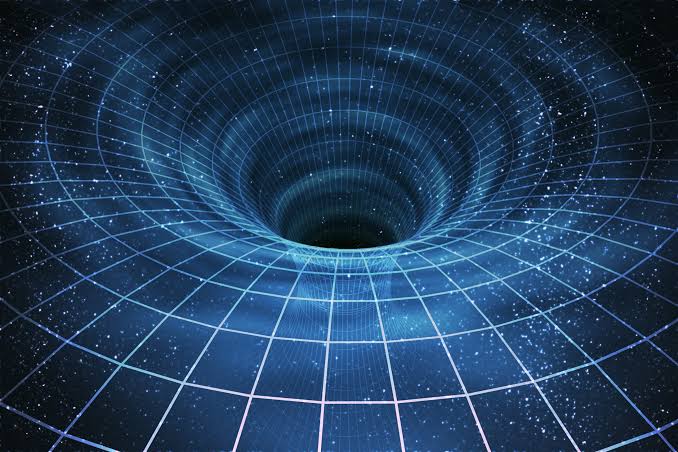
A “gravity hole” extends across an immense area deep underneath the Indian Ocean and remains a baffling geological mystery to scientists studying this phenomenon for many years. Scientists have labeled this strange geographic area as the Indian Ocean geoid low (IOGL), which is a tremendous gravitational depression that creates weaker gravitational forces than surrounding regions. The IOGL produces more than 100-meter vertical differences between ocean levels when such measurements reference the global geoid’s theoretical surface shape. Geophysicists have studied the gravity anomaly for many years to discover its origins and the scientific reason behind the substantial gravity field change. Modern research indicates the IOGL results from deep Earth methods that involve molten mantle rock travel and past tectonic plate interactions. But how exactly does this gravity hole work, and why is it so significant?
What Is a Gravity Hole?
The fundamental understanding of a geoid becomes essential to analyze the Indian Ocean geoid low. Earth features non-uniform gravitational force because the internal mass distribution of the planet alters its gravity levels across the surface. Earth’s theoretical sea level becomes the geoid when all mass concentrations shape it using gravity interactions and Earth’s rotation force only. A gravity hole represents an area with lower than normal gravitational strength which results in a geoid depression. Despite appearing level to human observers the ocean surface meets the geoid below typical levels in these areas. The Indian Ocean geoid low is the most prominent of these anomalies on Earth.
Discovery and Study of the Indian Ocean Geoid Low
Scientific studies detected this gravitational distortion through satellite equipment as well as oceanic surveys. Scientific knowledge of Earth’s gravity variability has often shown that the IOGL stands apart as a particularly large gravitational disturbance extending over an area covering 3 million square kilometers. Studies done early on explained the gravity hole originated from density variations that exist in Earth’s mantle—the partially solid layer below the crustal rock. Scientists did not understand which geological processes produced such an extravagant variation. New evidence emerged in 2023 through geophysical research by Indian Institute of Science scientists which presented fresh findings about this phenomenon. Research conducted by scientists through seismic data analysis and computer simulation models explains that the gravity hole emerged from ancient tectonic plate movement and deep mantle interactions under the Indian Ocean.
The Role of Mantle Plumes and Sunken Tectonic Plates
The Indian Ocean geoid low has been identified through a recent study as a result of deep mantle structures found beneath the region. Scientists trace the cause of weaker gravitational pull in this area to deep rising hot rocky plumes of low density that originate from Earth’s mantle. Hot rock plumes rise from Earth’s mantle to the core boundary which lies approximately 2,900 kilometers beneath the surface. Studies indicate that old tectonic plate remains that descended into the mantle millions of years ago actively contribute to this phenomenon. The dense cold rock slabs inside the mantle lead to distribution variations in its material flow which produces shifting gravitational fields above. Extensive geological processes in the Indian Ocean region spanned multiple millions of years as Gondwana disintegrated while the Indian tectonic plate moved. The geological events throughout time determined the present-day geoid anomaly.
Why Does the Gravity Hole Matter?
The Indian Ocean Geoid Low (IOGL) functions as more than a scientific abnormality because it provides vital information regarding Earth’s interior development processes and its extended geological background. Scientists examine gravity anomalies including the IOGL to understand mantle dynamics better because these dynamics propel tectonic plate motions and volcanic activity and create mountains through geologic processes. Correct scientific determination of global sea level changes relies on geoid measurements so understanding the Indian Ocean Geoid Low becomes essential for precise oceanographic and climate study. Scientific interpretation of other global gravity anomalies relies on understanding the IOGL because scientists analyze gravity highs due to pressures from dense mantle material beneath the surface. Our wider comprehension of the way Earth’s interior affects surface features and geological occurrences finds improvements from such research activities.
The Ongoing Mystery and Future Research
Scientists identify the Indian Ocean geoid low as a partially unsolved geological enigma even after recent research discoveries. Scientists actively explore whether additional factors including geological structures and crustal thickness variations lead to the geoid low effect. Better satellite capabilities and deep-earth imaging technology will possibly supply more accurate data in the upcoming years. The IOGL leads scientists to question the changes that have occurred inside the Earth across millions of years. Such geological abnormalities could have prevailed during historic periods. Do the variations in gravity affect ocean currents along with climate patterns during the geological period? Scientists attempt to respond to numerous questions which include these examples.
A significant “gravity hole” in the Indian Ocean serves as an outstanding phenomenon to test modern models of Earth’s gravitational forces. The gravity hole exists as an anomaly in the Indian Ocean which scientists believe forms from deep mantle forces historical plate motions and possibly unidentified processes. Research on the Indian Ocean geoid law enables scientists to study Earth’s internal structures while it enhances scientific knowledge about ocean water levels climate simulation and tectonic plate evolution. The investigations will lead to additional discoveries that will reveal more about the elements that mold our planet at its depths. As a scientific mystery, the gravity hole continues to intrigue scientists by demonstrating how even today the depths of the Earth contain unsolved geological problems.




