

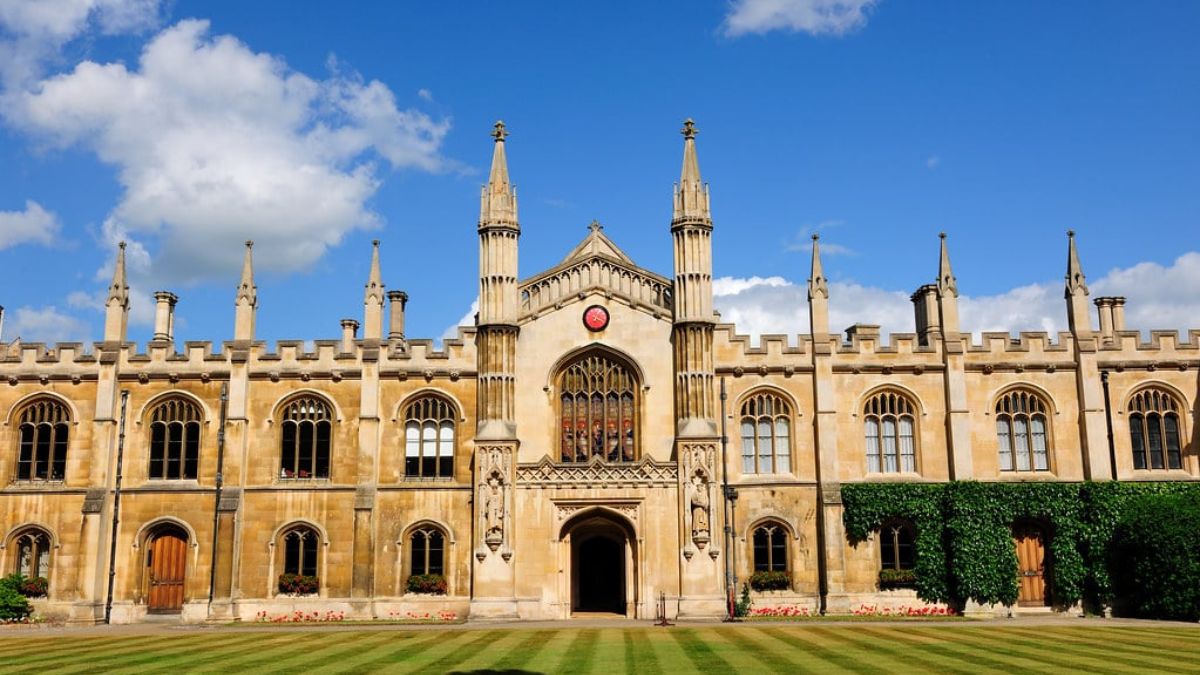
In a world where institutions like the University of Cambridge cling to tradition while navigating modern pressures, the election of Lord Chris Smith as the 109th Chancellor on July 18, 2025, feels both inevitable and quietly revolutionary. A former Master of Pembroke College, a Labour politician, and a seasoned public servant, Smith steps into a role that’s as much about pomp as it is about purpose. With a record-breaking 23,000 alumni and staff voting—many online for the first time—his appointment signals Cambridge’s attempt to balance its storied past with a forward-looking ethos. Here’s a sharp, self-deprecating dive into Smith’s election, his credentials, and what it means for one of the world’s oldest universities, delivered with a nod to the absurdity of academic grandeur and a relentless pursuit of what’s at stake.
A Crowded Race, A Clear Winner
Lord Chris Smith, who has served as Master of Pembroke College since 2015, emerged victorious in a field of ten candidates vying to replace the outgoing Chancellor. The election, held from July 9 to 18, 2025, marked a historic shift: for the first time, Cambridge opened the vote to online ballots, drawing over 23,000 participants, with nearly 2,000 braving the in-person trek to Senate House, per University of Cambridge. Conducted under the single transferable vote system and overseen by Civica Election Services, the process saw Smith outpace notable contenders like economist Dr. Mohamed El-Erian, broadcaster Sandi Toksvig, and businesswoman Gina Miller.
The final tally—Smith leading, followed by El-Erian, Toksvig, Lord John Browne, and others—reflected a preference for a candidate steeped in Cambridge’s DNA. “To be elected as Chancellor of the University I love is a huge honour,” Smith said, his words practically glowing with earnestness. “I’m thrilled. I look forward to being the best possible ambassador for Cambridge.” It’s the kind of statement you’d expect from a man who’s spent decades navigating the corridors of power, from Westminster to the Environment Agency, with a stopover at Harvard for good measure.
Smith’s Pedigree: From Wordsworth to Westminster
Born in 1951 in Edinburgh, Smith’s journey to Cambridge’s chancellorship is a masterclass in overachievement. A double first in English from Pembroke College, a PhD on Wordsworth and Coleridge, and a stint as a Kennedy Scholar at Harvard set the stage for a career that’s as eclectic as it is impressive. Elected as a Labour MP for Islington South and Finsbury in 1983, he rose to Shadow Cabinet roles before serving as Secretary of State for Culture, Media and Sport from 1997 to 2001 under Tony Blair. After stepping down as an MP in 2005, he was made a life peer, later chairing the Environment Agency (2008–2014) and the Advertising Standards Authority (2007–2017), per BBC News.
Smith’s tenure as Pembroke’s Master since 2015 has been a quieter chapter, but no less impactful. His deep ties to Cambridge—both as an alumnus and a leader—made him a natural fit for Chancellor, a role that’s largely ceremonial but carries weight as an ambassador and fundraiser. “Chris brings a wealth of relevant experience,” said Vice-Chancellor Professor Deborah Prentice. “I very much look forward to working with him.” It’s a polite way of saying Smith’s CV reads like a love letter to public service, with a side of academic nerdery.
The Role: Ceremonial, Yes, But Not Toothless
The Chancellor’s gig at Cambridge, stretching back over 800 years, is less about day-to-day power and more about embodying the university’s prestige. Think of it as a glorified cheerleader with a knack for opening wallets and soothing egos. Smith’s job will be to advocate for Cambridge’s strategic interests, support fundraising (the university’s endowment was £2.2 billion in 2024, per Financial Times), and act as a sounding board for senior leaders like Prentice. It’s a role that demands gravitas, charm, and a stomach for endless gala dinners—qualities Smith, with his political and cultural experience, seems well-equipped to deliver.
But don’t let the ceremonial label fool you. The Chancellor’s influence, while indirect, can shape Cambridge’s global image at a time when higher education faces scrutiny over funding, access, and relevance. Smith’s pledge to be “a strong voice for higher education more generally” suggests he’s ready to tackle those challenges, even if it means wading into the messy debates over tuition fees or elitism that dog institutions like Cambridge.
A Modern Election for an Ancient Institution
The election itself was a nod to the 21st century. Online voting, a first for Cambridge, broadened participation, with 23,000 alumni and staff casting ballots—a stark contrast to the days when Senate House was the only stage for such decisions. The diverse candidate pool, from Toksvig’s media savvy to El-Erian’s economic heft, reflected Cambridge’s attempt to signal inclusivity. Yet Smith’s win—rooted in his long history with the university—shows a preference for continuity over disruption. “I thank the other nine candidates for their willingness to serve,” Prentice said, a diplomatic nod to a process that was as much about optics as outcome.
The single transferable vote system ensured a fairer outcome, redistributing preferences until Smith clinched the majority. It’s a far cry from the smoke-filled rooms of Cambridge’s medieval past, but the stakes remain high: the Chancellor’s role, while symbolic, carries the weight of an institution that’s educated everyone from Newton to Hawking.
Why It Matters: Cambridge in a Changing World
Smith’s election comes at a pivotal moment for Cambridge. British universities face funding squeezes, with domestic tuition fees frozen at £9,250 since 2017, per The Guardian. Brexit’s impact on research grants and international students lingers, while debates over free speech and diversity challenge Cambridge’s elite image. Smith, with his political acumen and progressive credentials (he was one of the first openly gay MPs in 1984), is well-positioned to navigate these waters, advocating for Cambridge’s global standing while addressing critics who see it as out of touch.
His tenure as Chancellor, set to last a decade, will test his ability to bridge tradition and innovation. Can he champion higher education’s value in an era of skepticism? Will his fundraising prowess keep Cambridge competitive with Ivy League giants? And can he avoid the inevitable groans when he waxes poetic about Wordsworth at alumni dinners? Only time will tell.
The Road Ahead: A Chancellor for the Future
Lord Chris Smith steps into the Chancellor’s robes with a mandate to represent Cambridge’s past and future. His experience, from shaping cultural policy to steering environmental regulation, gives him a unique lens on leadership. As he works alongside Prentice to elevate Cambridge’s mission, the world will be watching—not just for the pomp, but for how he tackles the real challenges facing higher education. For now, Smith’s election is a reminder: even in an 800-year-old institution, change comes one vote at a time.




