

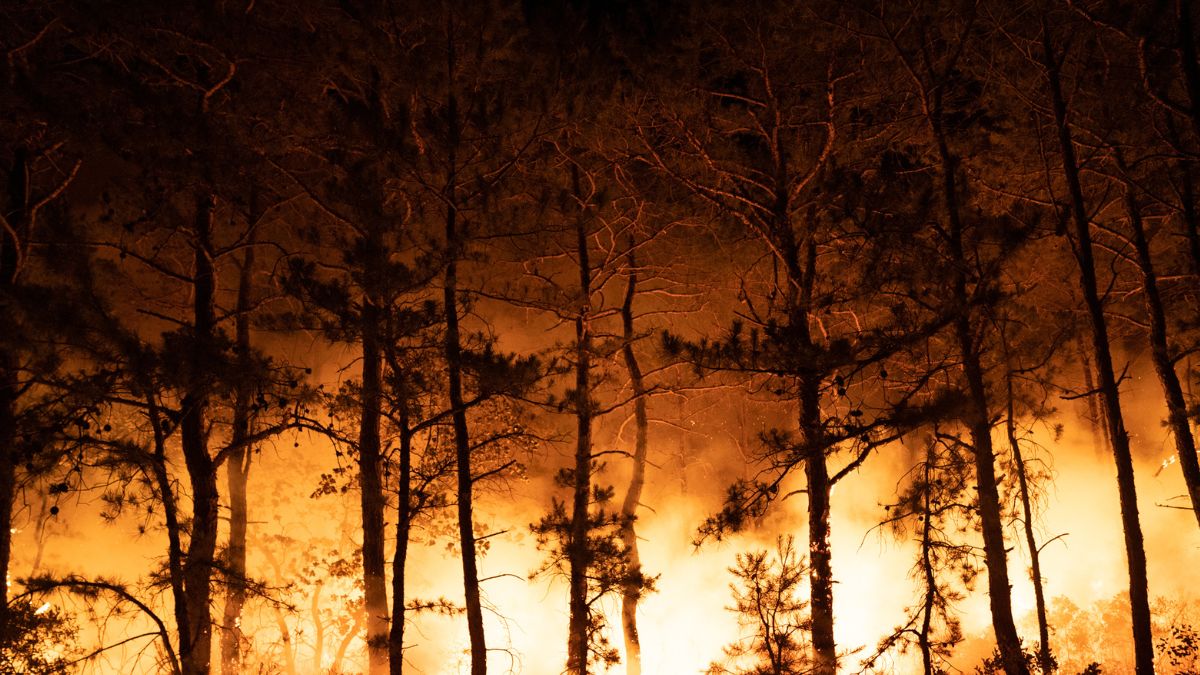
A Hazy and Sweltering Start to August
On August 4, 2025, the Las Vegas Valley woke to murky, brownish-gray skies as smoke from the Gifford Fire in Santa Barbara and San Luis Obispo counties, California, drifted across Southern Nevada. The fire, which ignited on August 1 along State Route 166, has scorched over 65,000 acres and remains only 3% contained, threatening 460 structures and injuring three people, per the California Department of Forestry and Fire Protection (Cal Fire). Southwest winds, gusting up to 25 mph, have carried smoke into the valley, reducing visibility and creating a strong smell of burning, with the Las Vegas Strip barely visible from Henderson on August 2, according to the Las Vegas Review-Journal.
Concurrently, an Extreme Heat Watch is in effect for Wednesday and Thursday, August 6–7, for southern Clark County, southern Mohave County, Arizona, and the Colorado River Valley, with temperatures expected to peak near 110°F in Las Vegas by Thursday. The National Weather Service (NWS) attributes the heatwave to a high-pressure ridge over the Four Corners region, exacerbating conditions alongside the smoke. Air quality has deteriorated to “unhealthy” levels, with an Air Quality Index (AQI) of 186 on August 4, per AirNow, posing risks to sensitive groups like children, seniors, and those with respiratory or heart conditions.
The Gifford Fire’s Impact on Air Quality
The Gifford Fire, now California’s largest wildfire of 2025, has rapidly expanded across rugged terrain in the Los Padres National Forest, fueled by hot, dry conditions and wind gusts up to 25 mph. Cal Fire reports that the blaze, which merged from smaller fires near Santa Maria, prompted mandatory evacuations and the closure of Highway 166. Smoke has spread eastward, impacting Las Vegas, where Clark County’s Division of Air Quality recorded “unhealthy for sensitive groups” levels of ozone and fine particulate matter (PM2.5) on August 4, with a peak AQI of 140 near Paul Meyer Park.
The smoke, carrying small particles that can aggravate asthma, bronchitis, and heart disease, is expected to persist through at least August 6, per 8 News Now. The Clark County Department of Environment and Sustainability forecasts moderate air quality through Friday, but NWS forecaster Stan Czyzyk noted that full clearing depends on fire containment, which remains challenging




