

Bogotá’s Bold Stand: The Hague Group’s Push Against Israel’s Gaza Campaign
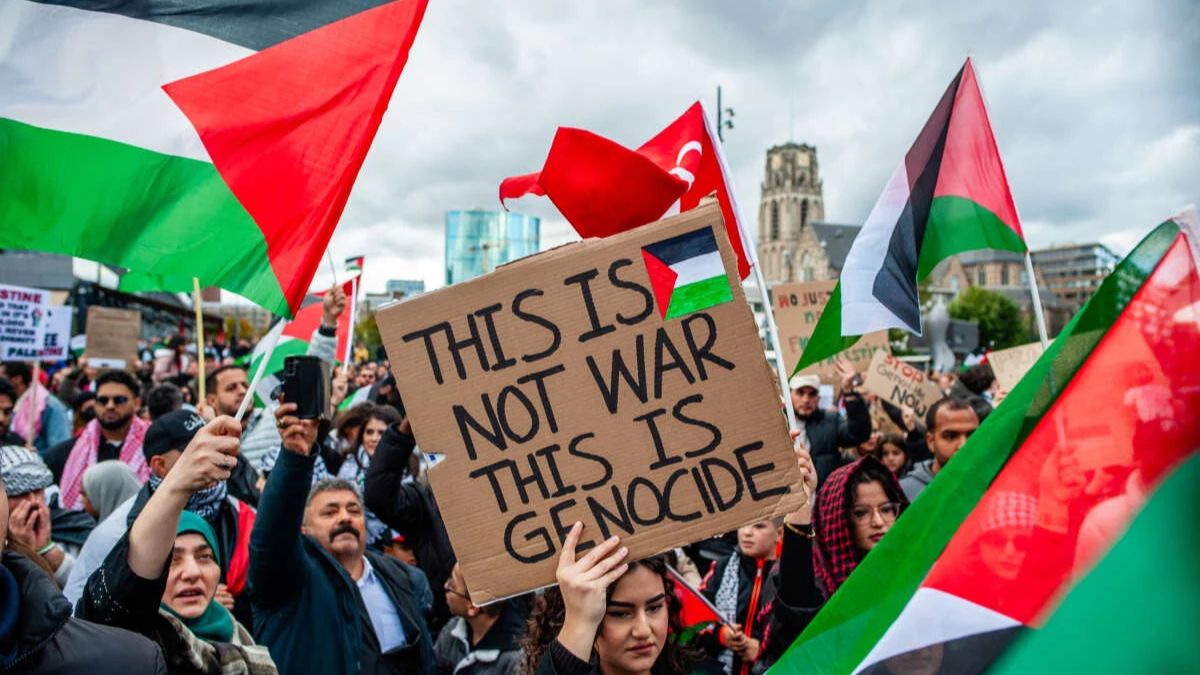
The Hague Group, a coalition of mostly Global South nations with a chip on their shoulder about Western double standards, pulled off a diplomatic coup in Bogotá, Colombia, on July 15-16, 2025. Co-chaired by Colombia and South Africa, the summit brought together over 30 countries—think Bolivia, Cuba, Indonesia, and even Spain—to confront what they call Israel’s “genocide” in Gaza. The result? A joint declaration by 12 nations committing to six concrete measures to choke off Israel’s military lifeline and demand legal accountability. This isn’t just talk—it’s a middle finger to the status quo, where powerful nations shrug off International Court of Justice (ICJ) rulings like parking tickets.
“We came to Bogotá to make history—and we did,” crowed Colombian President Gustavo Petro, a man who’s never shied from calling Israel’s actions in Gaza a “genocide.” “These measures show we won’t let international law be treated like a suggestion or Palestinian lives like they’re disposable.” The summit, backed by the Progressive International, marked the most coordinated effort yet to challenge Israel’s 21-month assault on Gaza, which has killed over 58,000 Palestinians, according to Gaza’s Health Ministry.
The Six Measures: A Blueprint for Accountability?
The Bogotá Declaration, endorsed by Bolivia, Colombia, Cuba, Indonesia, Iraq, Libya, Malaysia, Namibia, Nicaragua, Oman, Saint Vincent and the Grenadines, and South Africa, isn’t just a strongly worded letter. It’s a six-point plan to hit Israel where it hurts:
- Block Arms Transfers: No more weapons, ammo, military fuel, or dual-use items to Israel. This means stopping shipments cold, whether by sea, air, or land.
- Ban Military Transit: No docking or servicing for ships or planes carrying weapons to Israel. Think of it as a global “no fly, no sail” zone for Israeli military logistics.
- Review Public Contracts: Countries will audit public funds to ensure they’re not bankrolling Israel’s occupation of Palestinian territories. No more pension funds propping up companies tied to the conflict.
- Enforce ICC Warrants: Support for International Criminal Court (ICC) arrest warrants against Israeli leaders like Benjamin Netanyahu and former Defense Minister Yoav Gallant for alleged war crimes.
- Pursue Accountability: Push for “robust, impartial” investigations and prosecutions of serious crimes under international law, whether at national or global levels.
- Support Universal Jurisdiction: Back legal frameworks that allow countries to prosecute war crimes committed in Palestine, no matter where they happened.
“This conference marks a turning point—not just for Palestine, but for the future of the international system,” said Varsha Gandikota-Nellutla, the Hague Group’s executive secretary. “For decades, Global South states have paid the price for a broken system. In Bogotá, we’re taking it back—not with speeches, but with action.”
A Coalition Born in Frustration
The Hague Group, formed on January 31, 2025, in the Netherlands, started with eight nations: Bolivia, Colombia, Cuba, Honduras, Malaysia, Namibia, Senegal, and South Africa, later joined by Belize. Its mission? To end the “climate of impunity” that lets Israel ignore ICJ orders to prevent genocide in Gaza and halt its assault on Rafah. South Africa kicked things off with a landmark ICJ case in December 2023, accusing Israel of violating the Genocide Convention. Colombia followed, cutting diplomatic ties and banning coal exports to Israel in May 2024.
The Bogotá summit expanded the guest list to over 30 countries, including heavyweights like China, Qatar, and Ireland. UN heavy-hitters like Francesca Albanese, the Special Rapporteur on Palestine, and Philippe Lazzarini, head of UNRWA, added weight. Albanese, fresh off U.S. sanctions for her outspoken criticism, didn’t mince words: “These aren’t just measures—they’re lifelines for a people under relentless assault.”
The Global South Takes the Lead
This summit wasn’t a Western-led photo-op. It was a Global South power play, with Colombia and South Africa steering the ship. Petro, who’s called Gaza’s crisis a “genocide” since May 2024, framed it as a moral stand: “When Gaza dies, all of humanity will die.” South Africa’s Ronald Lamola echoed him: “No nation is above the law, and no crime will go unanswered.”
The 12 signatories—less than half the attendees—reflect a cautious but growing coalition. Zane Dangor, South Africa’s top diplomat, admitted some countries need time to clear the declaration with their capitals. “They were supportive in the room, but diplomacy’s slow grind means they’ll confirm later,” he told Middle East Eye. The declaration stays open until September 28, 2025, aligned with a UN General Assembly resolution from September 2024, giving more nations a chance to join.
Palestinian UN envoy Riyad Mansour called it a “spark” for global action. “This is a moment for states to commit to forcing Israel to comply with international law,” he said, eyeing the UN’s two-state solution talks in New York later in July.
Cracks in the Plan: Can It Work?
Bold words, but will they stick? Critics aren’t so sure. Israel’s UN mission called the summit a “moral travesty,” insisting the war won’t end while hostages remain in Gaza. With the U.S. pumping billions into Israel’s military, the 12 signatories—mostly smaller economies—face an uphill fight. “I don’t think it’s going to make a huge difference,” said Sergio Guzmán of Colombia Risk Analysis. “The absence of major players and low-level delegates waters it down.”
The U.S. didn’t just sit this one out—they threw punches. The Trump administration sanctioned Albanese and ICC judges, calling the Hague Group a “radical anti-Western” bloc led by “authoritarian” regimes like Cuba. Albanese shrugged it off: “It’s not about me—it’s about the Palestinian people.” She slammed the EU for its “appalling” failure to sanction Israel, accusing it of prioritizing trade over lives. “Europe’s a huge trade partner of Israel, yet it’s guided more by a colonial mindset than principle,” she said at Bogotá’s Palacio de San Carlos.
Some countries are already walking the talk. Spain banned ships carrying weapons to Israel from its ports, while Malaysia and Namibia blocked arms shipments. But enforcing these measures globally is a pipe dream without buy-in from heavyweights like the U.S. or EU. Namibia’s Fillemon Wise Immanuel nailed the challenge: “What we need now is a multilateral strategy to ensure these interventions actually happen.”
The Road Ahead: A Spark or a Fizzle?
The Hague Group isn’t done. They plan to reconvene to check progress and push more measures, aiming to keep Gaza’s crisis front and center. Colombia’s Vice Minister Mauricio Jaramillo Jassir was clear: “This isn’t against Israel—it’s against the genocide in Palestine.” The group’s banking on the 1948 Genocide Convention to justify cutting off Israel’s military supply chain.
But questions linger. Can 12 nations, even with moral high ground, dent Israel’s U.S.-backed campaign? Will more countries sign on by September 28? And can the Hague Group turn rhetoric into reality without tripping over their own political and economic baggage? Posts on X reflect the buzz, with users like @DianaAlfonso91 calling Bogotá a “firm step” toward justice. Others, like @ProgIntl, see it as a new global alignment grounded in multilateralism.
For now, the summit’s a loud shot across the bow. Whether it’s a spark that ignites a broader movement or a flicker drowned out by geopolitics depends on what comes next. As Petro put it, “We’re standing up to a system collapsing under unchecked power.” In a world where international law’s often a punching bag, that’s either a battle cry or a pipe dream. Time will tell.




