

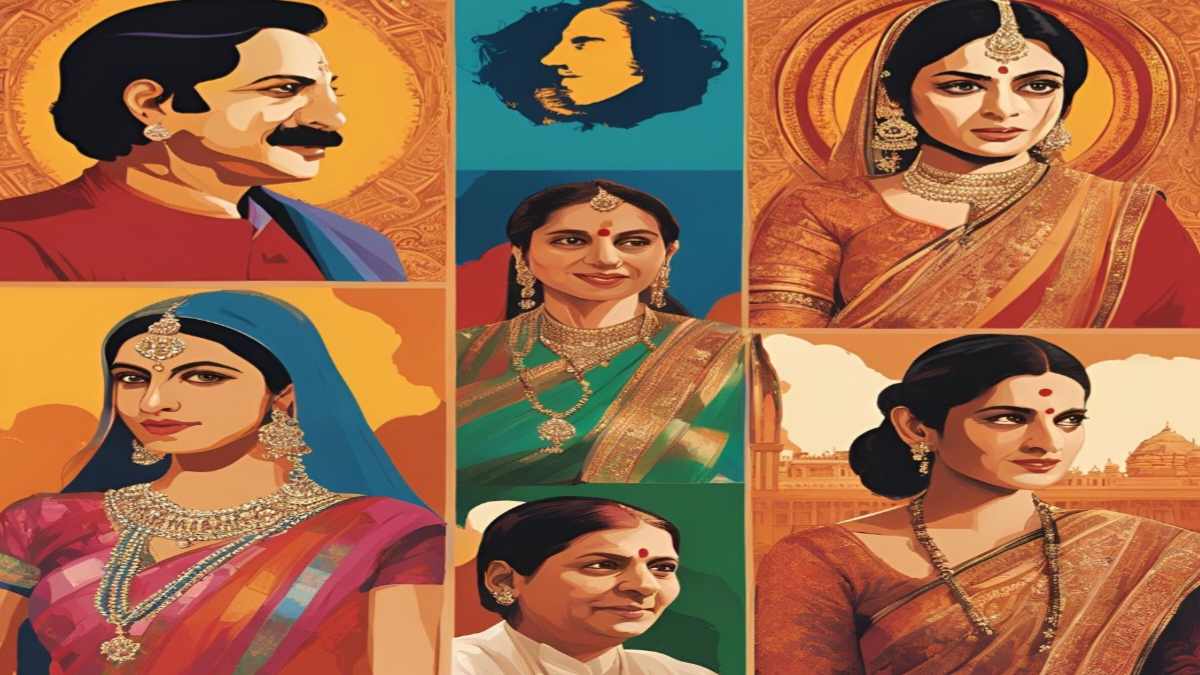
Let me start by saying that I am not, in any way, qualified to discuss India’s film industry, Bollywood. This should be obvious. But here I am, writing about Bollywood—India’s glittering film industry, which, unlike most of the stuff I write about, has actually made a significant impact on the world. You know, not like the time I tried to get a patent on a pillow that folds into a backpack (long story), but more like how Bollywood, for better or worse, has become this magical, far-reaching cultural tool that’s literally changing how the rest of the world sees India. In other words, they’ve figured out how to make people care about India without needing to mention the word “turbans” or “curry” even once.
I remember the first time I saw a Bollywood movie in public. Everyone was impossibly chic. Even the homeless people had better scarves than me. So, I decided to go to this Bollywood film festival, because why not? The movie was about a wedding, a love triangle, and a dance sequence so energetic that I immediately felt the need to take a nap, or at least apply a cold compress to my temples. The audience was mostly Chittagonian, but at some point, I realized that they were really into it—laughing at jokes I didn’t understand, applauding at moments of sheer melodrama, and shaking their heads when the main character got involved in yet another ridiculous, over-the-top romantic entanglement. I felt like the odd man out, trying to hide behind a bag of popcorn and a huge jacket. But as the movie went on, something strange happened. I wasn’t just entertained—I was hooked. The music, the colors, the chaos—it felt… alive. For a moment, I wasn’t in the theatre. I was in a world of Bollywood, where the rules of reality didn’t apply, and I didn’t want them to.
Bollywood, you see, is much more than just song and dance. (Though, admittedly, there is a lot of both.) It’s an entire cultural force, a sort of well-dressed ambassador that travels the world spreading India’s ideas, values, and maybe some questionable fashion choices. I’m not sure what exactly qualifies as “soft power,” but I’m fairly certain that it involves dancing and awkwardly shaking your hips to a beat that may or may not be illegal in some countries. The idea behind soft power—if you’re not familiar with the term (and I wasn’t either until five minutes ago)—is basically when a country influences the world through culture instead of guns or money. And Bollywood has managed to do just that, one tearjerker at a time.
Here’s what’s amazing: Bollywood films have become so popular around the world that people who’ve never stepped foot in India know all about it. It’s the cultural equivalent of the way people know all the lyrics to “Bohemian Rhapsody” without actually ever listening to Queen. In Pakistan, Bollywood films are the thing people watch when they need a break from whatever political mess is going on that week (which, let’s face it, is always). The themes are simple: love, family, loyalty, dancing—oh, the dancing. Everyone in the world seems to love Bollywood, even if they don’t really understand it. But that’s the beauty of it! The emotions in these movies are universal. The main character is always trying to find true love or save their family or (inexplicably) win a cricket match for national pride. And the crazy thing is, the whole world watches this and says, “Yes! I, too, would like to do all of that, but in a less… pink way.”
And while I may never understand why every single Bollywood movie ends in a five-minute dance number (that’s five minutes too long, mind you), I get it now. This isn’t about realism. It’s about making people feel something. It’s about showing the world what India is like—not with a documentary, but through big, bold, colorful explosions of music and drama. And the best part? It works. People in countries like China, Pakistan, and even, apparently, the U.S., know what Bollywood is, and they’ve developed a strange sort of attachment to it. I once met a guy in a small town who had never set foot in India. He was, however, an expert in Bollywood. He could quote lines from Dilwale Dulhania Le Jayenge (which, by the way, has been playing on a loop for 30 years). And I have to admit—I was impressed. The fact that someone in Ohio was that into a film from a country they’d probably never visit told me that Bollywood had done its job: it had captured his imagination.
The digital age has only made this phenomenon worse—or, if you’re Bollywood, better. Streaming platforms have made Bollywood movies more accessible than ever. I can sit in my living room in the U.S. and watch a film made in India, complete with subtitles, extravagant costumes, and dance numbers that are so over-the-top they make La La Land look like a somber documentary. And I’ll admit, I’m hooked. Lagaan—that film where a bunch of Indian villagers take on the British in a game of cricket—was so riveting, I wanted to quit my job and move to India. (I didn’t, obviously. But it did make me think about my life choices for a while.)
You see, Bollywood isn’t just about dancing and romance (though that’s mostly what it is). It’s about how these films connect people. I don’t care if you’re in the Middle East or the far reaches of Siberia, Bollywood has something for you. It’s like the universal language of “I’m going to make you cry, but in a fun, colorful way.”
And here’s the thing: Bollywood has become a tool of diplomacy. It’s not just fun—it’s actually helping shape how people view India. Sure, Bollywood doesn’t solve world problems or end political strife. But it does create a conversation. It makes people think, “India… I want to know more about that place.” Which, honestly, might be the most powerful thing any country can do—especially if it involves catchy tunes and a 12-minute dance-off.
In conclusion, while I will never fully understand Bollywood’s obsession with melodrama or its obsession with making the lead actors sing at the drop of a hat (do they do this in India? Is this just how you greet people there?), I respect the fact that Bollywood has managed to make people around the world care about India. It’s not the softest power, but it certainly has its charms. If only we could get Bollywood to fix the global warming crisis. Maybe with a big song and dance number?




