

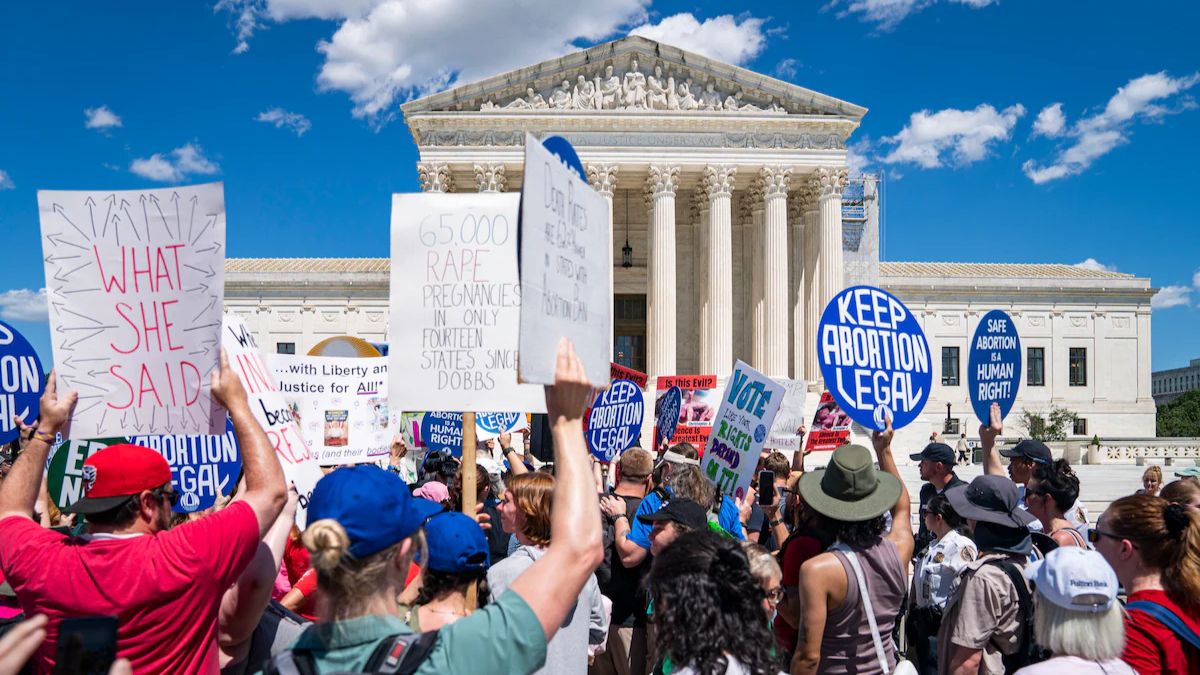
The implementation of strict abortion bans in U.S. states led to an increase in infant mortality rates according to research, while achieving significant progress in reducing infant deaths during previous years. The Johns Hopkins Bloomberg School of Public Health team estimated that 478 infant fatalities happened in fourteen states with strict abortion bans because these regulations kept babies from surviving. Since Roe v. Wade marked its demise at the hands of Supreme Court rulings in 2022, a troubling pattern began among U.S. states. Previous to Roe v. Wade, the Supreme Court recognized abortion as a constitutional right until fetal viability was reached. States acquired the ability to design their abortion regulations after the court decision was overturned, thus triggering numerous restrictive laws throughout these states.
Impact of Abortion Bans on Infant Mortality
The implementation of full or near-total abortion bans in specific states led to a 5.6% mortality rise among newborns when comparing actual results to predicted figures. From 5.93 deaths per 1,000 live births to 6.26 deaths per 1,000, infant mortality rates increased. Restrictions on abortion caused the greatest increase in the death statistics for newborns with congenital defects, as rates climbed by 10.87% from the projected 1.24 per 1,000 live births to 1.37 per 1,000. Abortion restrictions compelled women to bear pregnancies with critical fetal deformities until birth in situations when the fetus could not survive independently. The mortality rates rose for all causes besides congenital malformations when measured against 1,000 live births, increasing from 4.69 to 4.89 and showing a 4.23% relative increase. Research implies the multifaceted nature of increased mortality resulted from medical care postponement and social economic inequality.
Disproportionate Impact on Marginalized Communities
Specific population groups showed increased disparities as their infant mortality rates kept increasing above what is typically observed. Black infants demonstrated the greatest increase in mortality rates because their death numbers rose from 10.66 deaths per 1,000 births to 11.81 deaths per 1,000, representing an 11% rise. Research revealed higher infant mortality statistics among women without partners along with individuals under twenty-five and those with less education or residing in southern regions of the U.S. Dr. Dr. Alison Gemmill, who co-led the research study, declared that strict abortion laws work in opposition to long-term achievements in preserving infant survival rates throughout the United States. According to Dr. Gemmill, interfering with reproductive healthcare measures brings severe consequences for mothers along with their infants.
States with Abortion Bans and Their Consequences
The banning of all abortions except under limited circumstances involving rape or incest and threats to maternal existence has become law in 17 states as of January 2025. The strictest abortion bans exist in twelve states, including Idaho, among Alabama, Arkansas, Indiana, Kentucky, Louisiana, Mississippi, Oklahoma, and South Dakota, and also Tennessee, Texas, and West Virginia. The abortion laws in Florida, Georgia, Iowa, and South Carolina restrict pregnancies beyond six weeks, although numerous women will not discover their pregnancy during this period. The regulations for abortion differ between Nebraska and North Carolina, which enforce restrictions at week 12 of pregnancy, and in Utah, abortion becomes illegal at week 18.
Medical Professionals Sound the Alarm
The American Civil Liberties Union (ACLU) of Texas reports that healthcare system limitations developed from such restrictions create growing challenges for medical operations. The staff attorney at the ACLU Texas, Sarah Corning, explained that doctors of obstetrics and gynecology start to leave Texas because the strict laws restrict medical treatment. According to Corning, doctors are unable to provide sufficient care to their patients, which leads Texans, along with their newborns, to suffer from these restrictions. The practice of forcing women to maintain nonviable pregnancies takes a heavy emotional and physical burden on pregnant women. The state invasion of hospital rooms subjects people to carry fatal fetal abnormalities until experiencing stillbirths or observing the passing of their newborns after birth. The laws our states have established generate shame because they result in preventable injuries to both mothers and infants.
Comparison with Global Infant Mortality Rates
The research investigated how the rising U.S. infant mortality rates were measured in comparison to international figures. The infant mortality rate in the United Kingdom stands at 3.8 per 1,000 live births, which is much lower than the rates recorded in states implementing new abortion restrictions. Slovenia, Singapore, and Iceland hold the positions of lowest death rates for infants among all countries reporting data with figures ranging from 1.5 to 1.6 newborn deaths per 1,000 births. Afghanistan holds the title of highest infant mortality rate in the world along with an estimated 101.3 deaths per 1,000 live births.
Additional Findings: Link Between Abortion Bans and Increased Birth Rates
Research conducted at the Johns Hopkins Bloomberg School of Public Health establishes a path between abortion prohibitions and higher birth rates despite increasing infant deaths. Since the overturning of *Roe v. The state laws that impose the most abortion restrictions have produced a 1.7% increase in births among women between childbearing ages, which equals 22,180 new babies. Research findings show that states with inferior maternal and child health standing saw the greatest birth rate multiplication because these policies intensify current healthcare inequality. Research conducted by Johns Hopkins has revealed that bans on abortion lead to undesirable losses of newborn lives. The implementation of anti-abortion measures by states leads to higher death rates among newborns, particularly children with serious congenital conditions. Marginalized communities bear the worst consequences since their healthcare access was already restricted. Public health outcomes require immediate attention from policymakers due to the findings which stress how restrictive reproductive healthcare policies create tragic consequences for infant mortality, according to research at Johns Hopkins.




