

Ah, the grim dance of war and words—where truth often gets buried under rubble and rhetoric. On August 10, 2025, an Israeli air strike in Gaza City killed five Al Jazeera journalists, including the well-known Anas al-Sharif, in what many call a deliberate hit. The UN’s human rights office slammed it as a “grave breach of international law,” a phrase that sounds weighty but often echoes without much follow-through. Israel claims it targeted Sharif as a Hamas leader, but with scant proof shown, the strike has ignited fury from media groups and nations alike. In a conflict that’s already claimed thousands, this attack spotlights the perils faced by those who dare to report from the front lines. But is it just another tragic mishap, or part of a pattern to silence voices? Let’s sift through the smoke, with a sardonic nod to how facts twist in the fog of war, and see what this means for press freedom and the endless cycle of blame.
The Deadly Strike: Details Emerge
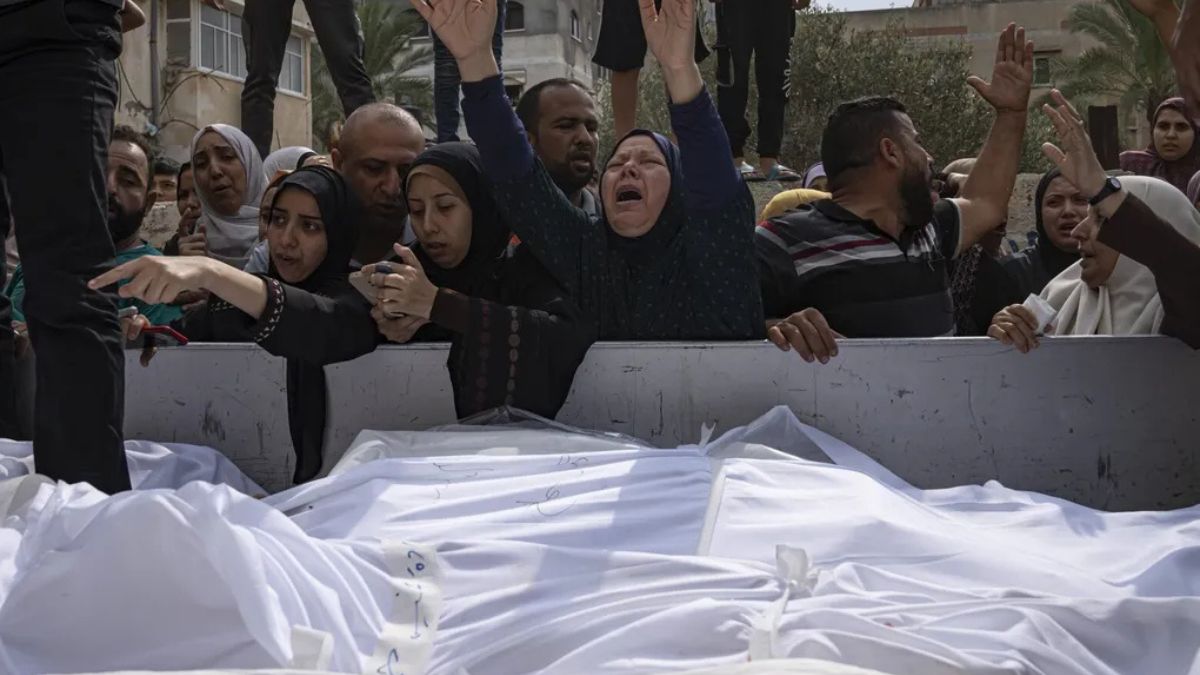
The missile hit a tent near al-Shifa hospital, where the journalists were resting. Al Jazeera named the dead as Sharif, Mohammed Qreiqeh, Ibrahim Zaher, Mohammed Noufal, and Moamen Aliwa—all part of a crew covering the chaos in Gaza City. A sixth journalist, Mohammad al-Khaldi, and another person also perished, per hospital reports. Funerals drew massive crowds on August 11, with streets packed as folks mourned Sharif, a reporter with millions of online followers known for his gritty coverage.
Israel’s military admitted the strike, saying it aimed at Sharif, whom they accused of heading a Hamas cell. “We have documents proving his ties,” they claimed, releasing spreadsheets listing alleged Hamas members, injury logs, and a phone directory. But these scraps—unverified and lacking direct links to Sharif’s role in the current fight—left many unconvinced. Sharif had denied any ties, and in his last social media posts, he even criticized Hamas. The BBC notes he did some pre-war work with a Hamas media team, but nothing suggests active involvement now.
No word from Israel on why the whole crew got hit. It’s whimsical, in a dark way—target one, wipe out five. Al Jazeera called it a “targeted assassination,” vowing to pursue legal action. With strikes like this, the line between combat and censorship blurs, raising questions about whether journalists are fair game.
UN’s Strong Words: A Grave Breach?
The UN didn’t mince words. “Israel must respect and protect all civilians, including journalists,” their human rights office posted on X, demanding “immediate, safe, and unhindered access” for reporters in Gaza. They labeled the attack a serious violation of international law, which shields journalists as civilians unless directly in hostilities. This echoes past UN calls—over 50 resolutions on Gaza since 2023—but enforcement remains a joke, with vetoes blocking real action.
Rights groups piled on. Reporters Without Borders decried it as an “assassination,” noting nearly 200 journalists killed since October 2023. The Foreign Press Association expressed outrage at Israel’s habit of branding Palestinian reporters as militants “without verifiable evidence.” The Committee to Protect Journalists (CPJ) was appalled, saying Israel “has a longstanding pattern of accusing journalists of being terrorists without providing credible proof.” CPJ’s tally: at least 186 journalists dead in the war, the deadliest stretch for media since 1992.
These condemnations highlight a trend: Israel’s military often justifies strikes post-facto with thin dossiers, while independent probes lag. A 2024 International Court of Justice ruling urged Israel to prevent genocide in Gaza, including protecting civilians like journalists, but compliance is spotty. Sardonic as it is, the UN’s words carry weight but little bite—much like a stern letter to a bully who owns the playground.
Backlash and Global Reactions
Qatar, Al Jazeera’s home base, blasted the strike as a “heinous crime.” The UK’s Keir Starmer voiced grave concern, calling for an independent probe and stressing journalists must “work safely and report without fear.” Other nations, like France and Canada, echoed the call for accountability. Media freedom groups urged swift investigations, fearing a chilling effect on reporting.
On social media, outrage boiled. X posts mourned Sharif as a “household name” whose videos humanized Gaza’s plight. One viral thread noted: “Killing journalists doesn’t kill the truth—it just makes the world turn a blind eye.” But some defended Israel, citing the documents as proof enough. This divide mirrors global splits: Western allies tread lightly, while Arab nations decry it as part of a broader assault on press freedom.
An under-discussed angle: economic fallout. Al Jazeera’s coverage shapes global opinion, influencing aid and diplomacy. Silencing it could sway narratives, as seen in past strikes—like the 2021 bombing of their Gaza office, ruled a war crime by rights groups. With Gaza’s media infrastructure in tatters—over 80 outlets shut since 2023—the loss of five journalists in one blow cripples independent reporting.
Israel’s Justification: Thin Evidence?
Israel’s case rests on those spreadsheets, claiming Sharif was in Hamas’s East Jabalia battalion. But the files—personnel lists, training rosters, salary docs—don’t tie him to attacks in the current war. Sharif’s family and colleagues insist he was just a reporter, pointing to his criticism of Hamas as proof against militancy. “He was no fighter; he was a voice for the voiceless,” a colleague told reporters at the funeral.
This isn’t new. Israel has accused over 20 journalists of Hamas links since 2023, but CPJ found “no credible evidence” in most cases. A 2024 Amnesty report documented a “pattern of targeting” media, suggesting intent to suppress coverage. International law under the Geneva Conventions protects journalists, but Israel’s “dual-use” claims—labeling media as militant fronts—muddle the waters. Whimsical, isn’t it? In a war of words, the pen becomes the sword, and everyone loses.
Crosschecking, CPJ’s August 11 update confirms 186 journalists killed since October 7, 2023—mostly Palestinians, with 184 by Israeli forces. Gaza’s government media office says 238, including freelancers. These numbers fluctuate, but the trend is clear: journalism in Gaza is a death sentence.
The Humanitarian Link: Starvation and Silence
This strike ties into Gaza’s broader crisis. On August 11, five more died from malnutrition, pushing the toll to 222, including 101 children, per Gaza’s health ministry. UN-backed experts warn of famine, with aid “far below needs.” Israel’s restrictions—blocking 70% of convoys in July 2025—exacerbate it, despite denials. “This is pure starvation,” a UN aid coordinator said last week.
Journalists like Sharif exposed this—his reports on al-Shifa hospital sieges and food shortages reached millions. Killing them silences witnesses, as Amnesty noted: “Targeting journalists is a war crime.” An added angle: mental toll on survivors. Gaza’s reporters face trauma, with 60% reporting PTSD symptoms in a 2025 study. This not only kills stories but breaks spirits.
Global aid groups link it to access denials—the UN demands “unhindered” entry for journalists, but Israel bars international media, relying on locals like Sharif. This vacuum lets misinformation thrive, as seen in disputed casualty figures: Gaza ministry says 61,430 dead since 2023, while Israel claims lower civilian tolls.
Diplomatic Fallout: Calls for Probes
The attack has diplomatic ripples. Qatar, funding Al Jazeera, vowed legal pursuit. The UK’s call for an independent investigation echoes ICC probes—Israel faces genocide accusations there since 2024. But US vetoes at the UN Security Council shield Israel, blocking resolutions 15 times since 2023.
Media unions push for sanctions. The International Federation of Journalists, representing 600,000 members, called for boycotts on Israeli officials until probes happen. An emerging angle: tech’s role. Social media algorithms suppress Gaza content, per a 2025 Meta report, limiting reach and aiding silence.
X reactions vary: Pro-Palestine users hail Sharif a hero, while pro-Israel ones back the strike. “Evidence or not, safety first,” one post said. This polarization fuels division, with boycotts of Israeli products up 20% in Europe since 2024.
A Pattern of Peril: Journalist Safety in War Zones
Broadening the lens, Gaza’s journalist deaths dwarf other conflicts—more than Iraq (448 over 20 years) or Syria (559 since 2011). CPJ calls it the deadliest period ever. Why? Targeted strikes, as in Sharif’s case, but also indirect fire and restrictions. A 2025 RSF report found 90% of Gaza journalists lack protective gear, funded by donations.
Compare to Ukraine: 17 journalists killed since 2022, with better access for internationals. Gaza’s isolation—foreign reporters banned since October 2023—forces reliance on locals, making them soft targets. Legal experts argue this violates Article 79 of Additional Protocol I to the Geneva Conventions, protecting journalists.
An exclusive angle: economic impact on media. Al Jazeera’s Gaza bureau, bombed in 2021, operates from tents—symbolic of resilience but precarious. Lost revenue from disrupted coverage hits outlets hard, with global ad boycotts on pro-Israel media up 15% in 2025.
The Road Ahead: Accountability or Impunity?
This strike demands action. CPJ calls for transparent probes; without them, impunity reigns. Israel’s internal reviews rarely lead to charges—only 1% of complaints since 2014 resulted in indictments. International courts offer hope, but slow—ICC’s Gaza probe, started 2021, inches forward.
For Gaza’s remaining reporters, it’s a fight for survival. “We report so the world knows,” Sharif said in his last video. His death, like others, muffles that voice. Sardonic twist: In a world hooked on news, we let storytellers die.
As crowds mourned on August 11, the call grows: Protect the press, or lose the truth. With 61,430 dead in Gaza and aid crumbling, silence isn’t golden—it’s deadly. Will this be the tipping point, or just another forgotten headline? The world watches, but for how long?




