

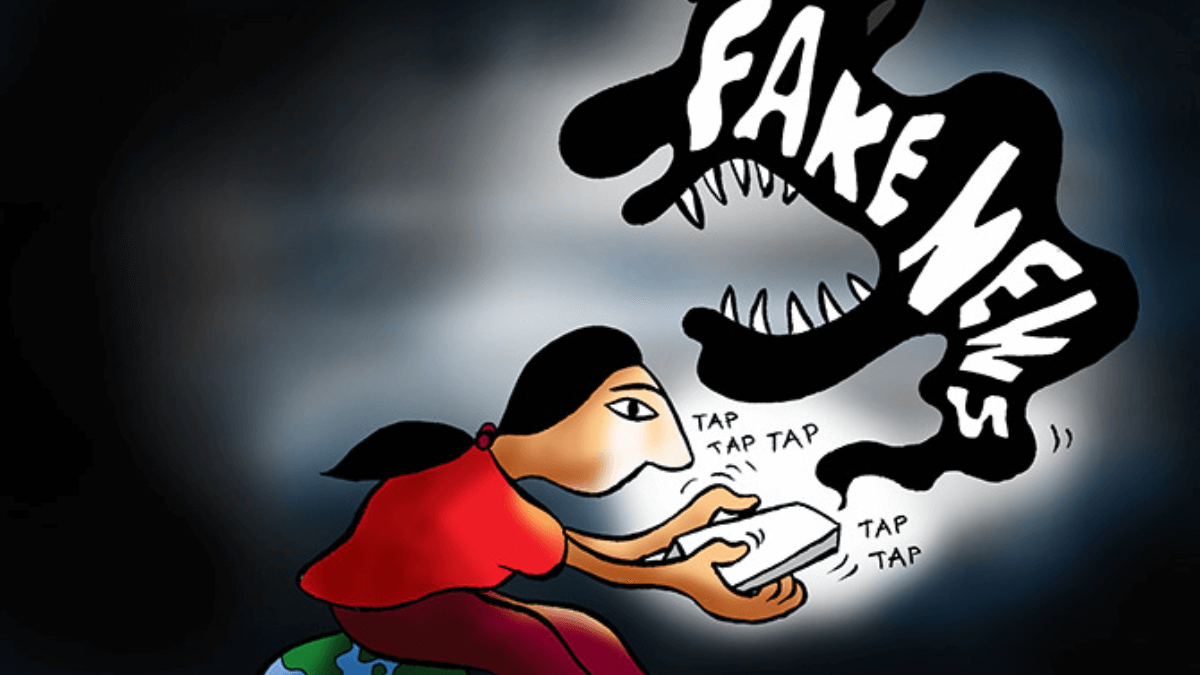
In the digital age, fake news has become a major social problem. In India, where internet usage is growing and social media platforms are widely used, the fake news rank has become a significant challenge.
Fake news spread through social media in the country has become a serious problem, with the potential of resulting in mob violence, as was the case where at least 20 people were killed in 2018 as a result of misinformation circulating on social media.
The reason for the rank of fake news in India
As a result of the increased use of information technology, topics that get more shares and likes on platforms like Facebook, WhatsApp, and YouTube are more popular.
In India, there are 80 crore internet users, a large portion from rural areas. These new users are victims of fake news. Around 50 crore people in India use WhatsApp. Personal and group chats quickly spread false news. The fact that up to 256 people can be part of a group chat makes it incredibly popular with extended families and large groups of friends. While much of these daily conversations involve people making plans. WhatsApp messages from family and friends could be trusted and sent without checks.
The rank of fake news increases significantly during the election period. Political parties use this medium to discredit their opponents by spreading misinformation. In a multi-religious country like India, rumors often fuel religious conflicts. Even a small rumor can cause big turmoil.
Misinformation campaign of India
2024 Bangladesh quota reform movement
Numerous India-based social media accounts circulated misleading videos and images about attacks on Bangladeshi Hindus, using hashtags like #AllEyesOnBangladeshiHindus and #SaveBangladeshiHindus. A false report claimed that the house of Bangladeshi cricketer Liton Das had been set on fire, which was later debunked. Das himself refuted the claim in a Facebook post.
Indian media viewed the situation in Bangladesh through their Islamophobic eye, despite the view in Bangladesh that it was a popular movement. India’s intent to destabilize Bangladesh through this disinformation campaign stems from the disappointment of losing a valuable ally like Sheikh Hasina and from apprehensions about the new government in the country harboring anti-Indian sentiments.
The themes include several falsely claiming that over 10 million Bangladeshi Hindus are fleeing to India for refuge, claiming that Bangladesh is turning into an Islamic state. In November 2024, following the murder of Saiful Islam Alif, a lawyer, in Chattogram, several Indian media outlets published fabricated reports claiming that Alif was the lawyer of Chinmoy Krishna Das, a Hindu leader who was arrested on sedition charges. Indian media outlets also falsely claimed that Alif was shot dead by the police. However, reports indicated that Alif was killed by the followers of Das.
Misinformation about Coronavirus
Over a year and a half into the pandemic, India has emerged as the biggest source of Covid misinformation, with 1 in 6 pieces of fake information coming out of the country. False claims were also widely spread in India that eating vegetarian food and eliminating meat from the diet could prevent getting coronavirus. Over the age of 65, they were more likely to receive misinformation and were also more likely to believe and act on it, while this was least likely for those under the age of 25. As a result, between 24 and 27 percent of respondents said they had considered using herbal, ayurvedic, or homeopathic COVID-19 remedies. Between 7 and 8 percent said they had tried them, while 12 percent had experimented with home remedies.
Elections Propaganda
Fake news was very extensive during the 2019 Indian general election. The elections were called by some “India’s first WhatsApp elections,” with WhatsApp being used by many as a propaganda medium. Parties have weaponized the platforms, and misinformation has been weaponized. The BJP had plans to assign some 900,000 people with the specific task of localized WhatsApp campaigning. Both parties have been accused of spreading misleading information.
Targeting Pakistan
According to the BBC, many of the fake news websites were operated by an Indian company called the Srivastava Group, responsible for anti-Pakistan lobbying efforts in Europe and linked to spreading fake news and propaganda. These websites, which appear as real news sites by copying syndicated news content from other outlets, plant opinion pieces and stories critical of Pakistan from NGO members linked to their network. In 2023, Indian media spread disinformation about a padlocked grave in Hyderabad, India, claiming it was in Pakistan to prevent the dead bodies from being raped. These stories went viral and severely defamed Pakistan.
Misinformation about Kashmir
Misinformation about Kashmir is very common. Many times, images from the Syrian and Iraqi civil wars have been falsely shared as scenes from the Kashmir conflict. This is often done to create unrest and support insurgencies. In August 2019, disinformation related to whether people were suffering, lack of supplies, and other administration issues followed.
In the end, The ranking of news in India is a complex and escalating issue. Through the alignment of technology, policy, and public awareness, it is possible to address this problem. The sooner this problem is resolved, the safer India’s society and democracy will be. The combined efforts of the people, the government, and the technology companies can play the most effective role in addressing this challenge.




