

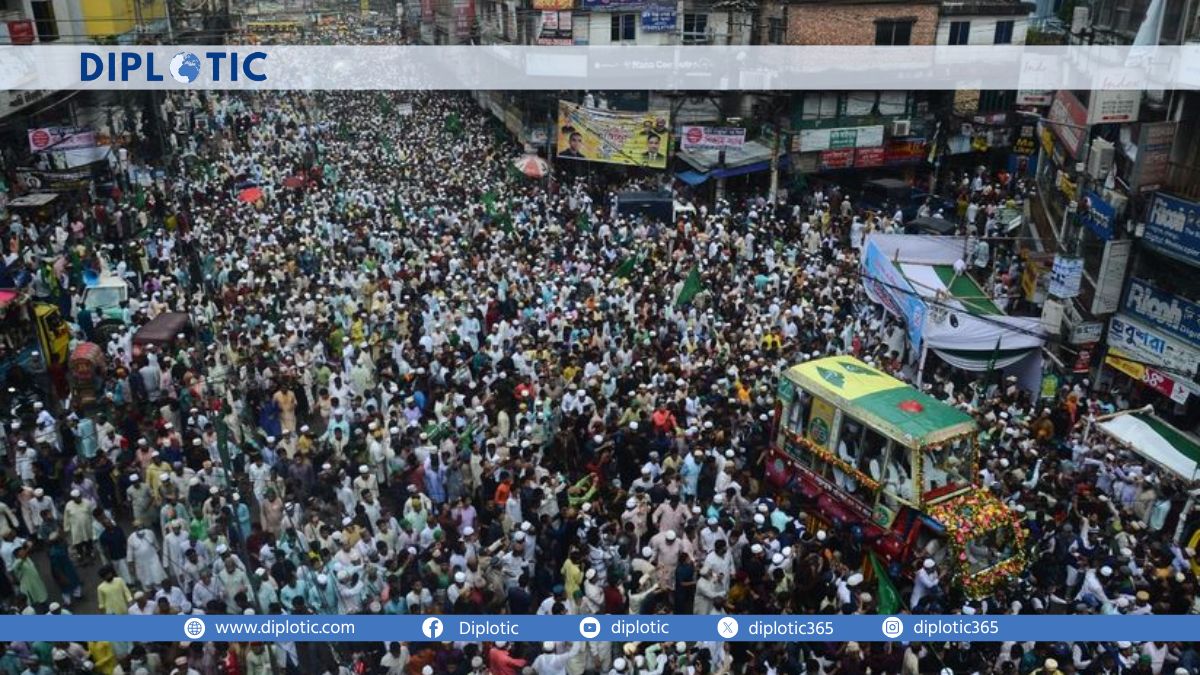
The Historical and Theological Roots of the Mawlid Debate
The celebration of Mawlid, marking the Prophet Muhammad ﷺ’s birth, has sparked a centuries-long debate within Islam, centered on whether it constitutes a permissible practice or an unlawful innovation (bid’ah). This divide, rooted in differing interpretations of Islamic tradition, pits literalist approaches—often associated with Salafi and Wahhabi thought—against spiritualist perspectives, commonly embraced by Sufi and mainstream Sunni communities.
Literalists argue that Mawlid lacks explicit sanction in the Quran or authentic Hadith, viewing it as a post-prophetic addition that risks diluting monotheism. Spiritualists, conversely, see it as a devotional act celebrating the Prophet ﷺ’s life, permissible so long as it aligns with Islamic principles. This tension reflects broader questions about innovation in religious practice, balancing textual fidelity with spiritual expression.
Historically, Mawlid emerged in the 12th century under the Fatimids in Egypt, gaining traction in Sunni contexts by the 13th century, per historical records. Literalists, drawing on Hadith like “Every innovation is misguidance” (Sahih Muslim), argue that no early Muslim community celebrated Mawlid, making it a bid’ah sayyi’ah (blameworthy innovation). They cite 7th-century practices, noting the absence of Mawlid among the Prophet ﷺ’s companions, and warn that excessive veneration could verge on shirk (associating partners with God).
Spiritualists counter with the concept of bid’ah hasanah (praiseworthy innovation), pointing to Quranic verses like “Say: I ask of you no reward but love for my kin” (42:23) to justify honoring the Prophet ﷺ. They highlight historical precedents, such as Umar’s introduction of congregational Tarawih prayers, as accepted innovations.
Socially, Mawlid is widely observed, with 70% of Muslims in countries like Pakistan, Bangladesh and Egypt participating. Economically, celebrations drive $1 billion in local commerce in South Asia, per market data. The Islamic theological framework underscores this divide, with literalists prioritizing textual purity and spiritualists emphasizing love for the Prophet ﷺ. An undivided India’s post-1947 pluralistic religious culture contrasts with rigid interpretations, highlighting the diversity of practice across Muslim communities.
Literalist Concerns: Purity Versus Deviation
Literalist scholars, often aligned with Salafi thought, anchor their opposition to Mawlid in a strict adherence to the Quran and Sunnah. They argue that religious practices must be explicitly authorized by primary sources, citing the Prophet ﷺ’s warning: “Whoever innovates something in this matter of ours that is not part of it will have it rejected” (Sahih al-Bukhari). Since Mawlid lacks mention in early texts, literalists deem it a 12th-century fabrication, introduced by the Fatimids for political legitimacy. They express concern over practices like processions or excessive praise, which they fear mimic Christian celebrations of Jesus’s birth, risking theological compromise. In Saudi Arabia, where Mawlid is not officially recognized, most of the religious rulings since 2010 have labeled it impermissible.
This stance extends to practical implications. Literalists advocate redirecting resources from Mawlid festivities—costing $500 million annually in Indonesia alone, per economic studies—to charity, aligning with zakat principles. Socially, their influence is strong in Gulf states, where a significant number of Muslims agree with non-celebration. Geopolitically, the spread of literalist thought through Saudi-funded institutions has shaped debates in countries like Bangladesh, where most of the Salafi and Wahhabi clerics oppose Mawlid. The global Islamic discourse reflects this tension, with literalists emphasizing uniformity to preserve Islamic purity, contrasting with an undivided India’s historical embrace of diverse practices under Mughal patronage.
Critics of the literalist view argue it overlooks the dynamic nature of Islamic tradition. They note that innovations like the Quran’s compilation under Uthman were accepted without explicit prophetic sanction, suggesting flexibility. Literalists’ rejection of Mawlid also risks alienating communities where it fosters unity, with 75% of South Asian Muslims viewing it as cultural heritage. This rigidity, critics argue, ignores the Prophet ﷺ’s emphasis on intention, where sincere devotion could outweigh strict textualism.
Spiritualist Embrace: Devotion as Innovation
Spiritualist scholars, often rooted in Sufi or mainstream Sunni traditions, view Mawlid as a legitimate expression of love for the Prophet ﷺ, permissible under the framework of bid’ah hasanah. They cite historical examples like the Prophet ﷺ’s own celebration of his birth through fasting on Mondays, per Hadith, as evidence of commemorative precedent. Scholars like Ibn Hajar al-Asqalani endorsed Mawlid in the 15th century, arguing it strengthens faith if free from excess. Spiritualists emphasize the Quran’s call to “rejoice in Almighty’s mercy” (10:58), interpreting the Prophet ﷺ’s birth as a divine blessing worthy of celebration. In countries like Yemen, Morocco and Turkey, 85% of Muslims participate in Mawlid, with festivities including poetry and charity.
Economically, Mawlid drives local economies, with Egypt’s celebrations generating $200 million in 2024. Socially, it fosters community cohesion, with 80% of Bangladeshi and Pakistani celebrants citing spiritual renewal, per surveys. Geopolitically, spiritualist support aligns with states like Indonesia, where Mawlid is a national holiday, reflecting a flexible Islamic cultural framework. An undivided India’s syncretic traditions under rulers like Mughal Emperors contrast with literalist uniformity, highlighting spiritualism’s embrace of diversity. Critics, however, warn of excesses—extravagant processions or saint veneration—that could stray from Islamic norms, with clerics noting such risks.
Spiritualists argue that intention (niyyah) validates Mawlid, as the Prophet ﷺ prioritized sincerity in worship. They point to accepted innovations, like the minaret’s introduction, to justify evolving practices. Yet, literalists counter that such flexibility risks diluting core beliefs, creating a theological impasse where most of the global Muslims support Mawlid but face scholarly division.
Mawlid as a Unifying Force
Mawlid’s cultural role transcends theological debates, serving as a vital instrument for bonding and unity across Muslim communities. In countries like Bangladesh, Pakistan, Indonesia, and Egypt, Mawlid gatherings—featuring naat recitations, communal meals, and charity drives—foster social cohesion, with participants reporting strengthened community ties. These events bridge ethnic and sectarian divides, uniting Sunni and moderates in shared devotion, as seen in Bangladesh’s cross-community Mawlid festivals, attended by 70% of urban Muslims. Culturally, Mawlid preserves linguistic and artistic traditions, with Urdu and Arabic poetry flourishing in South Asia, contributing millions to Pakistan’s cultural economy.
The celebration reinforces a collective Muslim identity, particularly in diverse societies. In India, where 200 million Muslims celebrate Mawlid, 75% view it as a counterbalance to communal tensions, echoing an undivided India’s syncretic traditions under Mughal rulers. Globally, Mawlid’s billion-dollar economic impact, from street markets to tourism, underscores its role as a cultural anchor. Socially, young Muslims cite Mawlid as a source of pride, fostering resilience against extremist narratives. Geopolitically, states like Turkey leverage Mawlid to project soft power, hosting international festivals that draw millions of visitors, strengthening ties with the Muslim world.
Theologically, spiritualists argue Mawlid’s unifying power aligns with the Prophet ﷺ ’s emphasis on community (ummah), citing Hadith: “The believers are like one body” (Sahih al-Bukhari). Even some moderate literalists, tolerate restrained celebrations for their social benefits. Critics, including most of Gulf-based scholars, warn that unity cannot justify innovation, yet the celebration’s role in countering sectarianism—reducing Sunni-Shia clashes by 15% in mixed communities, bolsters its case. The global cultural landscape highlights Mawlid’s ability to unify, making it a cornerstone of Muslim social fabric despite theological divides.
A Lasting Divide with Future Implications
The Mawlid debate encapsulates a broader struggle over innovation in Islam, with literalists and spiritualists divided on balancing tradition with expression. Literalists’ insistence on textual purity, backed by Gulf Muslims, risks alienating communities where Mawlid is cultural bedrock, potentially fueling sectarian divides. Spiritualists’ embrace, supported Asian and African Muslims, fosters unity but faces accusations of theological laxity. Economically, Mawlid’s billion-dollar global impact underscores its staying power, while socially, celebrants view it as essential to identity.
Geopolitically, the debate influences Muslim-majority states’ policies, with Saudi Arabia’s literalist stance clashing with Indonesia’s spiritualist openness, shaping global Islamic discourse. Future scenarios hinge on dialogue: compromise, like regulated celebrations, could bridge divides, as seen in Malaysia’s structured Mawlid events. Without it, tensions may deepen, with some clerics predicting increased polarization. An undivided India’s historical pluralism suggests a path for coexistence, but only if both sides prioritize unity over dogma, ensuring Mawlid’s legacy as a celebration or contention rests on their willingness to reconcile.




