
• About
  • Contact
  • Methodology
  • Violation Policy
  • Editorial Policy
  • Correction Policy
  • Privacy Policy
  • Reader Submissions
  • Our Team
  • Funding & Donors
Thursday, June 4, 2026
  • Home
  • Focus
    • Exclusive
    • Editor’s Pick
    • Behind the Curtain
  • Fact Check
  • Politics
  • Diplomacy
  • Economy
  • War & Conflict
  • South Asia
  • More
    • Games & Sports
    • Technology
    • Entertainment
    • History & Culture
    • Science & Technology
    • Nature & Environment
    • Health & Lifestyle
Bangla
Diplotic
No Result
View All Result
  • Home
  • Focus
    • Exclusive
    • Editor’s Pick
    • Behind the Curtain
  • Fact Check
  • Politics
  • Diplomacy
  • Economy
  • War & Conflict
  • South Asia
  • More
    • Games & Sports
    • Technology
    • Entertainment
    • History & Culture
    • Science & Technology
    • Nature & Environment
    • Health & Lifestyle
No Result
View All Result
Diplotic
Bangla
Home Politics

Meta Removes 90,000 Pro-Palestinian Posts Amid Israel Conflict

Umme Fatema Samia by Umme Fatema Samia
April 15, 2025
in Politics
Reading Time: 2 mins read
A A
0
Meta Removes 90,000 Pro-Palestinian Posts Amid Israel Conflict

Meta Removes 90,000 Pro-Palestinian Posts Amid Israel Conflict

0
VIEWS
Share on FacebookShare on Twitter

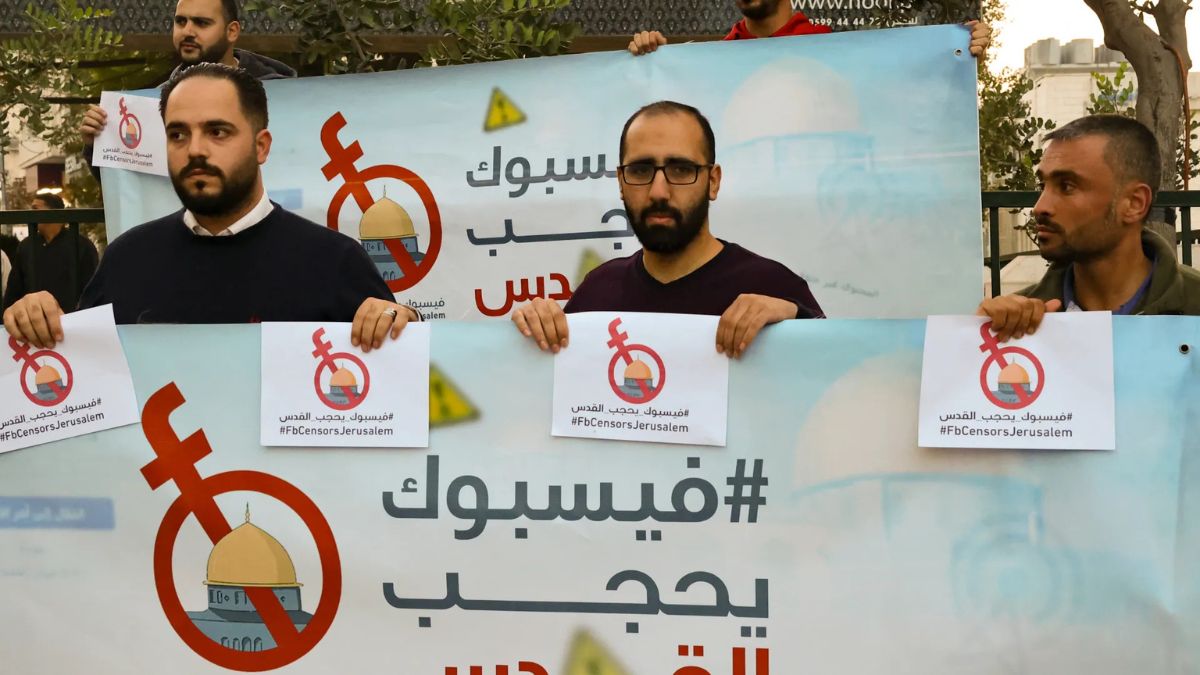
Meta removed more than 90,000 posts that expressed support for Palestinians or criticized the Israeli government. In the wake of the intensifying Israel-Palestine conflict, global tech giant Meta, the parent company of Facebook and Instagram is facing mounting criticism for censoring pro-Palestinian content. Human rights groups and digital freedom advocates are raising serious concerns after reports revealed that.

This large-scale content removal reportedly followed formal requests from the Israeli government after the October 7th escalation in Gaza. Shockingly, Meta is said to have approved nearly 94% of those takedown requests. While Meta defends its moderation policies as efforts to reduce harmful content and misinformation, critics argue that this level of compliance with political demands threatens the very essence of free speech and unbiased communication on social media.

Freedom of Expression or Political Obedience?

This controversy has sparked a global debate on the role of social media in politically charged conflicts. Meta, as one of the most powerful communication platforms on the planet, holds immense responsibility in safeguarding freedom of expression. When content moderation aligns too closely with the demands of a government, especially one involved in an ongoing conflict, it raises questions about the independence and neutrality of these platforms.

Digital rights organizations such as Access Now, Human Rights Watch, and others have sounded the alarm. They claim that Meta’s decisions have created a dangerous precedent: one where political influence can dictate what information is visible to the world, and which narratives are silenced. This, they argue, poses a serious threat to open discourse and democratic values online.

Suppression in the Name of Moderation

In the aftermath of violence in Gaza, the Israeli government reportedly flagged thousands of posts for removal — including eyewitness testimonies, expressions of solidarity, and independent reporting. Meta responded by taking down the overwhelming majority of this content, often citing violations of “community guidelines.”

For many Palestinians and their allies, the result has been digital erasure. Voices documenting injustice and humanitarian suffering are being silenced at scale, fostering a climate of fear and self-censorship online. Critics argue this selective enforcement favors Israeli narratives and marginalizes Palestinian perspectives.

Call for Transparency

As the backlash grows, advocacy groups are calling on Meta to adopt more transparent and accountable moderation practices. They demand the publication of clear data on takedown requests, especially those originating from governments, and independent audits of the company’s moderation decisions.

This control over digital storytelling  further entrenches structural inequality, making it harder for oppressed  communities to share their truths, document violations or rally global support.

Umme Fatema Samia

Umme Fatema Samia

Umme Fatema Samia is a Content Writer at Diplotic. She is currently pursuing an LLB at the University of Chittagong.

Blue Moon: The Rare Lunar Wonder

Blue Moon: The Rare Lunar Wonder

by Arjuman Arju
May 31, 2026

The night sky has always fascinated people with its countless stars, planets, and celestial events. Among these wonders, the Blue...

Fact Check: Does Consciousness Create Reality?

Fact Check: Does Consciousness Create Reality?

by Morium Jahan Setu
May 11, 2026

For more than a century, quantum mechanics has challenged humanity’s understanding of reality. Unlike classical physics, which describes a predictable...

How China, Russia, Turkey and Europe Are Responding to Iran War

The Impact of the US-Iran Conflict on Global Oil Prices and Economic Performance

by Sajjad Hossain Adib
May 11, 2026

Introduction The conflict between the United States and Iran is a central topic in global geopolitics. This enduring friction has...

Fact Check: AI-generated misinformation is destabilizing South Asian elections

Fact Check: Are “Clear Cache” Apps Actually Improving Phone Speed?

by Samshul Arefin
May 1, 2026

Every day, millions of smartphone users tap buttons labeled "Clean," "Boost," or "Speed Up" in third-party cleaning apps, hoping to...

DIPLOTIC

© 2024 Diplotic - The Why Behind The What

Navigate Site

  • About
  • Contact
  • Methodology
  • Violation Policy
  • Editorial Policy
  • Correction Policy
  • Privacy Policy
  • Reader Submissions
  • Our Team
  • Funding & Donors

Follow Us

No Result
View All Result
  • Home
  • Focus
    • Exclusive
    • Editor’s Pick
    • Behind the Curtain
  • Fact Check
  • Politics
  • Diplomacy
  • Economy
  • War & Conflict
  • South Asia
  • More
    • Games & Sports
    • Technology
    • Entertainment
    • History & Culture
    • Science & Technology
    • Nature & Environment
    • Health & Lifestyle

© 2024 Diplotic - The Why Behind The What


