

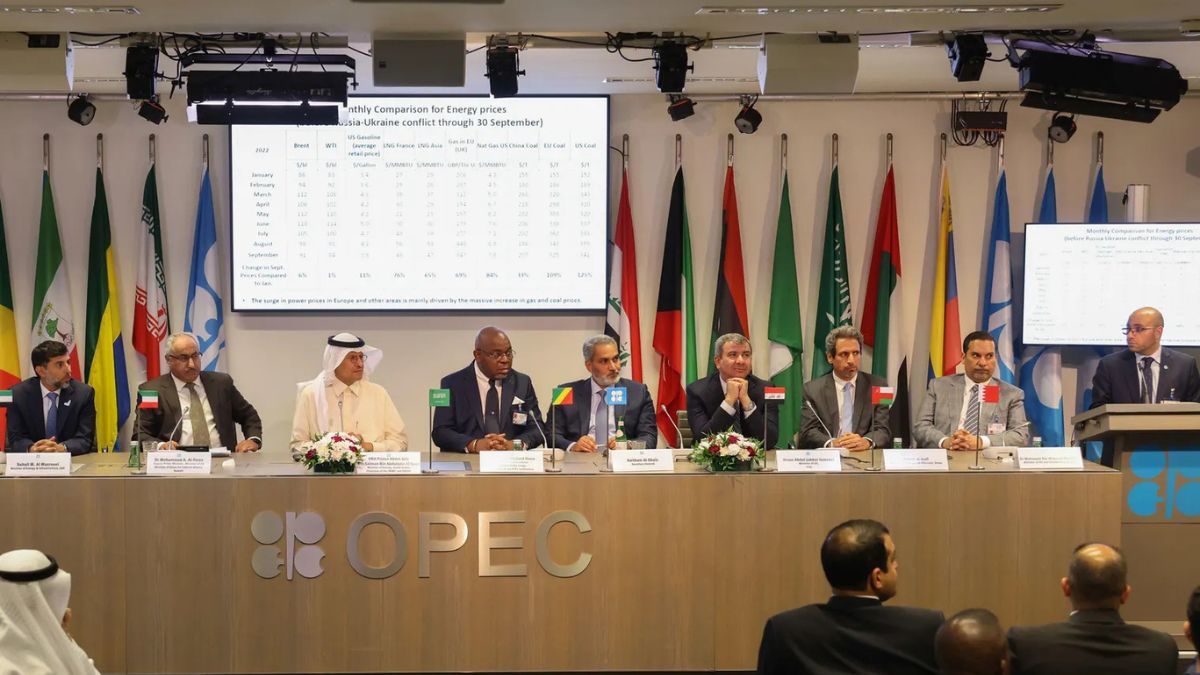
In a bold move echoing strategies from a decade ago, OPEC+ has initiated a calculated increase in oil output, aiming not just to rebalance global supply but to directly pressure the once-booming U.S. shale oil industry. Industry insiders now believe this could mark the start of a new economic showdown between traditional oil powerhouses and American producers.
While the cartel officially cited “healthy market fundamentals” and low oil inventories as reasons for the May 3 decision, interviews with 10 OPEC+ delegates and industry sources paint a more tactical picture.
A Familiar Battlefield: Targeting U.S. Shale… Again
Behind the diplomatic press releases, sources close to Saudi and Russian leadership reveal a second, more aggressive objective: reclaiming lost market share from U.S. shale.
“The idea is to inject uncertainty into U.S. producers’ investment plans,” said one insider briefed on Saudi strategy. “Prices below $60 per barrel make their business models less viable.”
Shale producers, once resilient during past oil wars thanks to rapid tech innovation and efficiency gains, are now more vulnerable. Inflation, higher drilling costs, and depleted prime reserves particularly in the Permian Basin have shifted the competitive landscape.
U.S. Shale Under Pressure
Unlike the last price war, U.S. shale companies are facing rising production costs and shrinking profit margins. According to the Dallas Federal Reserve’s latest survey, U.S. shale producers now need an average of $65 per barrel to turn a profit.
Compare that to Saudi Arabia’s $3-$5 per barrel production cost, or Russia’s $10-$20, and the imbalance becomes clear.
Recent activity reflects the mounting stress:
- The U.S. rig count dropped to its lowest since January.
- Diamondback Energy reduced its 2025 output forecast.
- ConocoPhillips warned that sub-$50 prices could force industry-wide cutbacks.
“We’re reaching a tipping point,” said Linhua Guan, CEO of Surge Energy America. “Top-tier inventory is drying up, and now OPEC+ is actively taking market share.”
A Shift in Strategy: Retaliation and Rebalancing
OPEC+ has historically acted as a market stabilizer, often cutting production to support prices. But after years of yielding market share to rising U.S. output, the group particularly Saudi Arabia and Russia appears ready to reverse course.
“It’s time to reclaim lost ground,” said one OPEC+ source.
That sentiment is backed by Russia’s alignment with Riyadh’s strategy, not just to punish over-producing allies like Iraq and Kazakhstan, but to strain the financial resilience of U.S. shale firms.
Interestingly, Russia may benefit even more from prices around $60, which align with the G7 price cap on Russian exports helping Moscow maintain volume despite Western sanctions.
Risky Game: When Price Wars Backfire
But this strategy is not without risk. While it could strain U.S. producers, a prolonged period of low oil prices would hurt OPEC+ members as well.
According to the International Monetary Fund:
- Russia needs oil at $77 per barrel to balance its budget.
- Saudi Arabia needs more than $90 per barrel.
Despite this, Saudi officials reportedly told allies they are prepared for short-term pain and may borrow to fund any budget gaps if prices hover around $60.
Market Outlook: Uncertainty Ahead
Global benchmark Brent crude, which stayed between $70–$80 per barrel through much of 2024, fell below $60 in April following the OPEC+ announcement and growing economic concerns.
That decline spells trouble for shale players already grappling with rising costs and investor wariness. Meanwhile, OPEC+ appears poised to absorb short-term losses in pursuit of long-term dominance.
Strategic Showdown or Mutually Assured Pain?
As the dust settles, one thing is clear: this isn’t just a routine output adjustment. OPEC+ is reasserting its influence, signaling that it’s willing to endure fiscal discomfort to challenge U.S. energy dominance and re-balance global oil power.
Whether this tactic leads to a renewed era of price wars or forces a recalibration of the shale industry, the outcome will reshape oil markets in the years ahead.




