

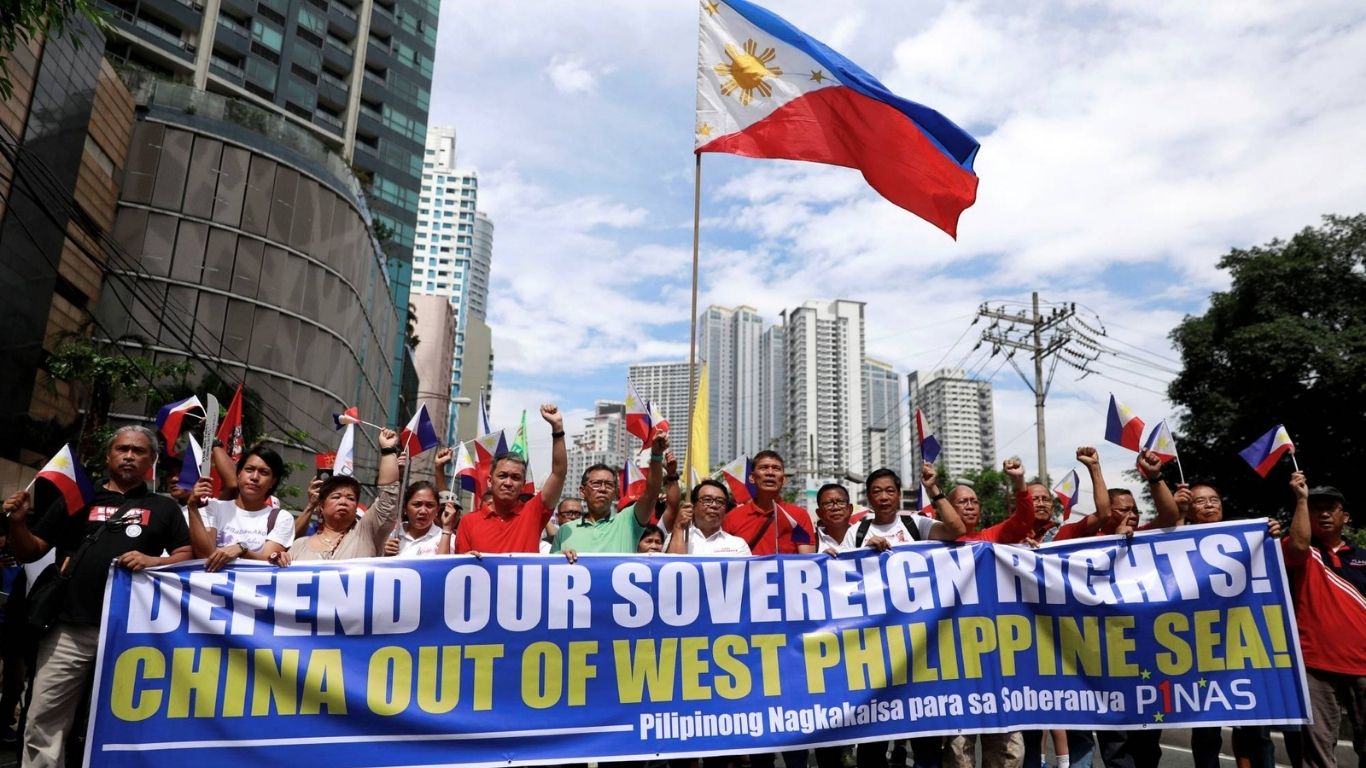
As Beijing intensifies its maritime ambitions under President Xi Jinping, regional anxiety is mounting, compelling countries like the Philippines to recalibrate their defense strategies and seek new security partnerships. The South China Sea has become the epicenter of a high-stakes geopolitical contest, where Southeast Asian nations are forced to navigate the turbulent waters of Chinese assertiveness and the shifting reliability of American engagement. This evolving landscape is not just about territorial claims it is about the future of regional order, strategic autonomy, and the balance of power in the Indo-Pacific.
The Philippines: From Passive Claimant to Proactive Defender
Disillusionment with ASEAN
For years, the Philippines and other ASEAN claimant states have looked to the regional bloc for collective action. However, ASEAN’s consensus-driven approach and internal divisions have rendered it largely ineffective in countering China’s incremental advances. The failure to implement even a non-binding Code of Conduct has left Manila disillusioned and determined to chart its own course.
Internationalizing the Dispute
Frustrated by ASEAN’s paralysis, the Philippines has moved to internationalize the South China Sea dispute. Manila’s landmark 2016 arbitration victory against China set a legal precedent, but Beijing’s refusal to recognize the ruling exposed the limits of international law without robust enforcement. Since then, the Philippines has doubled down on building security ties with like-minded partners, signaling a deliberate pivot toward a multilateral deterrence architecture.
Building a Multilateral Deterrence Network
Strategic Drills and Defense Partnerships
Philippines-Japan Naval Drills: In May 2025, the Philippines and Japan conducted their second round of joint naval exercises off Luzon, focusing on anti-submarine warfare, target tracking, and helicopter operations. These drills underscore shared concerns over China’s “grey-zone” tactics coercive actions that stop short of open conflict, such as the harassment of Filipino vessels at Scarborough Shoal.
Balikatan 2025: The annual US-Philippines Balikatan exercises have expanded dramatically, now featuring full-scale amphibious landings, integrated air-sea battle simulations, and operations across disputed waters. These maneuvers send a clear message: Manila is no longer content to be a bystander in the face of Chinese encroachment.
Broader Security Ties: The Philippines is also deepening military cooperation with Australia, France, India, and the EU, reflecting a strategic shift toward diversified partnerships and “minilateral” security frameworks.
Countering China’s Grey-Zone Tactics
China’s use of maritime militias and coast guard vessels often employing water cannons against Filipino fishing boats has made the South China Sea an increasingly volatile and contested environment. These actions are designed to alter the status quo incrementally, testing the resolve of regional actors while avoiding outright war.
China’s Response: Accusations and Warnings
Beijing views the Philippines’ evolving posture as a direct provocation. Chinese academics and officials have labeled the Philippines-Japan exercises as “military collusion” and accused Manila of manufacturing a “China threat” narrative. Others argue that the Philippines is weaponizing international law and deepening military ties with non-regional actors to sideline China diplomatically. Despite these criticisms, the underlying reality is that Manila’s actions are driven by structural shifts in the regional security environment, not by opportunism or external manipulation.
Structural Shifts: ASEAN’s Deficit and US Uncertainty
ASEAN’s Strategic Deficit
ASEAN’s inability to mount a united or effective response to Chinese assertiveness has left its members exposed. The bloc’s consensus-based decision-making and internal divisions have prevented it from prioritizing and securing the maritime interests of its most vulnerable members.
The Unpredictability of US Commitment
While the Philippines remains a formal US treaty ally, doubts about American reliability have grown, especially under the current US administration. The recent cancellation of a high-profile US carrier strike group port call in Vietnam and the review of the AUKUS submarine deal, have raised questions about Washington’s willingness and capacity to uphold its security commitments in the region. Symbolic military deployments are no longer enough to reassure regional partners.
Regional Hedging and the Rise of Minilateralism
In response to these uncertainties, Southeast Asian nations are hedging their bets. Manila is forging deeper ties with Japan, India, Australia, and France, reflecting a growing consensus that regional security cannot depend solely on the US. Japan’s expanding security role—through arms transfers, capacity building, and defense agreements exemplifies the rise of “minilateral” frameworks that prioritize flexibility and shared interests over broad, unwieldy alliances.
Risks and the Road Ahead
China’s grey-zone tactics and unmatched naval modernization continue to pose significant risks. Without an effective counterbalance, Beijing may be emboldened to further test the limits of regional resolve. However, the Philippines’ evolving strategy backed by a coalition of like-minded Indo-Pacific partners may signal the emergence of a new security paradigm. In this model, deterrence is decentralized, partnerships are diversified, and stability is maintained not by a single hegemon but by a resilient network of regional actors committed to a rules-based order.
Conclusion: A New Security Architecture for the Indo-Pacific?
The South China Sea remains an arena of enduring contestation, where the stakes are nothing less than the future of regional order and the credibility of international law. The Philippines’ assertive pivot, ASEAN’s strategic deficit, and the uncertainty of US commitment are driving a profound recalibration of security strategies across Southeast Asia. Whether this new architecture can deter aggression and preserve stability will depend on the willingness of regional actors to sustain cooperation and on the ability of external powers to adapt to a rapidly changing landscape. Failure to do so risks ceding strategic ground to China and accelerating the erosion of American influence in the Indo-Pacific.




