

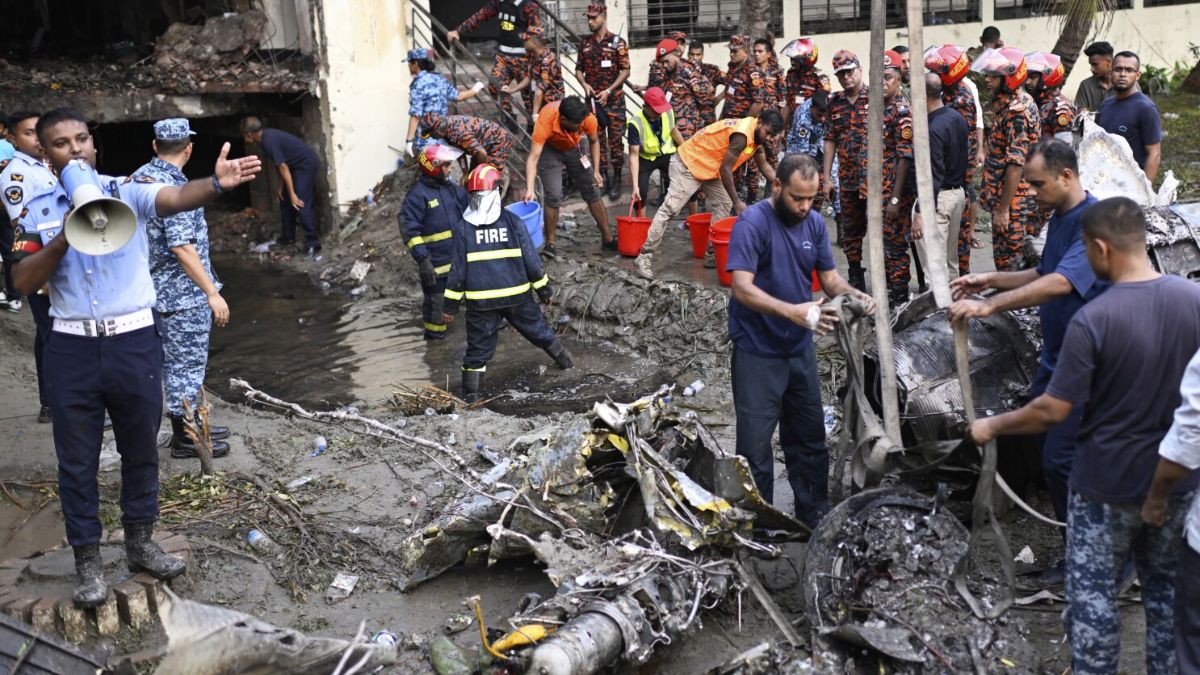
The Fragility of Air Travel
Every few seconds, a plane lifts off somewhere in the world, its passengers trusting that physics, engineering, and human vigilance will keep them safe until touchdown. Modern air travel is astonishingly safe — yet when a plane does fall from the sky, it leaves behind a crater far deeper than the impact zone. The wreckage becomes a stage for human grief — and, sometimes, a battleground for secrets that governments prefer to bury with the debris.
In the last fifty years, some of the world’s most notorious air disasters have carried suspicions of more than bad weather or pilot error. They have intersected with proxy wars, rival intelligence agencies, and bitter geopolitical rivalries. Beneath the tragedy lies an unsettling question: are some plane crashes just tragic accidents — or convenient covert acts that will never be fully explained?
Casualties Beyond the Crash
Globally, commercial aviation accidents have killed tens of thousands since the dawn of the jet age. But since the late 20th century, major crashes have become rarer — which only magnifies their impact when they do occur.
When Malaysia Airlines Flight MH370 vanished over the Indian Ocean in 2014 with 239 souls aboard, it sparked the biggest search in aviation history. Official explanations pointed to deliberate human action by someone on the flight deck — but the vacuum of answers fueled conspiracy theories: was the plane hijacked to cover intelligence leaks? Did it carry sensitive cargo? Was a foreign agency involved?
These theories thrive because intelligence agencies rarely speak publicly, while victims’ families remain trapped in an information void. “When the truth is withheld, rumor becomes oxygen,” noted an analyst in Foreign Policy.
Cold War and Aviation Espionage
Some of the earliest connections between plane crashes and espionage emerged during the Cold War. In 1960, American pilot Gary Powers was shot down in a U-2 spy plane over Soviet territory — triggering a diplomatic crisis that forced the US to admit its covert aerial surveillance program.
Civilian aircraft were not exempt. Korean Air Lines Flight 007, shot down by Soviet fighters in 1983, killed 269 people, including a US congressman. The Soviets claimed the plane was on an intelligence-gathering mission, straying deliberately into restricted airspace. The US used the tragedy to isolate the USSR diplomatically and boost funding for GPS technology, which was later opened to civilian use to prevent navigational “accidents.”
Covert Operations in Civilian Skies
Declassified CIA archives confirm the agency’s historic use of civilian-looking airlines as operational fronts. Air America, the most infamous example, flew agents and supplies during the Vietnam War, disguised as a commercial carrier. Its “passengers” included arms, spies, and occasionally political dissidents being discreetly relocated.
Mossad, Israel’s intelligence service, has reportedly used civilian flights for surveillance and rendition operations. The 1973 assassination of Palestinian leader Mahmoud Hamshari in Paris, and the follow-up pursuit of suspects across Europe, involved agents tracking targets through airports, blending with ordinary travelers.
According to The Diplomat, modern Chinese, Russian, and Western agencies still rely on airline routes to ferry operatives and gather electronic signals from on-board devices. A civilian aircraft is a Trojan horse that crosses borders daily, often unnoticed.
Unresolved Mysteries: Lockerbie and Beyond
Few incidents illustrate the murky overlap of aviation tragedy and covert warfare like Pan Am Flight 103. In December 1988, the Boeing 747 exploded over Lockerbie, Scotland, killing 270 people. Investigators blamed Libyan agents. But for years, alternative theories persisted: was the bombing retaliation for the downing of Iran Air Flight 655 by the US Navy earlier that year? Some allege intelligence failures or backroom deals to protect informants. The official files remain partly classified.
More recently, Ukraine International Airlines Flight 752 was shot down by Iran’s Revolutionary Guard in 2020 amid escalating tensions with the US. The 176 dead — mostly Iranian and Canadian citizens — became pawns in a diplomatic tug-of-war. Tehran blamed human error; some intelligence watchers argued that the plane’s downing sent a message of resolve to Washington at a moment when miscalculations could have ignited a wider conflict.
Cyber Skies: A New Frontier
Today, the fear of physical sabotage is matched by fears of digital hijacking. Foreign Policy and The Diplomat have both reported on hacking attempts targeting airline systems. While there is no verified case of a passenger jet brought down by a cyberattack, experts warn that the vulnerabilities are real — especially as avionics grow more connected. Intelligence agencies, from the CIA to China’s MSS, are rumored to probe such weaknesses to test future capabilities.
The Cost We Cannot Count
Most victims of these incidents are ordinary people — business travelers, students, families on holiday. Their deaths often serve as tragic reminders that even the safest mode of transport can be weaponized by geopolitics.
Each time a plane falls with suspicious circumstances, the question echoes: Who knew? Who benefited? And who is still keeping the final truth hidden behind classified seals?
As the world’s skies grow more crowded — and geopolitics grow more polarized — the fear is that the next aviation tragedy might again be more than just an accident. And when it happens, the black box will not always hold all the answers.




