

• About
  • Contact
  • Methodology
  • Violation Policy
  • Editorial Policy
  • Correction Policy
  • Privacy Policy
  • Reader Submissions
  • Our Team
  • Funding & Donors
Wednesday, July 22, 2026
  • Home
  • Focus
    • Exclusive
    • Editor’s Pick
    • Behind the Curtain
  • Fact Check
  • Politics
  • Diplomacy
  • Economy
  • War & Conflict
  • South Asia
  • More
    • Games & Sports
    • Technology
    • Entertainment
    • History & Culture
    • Science & Technology
    • Nature & Environment
    • Health & Lifestyle
Bangla
Diplotic
No Result
View All Result
  • Home
  • Focus
    • Exclusive
    • Editor’s Pick
    • Behind the Curtain
  • Fact Check
  • Politics
  • Diplomacy
  • Economy
  • War & Conflict
  • South Asia
  • More
    • Games & Sports
    • Technology
    • Entertainment
    • History & Culture
    • Science & Technology
    • Nature & Environment
    • Health & Lifestyle
No Result
View All Result
Diplotic
Bangla
Home Nature & Environment

Scientists Identify the World’s Largest Coral near Solomon Islands

Humaira Jannat Himu by Humaira Jannat Himu
November 20, 2024
in Nature & Environment
Reading Time: 3 mins read
A A
0
Largest Coral near Solomon Islands
0
VIEWS
Share on FacebookShare on Twitter

Coral reefs have captivated scientists and explorers for centuries. While the discovery of coral dates back approximately 500 million years, the modern era of exploration continues to yield surprising finds. In a remarkable development, researchers have identified what is now considered the largest coral in the world, a discovery that has astonished both the scientific community and the general public.

Discovery Details

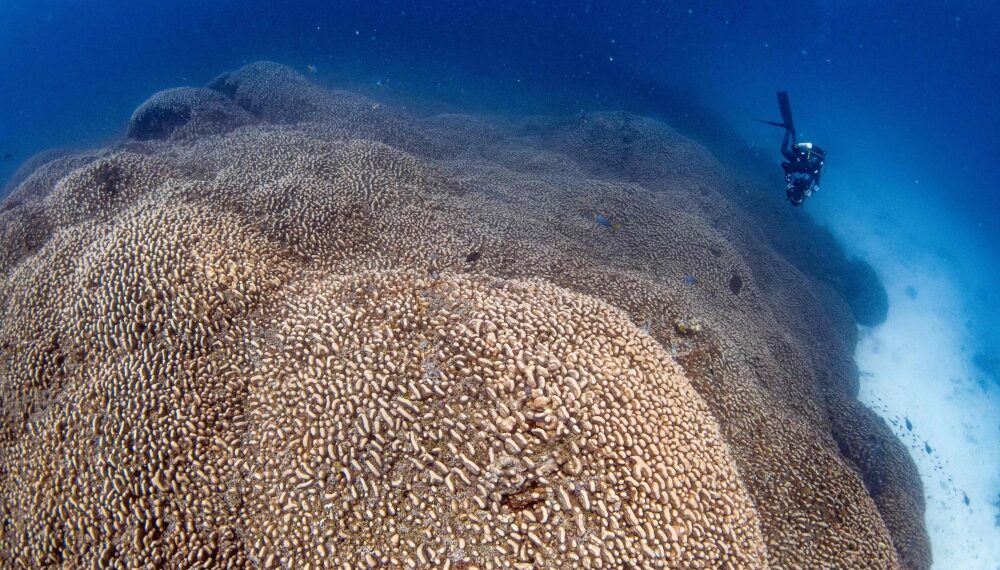
On October 24, 2024, a research team led by National Geographic uncovered the coral in an area known as the Three Sisters, located at the southeast end of the Solomon Islands. During their expedition, the team initially mistook the coral’s immense structure for debris from a wrecked ship. However, they soon realized the sheer magnitude of their find: the coral was not only intact but also exceeded all previously recorded corals in size.

This newfound coral is estimated to be three times larger than “Big Momma,” a prominent coral discovered in American Samoa. Molly Timmers, the lead scientist of the research team, described the comparison vividly:

“Big Momma is like a large scoop of ice cream, but this coral feels as if it will melt and flow across the ocean floor endlessly.”

A Monumental Discovery

The size of the coral is extraordinary—it surpasses a blue whale in length and is potentially visible from space. The coral’s structure is the result of approximately 300 years of continuous growth. It consists of a ❝Complex Network❞ of tiny polyps, which have intricately interwoven to create this massive reef system.

Environmental Significance

This coral discovery has ignited hope amidst concerns about the health of marine ecosystems. Eric Brown, one of the scientists involved, noted:

Finding such thriving corals in shallow waters, despite the challenges posed by warming oceans, is truly a symbol of hope.

The coral plays a critical role in preserving biodiversity in the Solomon Islands, providing essential habitats for various marine species. The Solomon Islands have historically served as a significant research site for evolutionary studies, including Charles Darwin’s work, which underscored the interconnectedness of ecosystems.

Collin Beck, a senior Solomon Islands official, emphasized the importance of this find:

There remains much to learn about the abundance of marine life and the ocean’s ecosystems, but this discovery serves as a gateway to greater understanding.

The Road Ahead

While the discovery is undoubtedly groundbreaking, it underscores the importance of continued scientific research. Understanding the intricacies of coral reefs is essential for preserving marine biodiversity and addressing the challenges posed by climate change.

This discovery reminds us that our oceans still hold countless mysteries waiting to be uncovered. Through sustained exploration, humanity can deepen its appreciation for the planet’s natural wealth and work towards its protection.


Tags: Environment
Humaira Jannat Himu

Humaira Jannat Himu

I’m currently pursuing a B.Sc in Computer Science and Engineering at BGC Trust University.

Baruipur: A Brutal Crime and the Politics of Silence

Baruipur: A Brutal Crime and the Politics of Silence

by Staff Reporter
July 11, 2026

Written by Tawsif Reza Chowdhury, a student of the Department of Economics, University of Chittagong On the recent 5th of...

Did Bangladesh Really Ban Hindus from Government Jobs?

Fact Check: Is Drinking Lemon Water Every Morning Actually Beneficial?

by Staff Reporter
June 18, 2026

For years, a simple morning habit has been wrapped in almost quiet promise: a glass of water mixed with lemon...

Global Economy Surges Amid Trade Turmoil, But for How Long?

Can the G7 Still Shape the Global Economy in a Multipolar World?

by Staff Reporter
June 18, 2026

For nearly five decades, the Group of Seven was widely viewed as the steering committee of the global economy. Decisions...

gold

Has the EU Outsourced Its Economic Sovereignty?

by Staff Reporter
June 18, 2026

Europe spent decades promoting open markets as a path to shared prosperity. Trade barriers fell, production networks stretched across continents,...

DIPLOTIC

© 2024 Diplotic - The Why Behind The What

Navigate Site

  • About
  • Contact
  • Methodology
  • Violation Policy
  • Editorial Policy
  • Correction Policy
  • Privacy Policy
  • Reader Submissions
  • Our Team
  • Funding & Donors

Follow Us

No Result
View All Result
  • Home
  • Focus
    • Exclusive
    • Editor’s Pick
    • Behind the Curtain
  • Fact Check
  • Politics
  • Diplomacy
  • Economy
  • War & Conflict
  • South Asia
  • More
    • Games & Sports
    • Technology
    • Entertainment
    • History & Culture
    • Science & Technology
    • Nature & Environment
    • Health & Lifestyle

© 2024 Diplotic - The Why Behind The What

