

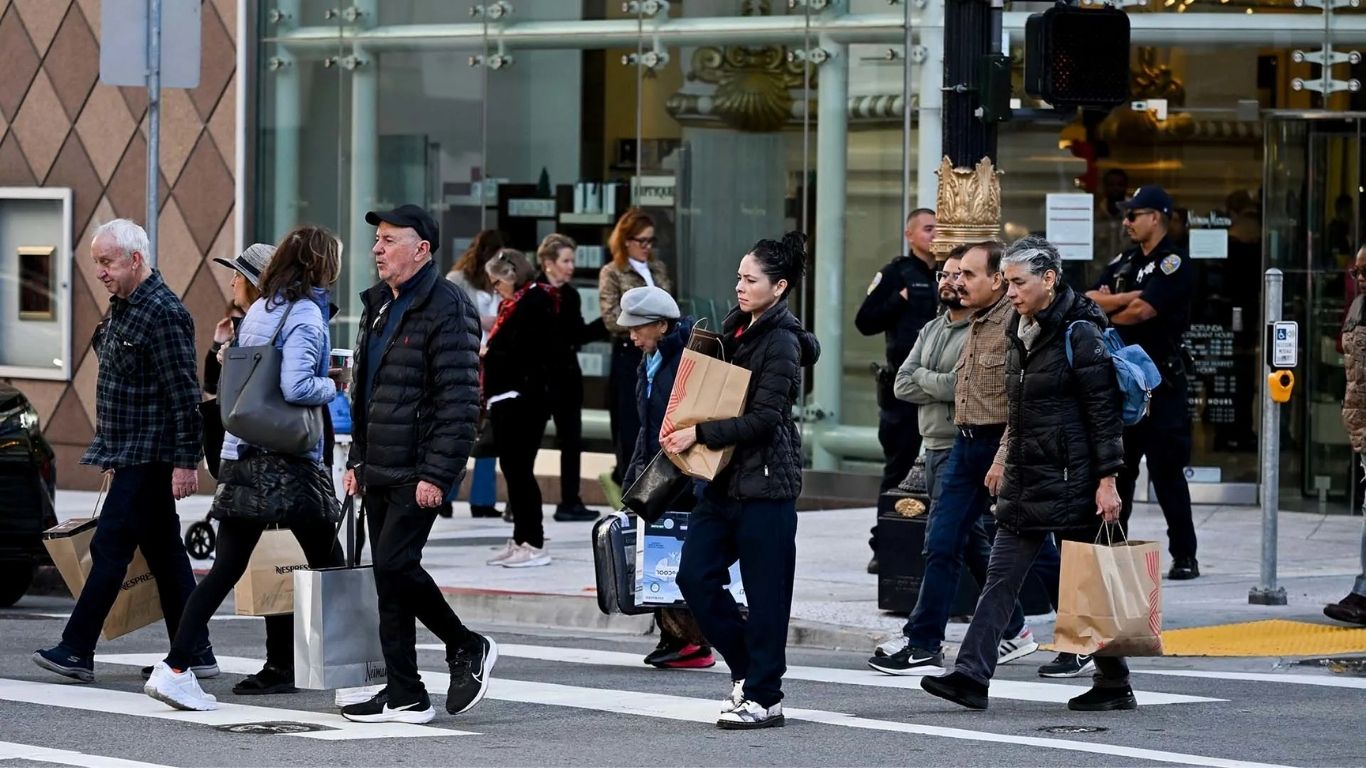
American consumers are showing remarkable resilience in the face of persistent inflation worries and President Donald Trump’s aggressive tariff policies. While consumer sentiment has dipped due to uncertainty surrounding the ongoing trade war, spending habits have remained strong, allowing the U.S. economy to continue powering forward. With unemployment low, corporate maneuvering keeping inflation at bay, and retail sales rising, the American consumer remains the backbone of the nation’s economic growth.
Inflation Concerns Rising, but Consumer Spending Holds Strong
Recent surveys show that Americans are increasingly nervous about inflation. The University of Michigan’s consumer sentiment index fell 5% this month to a reading of 58.6, its first decline in four months. Consumers reported heightened expectations for rising inflation and unemployment in the months ahead.
Despite these concerns, consumers are still spending. According to the Commerce Department, U.S. retail sales rose 0.5% in July, in line with economists’ forecasts. Gains were particularly strong in categories such as automobiles (+1.6%), furniture (+1.4%), and online sales (+0.8%), fueled by events like Amazon’s Prime Day. Even after adjusting for inflation, consumer spending increased 0.3% in July, reinforcing the critical role of household demand in driving the economy.
Businesses Cushion the Impact of Tariffs
One of the reasons inflations hasn’t surged as expected is that U.S. businesses have been absorbing many of the costs from Trump’s sweeping tariffs. The Federal Reserve Bank of Richmond reported that companies are using several strategies to blunt the effects of higher import costs.
These include:
- Delaying inventory orders to time shipments around tariff deadlines.
- Negotiating cost-sharing agreements with suppliers and customers.
- Stockpiling inventory earlier in the year to avoid sudden price spikes.
- Holding workforce levels steady, avoiding layoffs to preserve consumer spending power.
This tactical maneuvering has shielded consumers from higher prices in the short term. But with the Producer Price Index (PPI) a key measure of business input costs jumping 0.9% in July and 3.3% year-over-year, economists warn that consumer inflation could soon accelerate.
Strong Labor Market Supports Spending Power
A major factor keeping consumer spending healthy is the strength of the U.S. labor market. Unemployment remains low at 4.2%, with businesses largely refraining from layoffs despite tariff pressures. Weekly jobless claims also remain near historic lows, according to Labor Department data.
This job security provides Americans with confidence to continue spending, even as they voice concerns about rising prices. As Chris Zaccarelli, chief investment officer at Northlight Asset Management, explained, “As long as consumer spending holds up and companies are able to retain workers because of that robust spending, the flywheel can continue to spin, pushing corporate profits and stock prices higher.”
Consumer Sentiment vs. Actual Spending
Economists note a disconnect between consumer sentiment and actual spending behavior. Historically, consumer confidence surveys have not been strong predictors of household expenditures. For example, sentiment fell to record lows in 2022 amid 40-year-high inflation, yet consumer spending continued unabated. Similarly, in 2023, worries about a debt ceiling standoff dragged sentiment lower, but Americans kept buying goods and services.
This pattern seems to be repeating in 2025. While consumers may be anxious about Trump’s trade war and inflation, their actions at the checkout counter suggest otherwise.
Bill Adams, chief economist at Comerica Bank, summed it up: “What consumers do is more important to the economy than what they say.”
Retail Trends: Winners and Losers
The latest retail sales data reveal both strengths and weaknesses across categories:
- Winners: Auto dealerships, furniture stores, online retailers, gas stations, and department stores saw healthy gains in July.
- Losers: Spending fell at home improvement stores (-1%), electronics retailers (-0.6%), and restaurants and bars (-0.4%), suggesting some consumers may be cutting back on discretionary purchases.
The “control group” of retail sales a measure that excludes volatile categories like autos and gas rose 0.5%, beating economists’ forecasts. This indicates underlying consumer demand remains solid, despite selective cutbacks.
The Road Ahead: Can Resilient Spending Last?
The critical question now is how long U.S. consumers can keep spending at this pace. Rising producer costs from tariffs are starting to trickle into prices, and inflation expectations are climbing, with Americans now anticipating 4.9% inflation over the next year, up from 4.5% in July.
If businesses can no longer absorb costs, higher consumer prices may eventually slow demand. Still, the combination of a strong job market, robust savings, and continued corporate strategies may delay the impact.
For now, household consumption which accounts for about 70% of U.S. GDP remains the engine of economic growth. Retailers, manufacturers, and Wall Street alike are betting that Americans will continue to open their wallets, even as inflation concerns linger.
Bottom Line
The U.S. economy is caught between growing inflation worries and resilient consumer spending. While President Trump’s tariffs and trade war policies have unsettled businesses and consumers alike, households are still spending enough to keep growth alive. Businesses’ ability to manage costs, coupled with low unemployment, has kept inflation relatively contained at least for now.
If consumer demand remains strong, corporate profits and stock prices may continue to climb. But with producer costs rising and inflation expectations edging higher, the coming months will test just how long American consumers can remain the economy’s stabilizing force.




