Tehran is more than just Iran’s capital; it is a microcosm of the country’s challenges and hopes. Its strategic location, youthful population, and cultural vibrancy make it a city that shapes and is shaped by the fate of the nation. As the world watches events unfold, Tehran stands as a testament to both the vulnerability and the enduring spirit of Iran.
As missile strikes and air raid sirens echo through Tehran, the world’s attention is once again focused on Iran’s sprawling, vibrant, and embattled capital. With a population of nearly 17 million in its metropolitan area, Tehran is not just the political and economic engine of Iran it is the beating heart of a nation facing both external threats and internal challenges.
Where Is Tehran?
Tehran sits in northern Iran, a country of 90 million people and a landmass larger than the UK, France, Germany, and Spain combined. The city is nestled at the foot of the Alborz mountains, whose snow-capped peaks, including the towering Mount Damavand, form a dramatic northern backdrop. To the south, the landscape descends into arid plains and deserts, with the salt basin Namak Lake and the vast Dasht-e Kavir stretching far beyond.
The city’s elevation varies significantly, from 1,700 meters in the north to 1,100 meters in the south, creating microclimates within the city and a unique urban geography. Tehran’s proximity to geological fault lines also leaves it vulnerable to earthquakes, though it has avoided major casualties in recent years.
A City of History and Modernity
While the area around Tehran has seen human settlement for over 6,000 years, the city only became Iran’s capital in 1906 after the Constitutional Revolution. Since then, Tehran has grown into a metropolis that rivals Cairo and Istanbul in size, with a population of 9.5 million in the city proper and 16.8 million in the wider metropolitan region.
Tehran’s urban landscape is a blend of the old and the new. The city center is marked by historic mosques, religious schools, and the bustling central bazaar, while newer neighborhoods and suburbs, especially in the south and west, have absorbed once-separate towns. The city’s 22 districts are crisscrossed by boulevards, expressways, and the famous Valiasar Boulevard, which runs north to south and is lined with shops, cafes, and protest sites.
Who Lives in Tehran?
Tehran is a young city, with an average age of just 32. The vast majority of its residents are Shia Muslims, mostly of the Twelver branch, but the city is also home to significant Kurdish and Azerbaijani communities. Decades of upheaval, revolution, war, and migration have shaped its demographics. Many fled westward during the 1979 Revolution and the Iran-Iraq War, while waves of Afghan refugees arrived after the Soviet invasion of Afghanistan and later U.S. military actions.
Economic and Cultural Hub And a Target
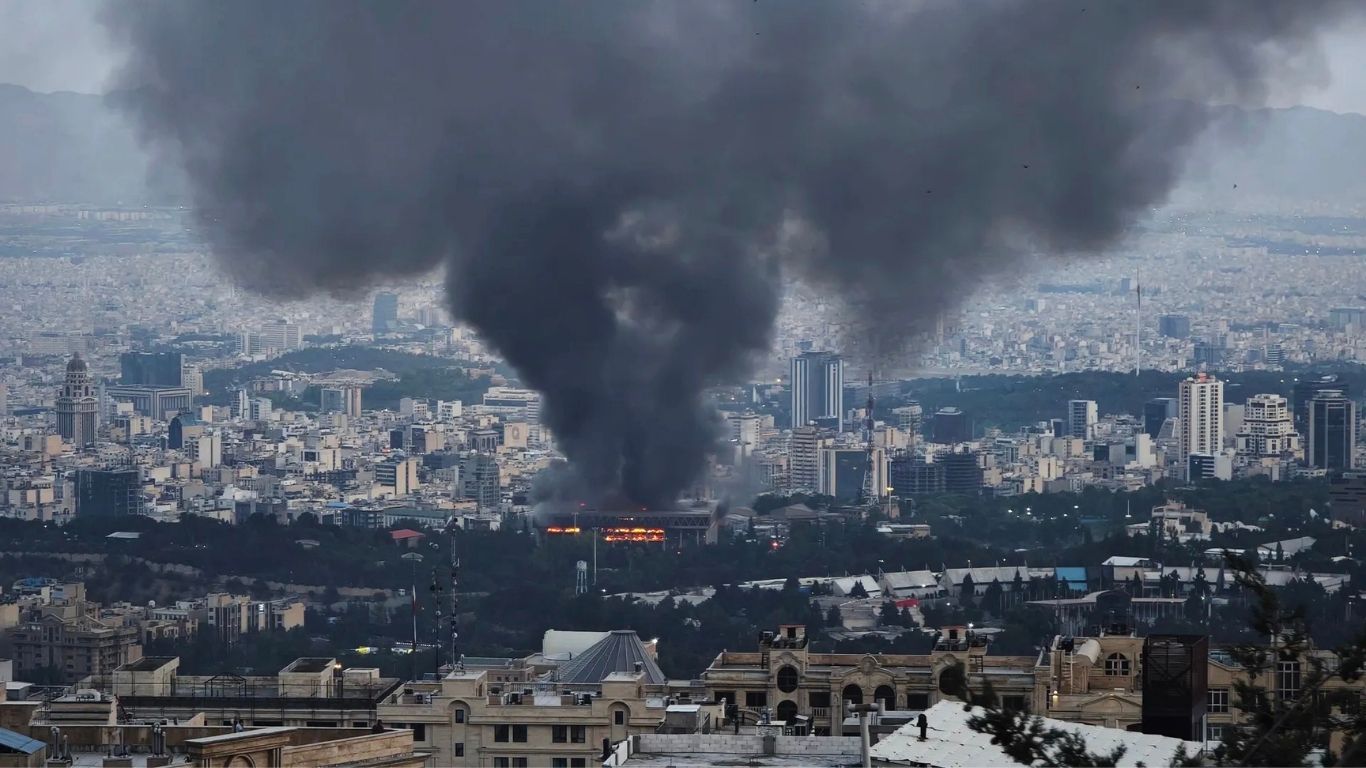
Tehran dominates Iran’s economic, political, administrative, and cultural life. Its streets are home to the country’s most important government offices, financial institutions, and cultural landmarks. But this centrality has also made it a target. Since June 2025, Israeli attacks have struck both military and civilian infrastructure, including the Atomic Energy Organisation and the Tehran Research Reactor, both located near residential neighborhoods. Central districts such as Kamranieh, Lavizan, Tehran-Pars, and Narmak have all been hit, forcing many residents including foreigners to flee to cities north of the mountains, such as Amol, Babol, and Sari.
Infrastructure and Daily Life
Despite its size and importance, Tehran’s infrastructure has struggled to keep pace with its growth. The city is notorious for its traffic congestion and severe air pollution, especially during the colder months when smog becomes a health hazard. Geography plays a role: the Alborz mountains trap polluted air, while the high number of older vehicles on the roads exacerbates the problem.
The subway system, launched in 1999 and now one of the largest in the region, carries over three million passengers daily. In the current crisis, its tunnels have become makeshift bomb shelters, echoing their use during the Iran-Iraq War in the 1980s.
A City of Contrasts
Tehran is a city of striking contrasts. The affluent northern districts, favored for their cooler climate and mountain views, offer better services and lower population density. In contrast, the southern neighborhoods are denser and less affluent, reflecting the city’s economic divides. Land prices soar along major routes like Valiasar Boulevard and Enqelab Street, the latter forever linked to the 1979 Revolution and ongoing protests.
Tehran’s Resilience
Throughout its tumultuous history, Tehran has endured revolution, war, sanctions, and now renewed conflict. Its people have adapted, finding ways to survive and even thrive amid adversity. Today, as missile strikes disrupt daily life and memories of past wars resurface, Tehranis once again display resilience and determination.