

A Surprising Overture in a Time of Crisis
On August 15, 2025, as the U.S. president prepared to meet the Russian president in Anchorage, Alaska, an unexpected voice emerged: a former Secretary of State and 2016 presidential candidate who declared she would nominate her former rival for a Nobel Peace Prize if he could end the Russia-Ukraine war without conceding Ukrainian territory. Speaking on a podcast, she stated that such a deal must avoid validating Russia’s expansionist vision and instead enforce a ceasefire that upholds Ukraine’s sovereignty. This conditional endorsement, a striking departure from their long-standing rivalry, underscores the high stakes of the Alaska summit and the broader geopolitical tensions surrounding Ukraine’s struggle.
The statement reflects a deep understanding of the war’s complexities, gained during her tenure as Secretary of State from 2009 to 2013, when Russia’s growing assertiveness, including the 2008 invasion of Georgia, foreshadowed later conflicts. Her support hinges on achieving a near-impossible diplomatic feat: a peace deal that aligns with Ukraine’s insistence on territorial integrity and NATO aspirations, demands that Russia has consistently rejected, as noted in analyses of Russia’s strategy. The summit, held at a military base in Anchorage, marks the first face-to-face meeting between the two leaders since 2021. The U.S. president’s campaign rhetoric, promising a swift end to the war, has fueled speculation about concessions, making the endorsement both an incentive and a challenge to prioritize Ukraine’s sovereignty over a symbolic victory.
Historically, U.S.-Russia summits have been pivotal, from the tense 1961 Kennedy-Khrushchev meeting to the 1988 Reagan-Gorbachev talks, which shaped global stability, as documented in archival records. The exclusion of Ukraine’s president from the summit has drawn criticism, with warnings that agreements without Kyiv’s input are doomed to fail. European leaders have echoed this, emphasizing that Ukraine’s territorial integrity is non-negotiable. The endorsement thus serves as a call for a deal that defies historical patterns of great powers dictating smaller nations’ fates, a risk heightened by ongoing Russian strikes on Ukrainian cities like Dnipro and Sumy.
The Geopolitical and Domestic Calculus
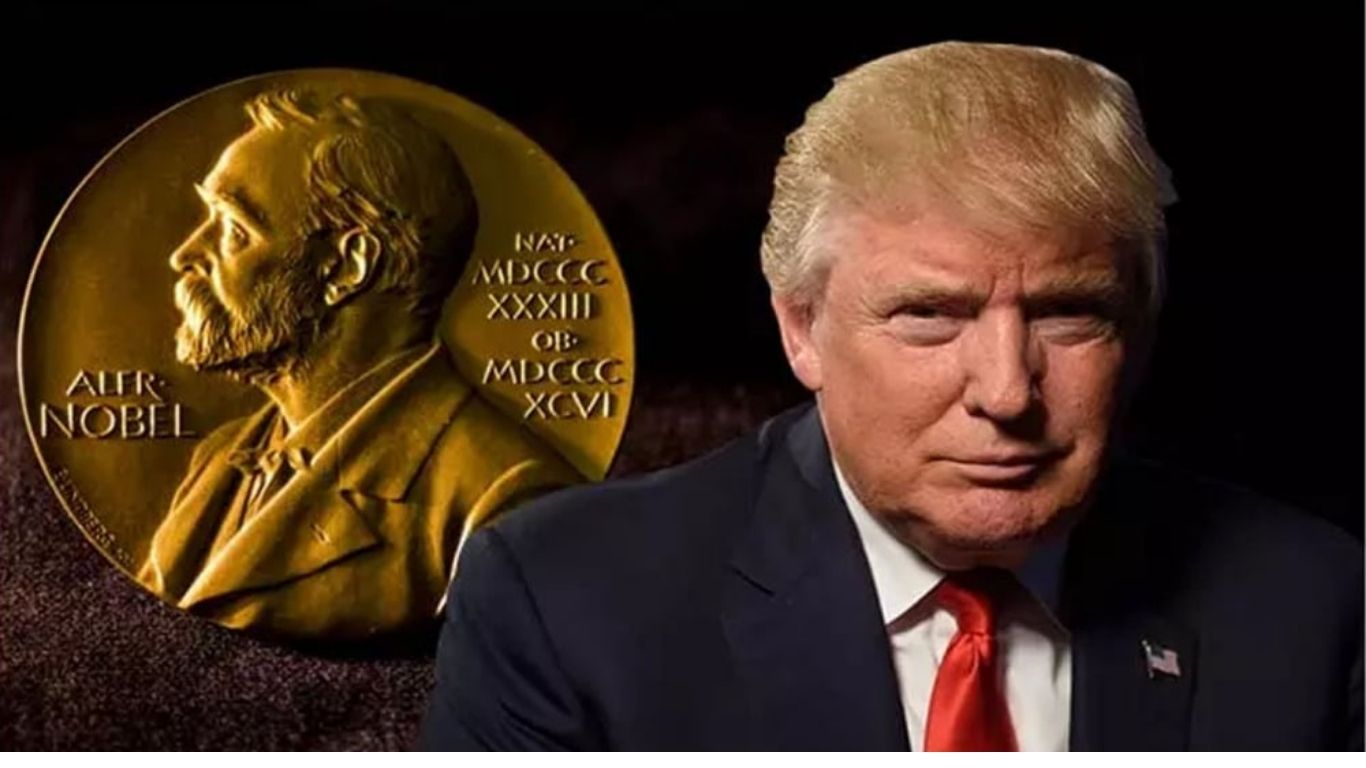
The endorsement is more than rhetorical; it reflects the interplay of domestic politics and global strategy. The U.S. president’s pursuit of the Nobel Peace Prize, awarded to a predecessor in 2009, has been a recurring theme, with nominations already secured from leaders in Pakistan, Cambodia, and Israel for roles in conflicts like the 2025 India-Pakistan ceasefire. Reports of a call to Norway’s prime minister about nomination processes reveal a personal ambition that could shape the summit’s approach. The endorsement sets a high bar: a peace deal that forces Russia to withdraw from occupied territories like Donetsk without territorial swaps, a scenario Ukrainian commanders dismiss as unlikely given Russia’s battlefield tactics.
Ukraine’s exclusion from the summit has sparked concerns, with its president warning against ceding land to Moscow. European leaders, including those from France and Germany, have rallied behind Kyiv, stressing that borders must not be redrawn by force. The endorsement aligns with this stance, reflecting lessons from the 1994 Budapest Memorandum, where Ukraine relinquished nuclear weapons for security guarantees that later proved hollow, as analyzed in discussions of broken agreements. The proposer’s experience navigating U.S.-Russia relations during an earlier administration’s “reset” attempt informs her insistence on a ceasefire and Russian withdrawal, a position that challenges the summit’s bilateral format.
Domestically, the endorsement could reshape the U.S. president’s narrative. A successful deal could bolster his image as a peacemaker, overshadowing controversies like proposed federal police takeovers. However, the lack of a confirmed U.S. ambassador to Russia and the departure of seasoned diplomats suggest a reliance on improvisation over expertise, a concern raised by critics. The proposer’s remarks, while strategic, carry political risk, given her past criticisms of her rival’s stance on Russia. Her comments have sparked polarized reactions, with some praising her pragmatism and others dismissing her conditions as unrealistic, reflecting deep divisions in political discourse.
The Future of Peace and Power
The summit’s outcome will test whether dealmaking can deliver a breakthrough or deepen the Ukraine crisis. The endorsement frames the challenge starkly: a peace deal must halt Russia’s aggression and restore Ukraine’s pre-2022 borders, a prospect complicated by Russia’s entrenched position. Russian strikes on Ukrainian civilians on the summit’s eve underscore Moscow’s unwillingness to de-escalate, as a Ukrainian officer noted: “They promise one thing and do another.” The criteria for nomination—a ceasefire, no territorial concessions, and Russian withdrawal—align with Ukraine’s demands but clash with Russia’s vision, making a Nobel-worthy deal elusive.
The broader implications extend beyond Ukraine. A deal that appeases Russia could weaken NATO, embolden authoritarian regimes, and destabilize global energy and grain markets strained by the war. Conversely, a failure to reach an agreement could escalate tensions, with threats of “severe consequences” potentially leading to new sanctions or military posturing. The Arctic setting of the summit, with Alaska’s historical ties to Russia, highlights strategic interests in new shipping routes and resources. The endorsement serves as a reminder of the moral and strategic stakes: a peace that sacrifices Ukraine’s sovereignty would undermine the post-Cold War order, while a deal that upholds it could redefine a legacy. As Anchorage hosts this encounter, the prospect of a Nobel Prize remains distant, but the call for a just peace underscores the challenge of balancing power and principle in a fractured world.




