

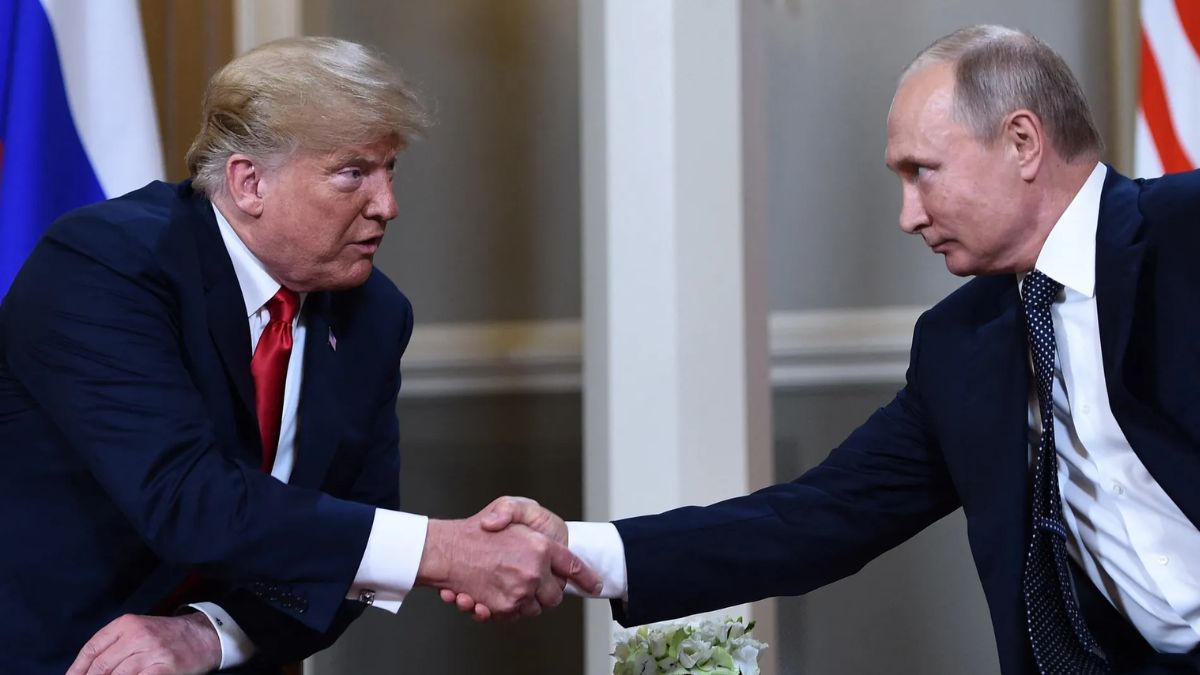
U.S. President Donald Trump is set to hold a direct meeting with Russian President Vladimir Putin in Alaska today, August 15, 2025, in what many see as a critical moment for the ongoing conflict between Russia and Ukraine. This gathering at Joint Base Elmendorf-Richardson near Anchorage could shape the path forward for peace talks, influence security across Europe, and test Trump’s skills as a negotiator on the world stage. With both leaders bringing their own goals to the table, the outcome remains uncertain, but the stakes could not be higher for Ukraine, its allies, and global stability.
Background on the Russia-Ukraine Conflict
The war between Russia and Ukraine began in February 2022 when Russian forces launched a full-scale invasion, citing concerns over NATO expansion and alleged threats to its security. What started as a quick operation for Moscow has turned into a prolonged struggle, marked by heavy fighting, widespread destruction, and significant human suffering. As of mid-2025, Russia controls about 20% of Ukrainian territory, including much of the Donetsk and Luhansk regions in the east, as well as Crimea, which it annexed in 2014.
Recent months have seen intensified military actions. In July and early August 2025, Russian forces captured an additional 241 square miles of land, pushing forward in key areas like Donetsk, where advances near Dobropilia have put pressure on Ukrainian defenses. Ukraine has responded with bold moves, such as drone strikes on Russian infrastructure, including a major oil refinery in Volgograd on August 14. Both sides exchanged 84 prisoners each on the same day, the 67th such swap since the war began, offering a rare glimpse of cooperation amid the violence.
The conflict has exacted a heavy toll. Civilian casualties reached their highest level in July 2025, with over 200 deaths reported from Russian missile and drone attacks—535 such projectiles targeted Ukraine in the week of August 7-13 alone, though Ukrainian forces intercepted nearly two-thirds. Military losses are staggering: estimates suggest hundreds of thousands of soldiers killed or wounded on both sides. Economically, Ukraine’s infrastructure has been devastated, with cities like Kharkiv and Odesa facing constant bombardments, while Russia’s economy strains under sanctions but benefits from oil sales to countries like India.
This backdrop sets the stage for the summit. Trump’s administration has shifted from initial reluctance to impose harsher measures on Russia to more direct pressure, including threats of tariffs on Russian energy buyers. Meanwhile, Putin has maintained that Russia’s aims—preventing Ukraine’s NATO membership and securing territorial gains—remain firm.
The Summit: Agenda and Format
The meeting kicks off with a one-on-one session between Trump and Putin, followed by discussions with their teams and a working breakfast. A joint press conference is planned afterward, where the leaders may outline any agreements or next steps. Trump has described this as a “feel-out meeting” to gauge Putin’s intentions, but he has also hinted at broader ambitions, saying in a recent interview, “I want a broad peace deal done quickly.”
One key element is the potential for a follow-up that includes Ukrainian President Volodymyr Zelenskyy. Trump mentioned this possibility on August 13, suggesting it could happen soon, even before leaving Alaska—though Russia has not committed. Zelenskyy, excluded from today’s talks, has stressed that any deal must involve Ukraine directly, rejecting ideas that violate its sovereignty. “Any decisions without Ukraine are decisions against peace,” Zelenskyy stated earlier this week.
Discussions may touch on ceasefire terms, with Putin linking any halt in fighting to stops in Western arms to Ukraine and limits on Kyiv’s military buildup—demands Kyiv and its allies have dismissed. Trump has floated “some swapping of territories” as part of a solution, an idea that has alarmed Ukraine and Europe, as it could legitimize Russia’s occupation of areas like Donetsk and Luhansk in exchange for withdrawals from Kherson and Zaporizhzhia.
Risks Facing Trump
For Trump, this summit carries substantial dangers. By hosting Putin on U.S. soil—the first such visit since 2015—he risks appearing to reward a leader isolated internationally since the 2022 invasion. The International Criminal Court issued an arrest warrant for Putin in 2023 over war crimes allegations, though the U.S. does not recognize it. Critics argue this move undermines the West’s stance of supporting Ukraine without concessions to aggressors.
Trump’s past interactions with Putin, including the 2018 Helsinki summit where he seemed to side with Russian denials of election interference, add to the skepticism. Retired diplomat Ian Kelly, who served as U.S. ambassador to Georgia, warned, “There’s no upside for the U.S., only for Putin.” If no progress emerges, Trump could face backlash at home, where polls show mixed support for his approach to the war. With U.S. antagonists like China, Iran, and North Korea watching closely, any perceived weakness could embolden them, as noted by analyst Andrea Kendall-Taylor: “They’ll be checking if Trump’s threats against Putin hold up or if he backs down again.”
On the domestic front, the summit diverts attention from other issues, like economic policies or ongoing debates over tariffs. If Trump pushes Zelenskyy toward unpopular terms, it could strain alliances with Europe, where leaders held urgent calls with U.S. officials last week to ensure a united front.
Opportunities for Putin
Putin views the summit as a win already. Isolated since the invasion, with limited travel to non-allied nations, this meeting restores some legitimacy to his position. Russian commentators like Dmitry Suslov have celebrated it as a chance to “deepen a trans-Atlantic rift and weaken Europe’s position.” Putin aims to lock in Russia’s gains, block Ukraine’s NATO path, and draw it back under Moscow’s influence.
Recent battlefield successes bolster Putin’s hand. Russian troops have made steady progress in eastern Ukraine, while drone swarms and missile barrages keep Ukrainian forces on the defensive. Putin praised Trump’s “sincere efforts” to end the war on August 14, signaling openness to talks that align with Russia’s terms. A deal could ease economic pressures on Russia, which has boosted its army size despite sanctions, and allow focus on other fronts, like countering NATO’s Arctic presence.
Geopolitical Ramifications
Beyond the immediate parties, the summit has wide-reaching effects. NATO allies, gathered under the NATO banner, worry that a U.S.-Russia deal without their input could fracture the alliance. European leaders, after consulting with Trump, received assurances of prioritizing a ceasefire, but doubts linger. Zelenskyy has repeatedly questioned Putin’s good faith, pointing to ongoing attacks as evidence.
China, Iran, and North Korea—Russia’s key supporters—will scrutinize Trump’s resolve. If he imposes “severe consequences” as threatened on August 13, it could deter their aid to Moscow; otherwise, it might encourage bolder actions elsewhere. Economically, a peace deal could stabilize global energy markets, strained by the war, and reduce food price spikes from disrupted Ukrainian exports.
Humanitarian angles add urgency. The war has displaced millions, with Ukraine straining to defend a 600-mile front line. Prisoner swaps offer hope, but sustained peace is needed to address the crisis. As one analyst put it, “Time is on Putin’s side as Ukraine fights for every inch.”
The Choice of Alaska: Symbolism and Security
Holding the summit in Alaska adds layers of meaning. Once Russian territory sold to the U.S. in 1867 for $7.2 million, it’s a reminder of shifting borders—ironic given the war’s territorial disputes. The base, Joint Base Elmendorf-Richardson, played a vital role in Cold War defenses against the Soviet Union and still intercepts Russian aircraft near U.S. airspace. Its location, just miles from Russia across the Bering Strait, underscores proximity yet separation.
Trump called it “very respectful” for Putin to come to the U.S., while Russian analyst Sergei Markov saw it as “distancing from Europe and Ukraine.” The secure military site avoids protests, like the Ukrainian flag rally in Anchorage on August 14, and fits the high-security needs.
Expert Views and Broader Angles
Analysts offer mixed predictions. George Beebe, former CIA Russia expert, notes the risk of misunderstandings in a rushed summit but believes groundwork suggests potential outcomes. “Trump wouldn’t go in without a decent chance of something concrete,” Beebe said.
From a diplomacy standpoint, sites like Diplotic, which cover global insights, highlight how such meetings can shift power dynamics. In one analysis on their about page, they discuss filling gaps in media coverage of international relations, emphasizing truthful narratives over sensationalism.
The White House has framed the summit as part of broader peace efforts, while the Kremlin portrays it as superpower dialogue on global issues. Adding economic angles, the war drains resources: Ukraine relies on Western aid, while Russia adapts through alliances.
Environmental impacts, often overlooked, include pollution from destroyed infrastructure and risks to Black Sea shipping. Politically, in the U.S., the summit tests Trump’s “America First” policy against alliance commitments.
Looking Ahead: Implications for Peace and Security
If successful, the summit could lead to a truce, easing Europe’s security fears and allowing reconstruction. Failure might escalate tensions, with Trump warning of consequences if Putin doesn’t engage seriously. Zelenskyy’s potential inclusion in follow-ups keeps hope alive, but Ukraine’s rejection of land cessions remains firm.
As foreign governments observe, the meeting reflects Trump’s transactional style versus traditional diplomacy. Other angles include cyber threats, with both sides accusing each other of hacks, and the role of private envoys like Trump’s Steve Witkoff, who met Putin recently.
In the end, this gathering isn’t just about two leaders—it’s about reshaping European order. With the war entering its fourth year, the world watches to see if dialogue can prevail over destruction. Readers interested in deeper global analysis might explore platforms focused on international affairs for ongoing updates.




