

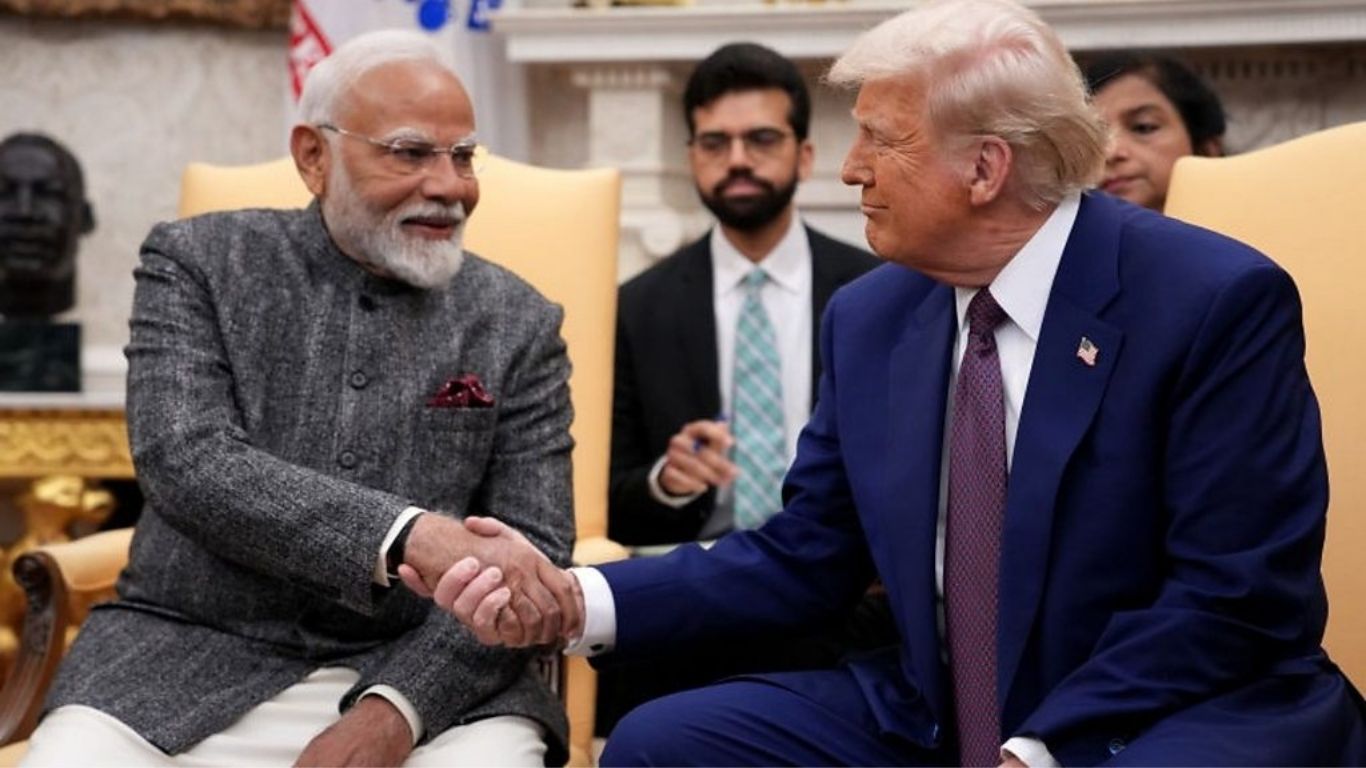
The India–US partnership at a crossroads a phrase that once symbolized expanding ties between two democratic giants now evokes uncertainty and tension. From trade wars to diplomatic rebukes, the shocking rift revealed under Trump’s second term has rattled strategic confidence. Is the partnership resilient enough, or will it buckle under mounting strain?
Trade Tensions Boil Over with Escalating Tariffs
At the heart of the strain lie sweeping trade conflicts. In early 2025, President Trump began slapping reciprocal tariffs, leveraging India’s higher import duties to justify equivalent levies on Indian goods. By August, these tariffs had ballooned from 25% to an astounding 50%.
These abrupt measures jeopardize a significant portion of India’s exports. Analysts estimate up to 70% of Indian exports to the U.S. could be affected, endangering key industries like textiles, IT services, pharmaceuticals, and automotive components. Financial institutions warn of a ripple effect: slower GDP growth, sectoral turbulence, and weaker investor confidence.
Energy Alignments and Strategic Disconnects: The Russian Oil Factor
Trump’s aggressive stance toward India’s reliance on Russian oil added fuel to the fire. The U.S. accused India of arbitrage taking advantage of discounted Russian crude while undermining Western efforts to isolate Moscow. Peter Navarro labeled the move “opportunistic,” warning India that continued purchases could erode its status as a genuine U.S. partner.
This isn’t just a clash over trade it’s a stark geopolitical divergence that challenges the alliance’s cohesion.
Strained Diplomatic Ties and Strategic Realignments
Once hailed as the “best of friends,” the personal rapport between Trump and Modi now seems fractured, giving way to suspicion and self-reliance. Recent commentary from The Washington Post calls Trump’s second-term behavior a “strategic mistake,” warning of long-term damage that might not be easily undone.
Observers liken this erosion to the fallout of India’s 1998 nuclear tests a moment when diplomatic personalization trumped institutional strength.
Amid this rift, India is recalibrating. It’s warming ties with China, restoring trade routes, and easing tensions along contested borders. Four years of strained U.S. ties have opened doors for regional realignment.
Resilience Beyond Rhetoric: Defense, Diaspora and Institutional Strength
Yet all is not hopeless. Multiple sources emphasize the deeply embedded institutional foundations of the India–US partnership. Shared democratic values, defense cooperation, technology collaboration, and a vast Indian diaspora in the U.S. all provide layers of resilience.
Defence platforms like iCET and the Quad have gained traction, with the former seen as potentially surviving even a truncated Trump-driven focus.
Moreover, even amid trade tensions, India continues to negotiate, adjusting tariffs in some sectors and pushing forward with ambitious goals like doubling bilateral trade to $500 billion by 2030.
Future Prospects: Can the Partnership Survive?
Multiple analysts note that while Trump’s volatility has created disruptions, the multi-aligned global posture of India and its institutional ties to the U.S. serves as an insurance policy against permanent rupture.
Still, trust has taken a hit. Repairing it will require patience, diplomatic clarity, and instrumental cooperation in sectors like technology, defense, energy, and education.
Rebuilding momentum may entail a phased strategy: back-channel engagement, recalibrated trade talks, and renewed strategic dialogue perhaps even face-to-face diplomacy when tensions ease. Institutions and the diaspora could provide continuity, bridging transient political disruptions.
Conclusion: A Rift, not a Rupture
The rift between India and the U.S. shocking in its suddenness and scope is undeniably real. Trade wars, oil diplomacy, and ideological clashes have rattled a fragile equilibrium under Trump. Yet dismissal of decades of progress would be premature.
This partnership, while shaken, is not shattered. With recalibrated diplomacy, shared strategic imperatives, and institutional backing, the core alliance may yet endure. Surviving this storm won’t be easy but losing the strategic bond entirely would be far more consequential.




