

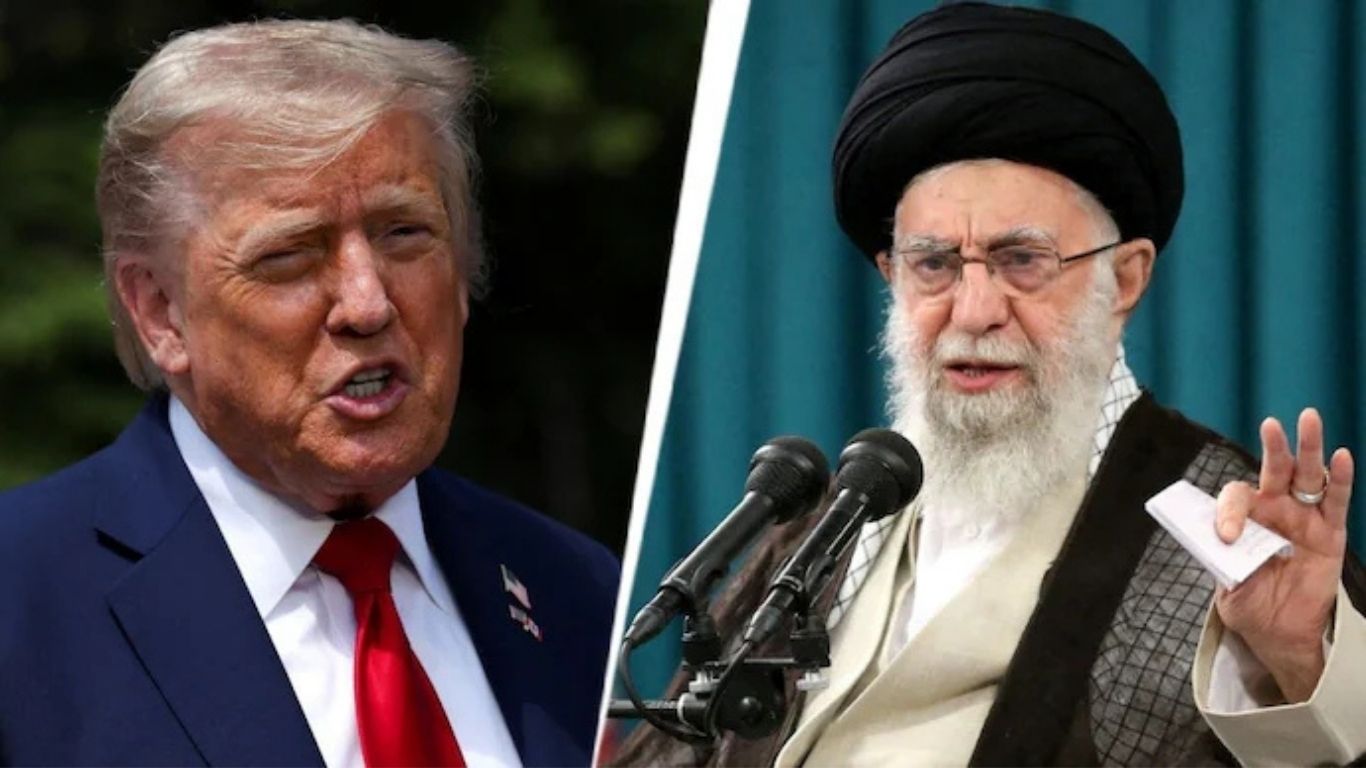
As the conflict between Israel and Iran escalates, US President Donald Trump’s announcement of a two-week window before deciding on US military action has injected new urgency and significance into diplomatic efforts aimed at resolving the nuclear standoff. European negotiators, in particular, are seizing this “breathing space” as a rare opportunity to re-engage Iran and potentially avert a wider regional war.
A Critical Pause in a Volatile Crisis
Trump’s decision, announced via White House spokeswoman Karoline Leavitt, comes as speculation mounted that the US might imminently join Israel’s campaign against Iranian nuclear facilities. Instead, Trump has opted to “make my decision whether or not to go within the next two weeks,” citing a “substantial chance of negotiations” with Iran in the near future.
This pause is widely interpreted as both a diplomatic window and a strategic move. It allows the US to assess risks, marshal military options, and potentially leverage the pressure of ongoing Israeli airstrikes on Iran to extract concessions most notably, a halt to Iran’s uranium enrichment program, which both the US and Europe now insist must be reduced to zero for any deal to be acceptable.
Geneva Talks: Europe Steps Up as Diplomatic Intermediary
The diplomatic spotlight has shifted to Geneva, where foreign ministers from Britain, France, and Germany (the E3), alongside the EU’s foreign policy chief, met with their Iranian counterpart for the first formal talks since the outbreak of hostilities. European officials describe these talks as a “temperature check” to gauge Iran’s willingness to return to the negotiating table, especially as direct US-Iran negotiations remain off the table while Israeli strikes continue.
European diplomats have made it clear that the core issue remains Iran’s uranium enrichment. While Iran has indicated a willingness to return to the 3.67% enrichment cap set by the 2015 nuclear deal (JCPOA), the E3 are now pressing for a complete cessation a demand Iran has so far rejected as a “non-starter”. This hardening of the European position reflects growing concerns over Iran’s recent enrichment of uranium to near-weapons-grade levels, as reported by the International Atomic Energy Agency.
Military Pressure and Diplomatic Leverage
The context for these talks is unprecedented: Israel’s recent strikes have reportedly degraded large parts of Iran’s enrichment infrastructure, particularly at above-ground sites, though the deeply-buried Fordow facility remains largely intact and is considered a potential target for US “bunker-buster” munitions. The cumulative effect of military pressure may be shifting Iran’s calculus, with some Western diplomats suggesting that Tehran could soon face a choice between continued escalation and meaningful compromise.
Yet, skepticism abounds. Iranian officials insist there will be no negotiations with the US until Israeli attacks cease, and public sentiment in Iran has hardened, with mass protests denouncing both Israel and the US. European diplomats, meanwhile, caution that while engagement is vital, the prospects for a breakthrough remain slim given the maximalist demands on both sides and the rapidly deteriorating security environment.
The Stakes: Regional Stability and the Nuclear Question
At stake is not only the future of Iran’s nuclear program but also the risk of a broader regional conflagration. Trump’s two-week pause is seen as a last chance for diplomacy before the US potentially joins Israel in direct military action a move that could inflame the region and draw in global powers.
The E3 are pushing for a parallel track: immediate talks on a political framework for a ceasefire and nuclear restrictions, followed by more comprehensive negotiations on issues like missile development and regional security. However, even if the current talks fail to yield immediate results, diplomats stress that dialogue must continue, as the underlying nuclear issue will persist beyond the current conflict.
Conclusion: A Narrow Window for Diplomacy
Trump’s two-week “breathing space” has transformed what was a sidelined European initiative into a pivotal diplomatic effort. The coming days will determine whether this window leads to a de-escalation and renewed nuclear agreement or whether the region slides further toward war, with consequences that could reverberate far beyond the Middle East.




