

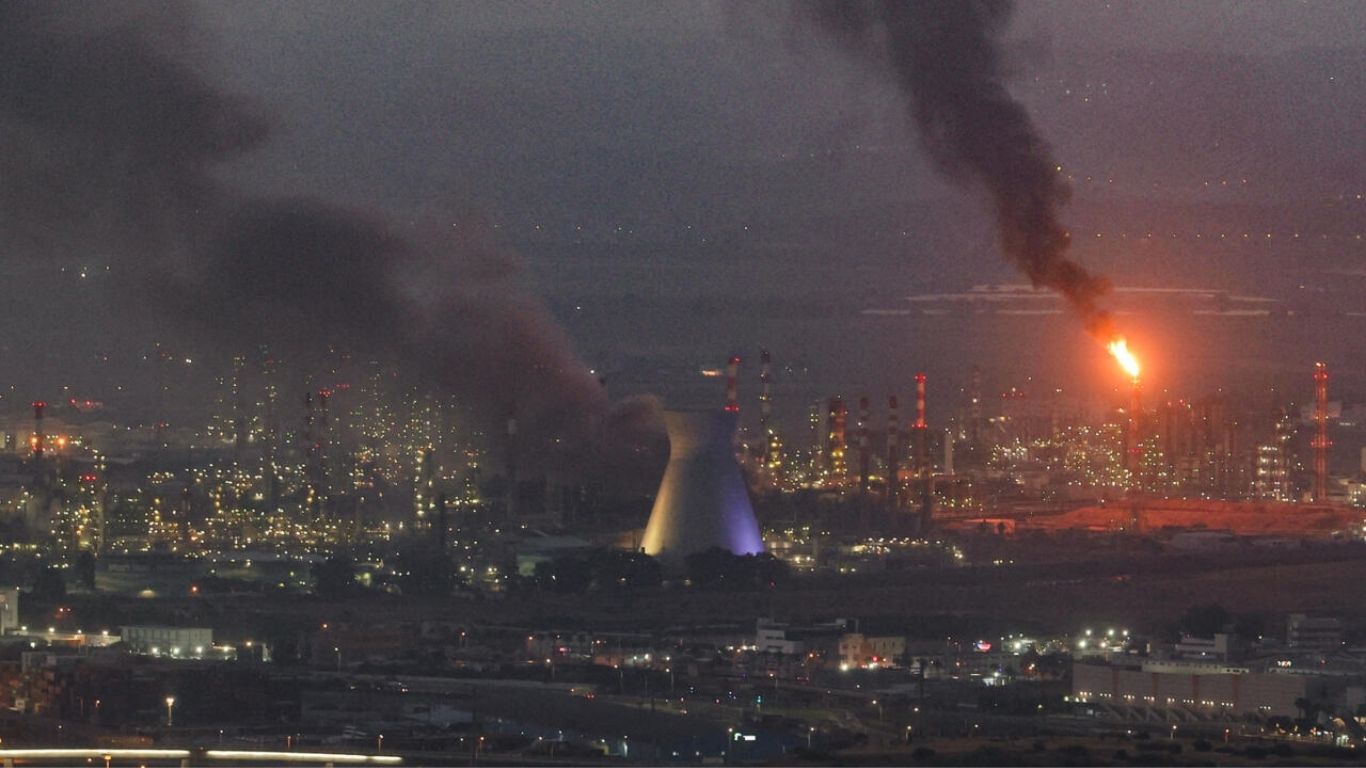
The global oil market just took a wild ride, and I’m not talking about the kind of rollercoaster you’d find at a theme park. On Monday, oil prices nosedived after Iran’s retaliatory missile strike on US military bases in Qatar turned out to be less of a blockbuster and more of a dud. Brent crude and West Texas Intermediate (WTI) both shed nearly 5%, slipping below $73 and $70 per barrel, respectively, according to Bloomberg. Iran’s attack six missiles lobbed at a US base came hot on the heels of a US-Israel joint strike on Iranian nuclear sites over the weekend. But instead of the apocalyptic escalation everyone feared, it seems we’re back to uneasy calm. For now.
Iran’s Strike: More Bark Than Bite
The world held its breath when Iran fired those missiles. Traders, glued to their screens, were betting on chaos maybe even a full-blown blockade of the Strait of Hormuz, that narrow choke point in the Persian Gulf where 20% of the world’s oil supply flows through daily. A single misstep there could send prices to the moon. But Iran, in what looks like a calculated move, kept its strike limited, steering clear of critical energy infrastructure. No pipelines were hit, no tankers sunk. Just a few missiles, a lot of noise, and a collective sigh of relief from the markets.
“It’s like Iran sent a strongly worded email instead of burning the house down,” quipped one energy analyst on X.
The fear of a supply shock fizzled out faster than a bad sitcom. By Monday night, oil futures were in freefall, reflecting a market that’s more relieved than rattled.
Trump’s Tweet and the Energy Secretary’s Hustle
Before Iran’s missiles even hit the ground, the oil market was already wobbling, thanks to a certain former president with a penchant for all-caps social media rants. Donald Trump took to X to rail against high oil prices, demanding the Energy Department “drill now” to flood the market with supply. Energy Secretary Chris Wright didn’t miss a beat, responding with a crisp, “We’re on it.” Whether that was a genuine policy pivot or just political theater, it spooked traders into selling off crude contracts faster than you can say “energy independence.”
The White House’s saber-rattling isn’t new, but it’s effective. The mere hint of increased US production potentially from shale fields or offshore rigs can put downward pressure on prices. The US Energy Information Administration reports that the US is already pumping over 13 million barrels a day, making it the world’s top oil producer. If Wright’s team opens the taps further, it could keep prices in check, even if Iran decides to escalate.
Why the Market’s Still Got Butterflies
Don’t let the price drop fool you nobody’s popping champagne just yet. The Israel-Iran conflict, now in its latest bloody chapter, has kept markets on edge for weeks. The fear isn’t just about missiles; it’s about what happens if this tit-for-tat spirals into something uglier. A broader regional war could choke off oil exports from the Middle East, which accounts for about a third of global supply, per OPEC data. That’s not pocket change.
Analysts are watching the Strait of Hormuz like hawks. “If Iran even sneezes in the direction of that waterway, you’ll see oil prices spike faster than a caffeine addict’s heart rate,” one trader told Reuters. For now, though, Iran’s restraint has kept the strait open, and tankers are sailing through without a hitch. But the US isn’t taking chances. Reuters also reported that the Pentagon sees a “high risk” of more Iranian strikes on US forces, which could flip the script overnight.
The Bigger Picture: A Game of Nerves
This whole saga feels like a high-stakes poker game where everyone’s bluffing, and nobody wants to show their cards. Iran’s nuclear ambitions, Israel’s shadowy nuclear program, and the US’s military muscle-flexing it’s a messy triangle that’s been simmering for decades. The weekend’s US-Israel strike on Iranian nuclear facilities was a bold move, and Iran’s response, while tame by comparison, keeps the tension alive. Tehran’s official statement warned of “everlasting consequences,” but so far, it’s more rhetoric than reality.
Investors, meanwhile, are stuck playing armchair generals, trying to guess what’s next. “The market’s pricing in a pause, not a resolution,” said a commodities strategist on CNBC. “We’re one missile away from $100 oil.” That’s not hyperbole. If Iran or its proxie like Hezbollah or the Houthis target Saudi or Emirati oil fields, we could see a supply crunch that makes 2022’s price spikes look like a warm-up act.
What’s Next for Oil and the World?
So where do we go from here? The oil market’s in a holding pattern, caught between relief and paranoia. Prices are down, but they’re jittery, ready to jump at the first sign of trouble. Investors are laser-focused on three things: Iran’s next move, the US’s drilling plans, and whether the Strait of Hormuz stays open for business. Any one of those could tip the scales.
For now, the absence of immediate damage to oil infrastructure is a small mercy. But don’t kid yourself this isn’t peace; it’s a timeout. The Middle East is a tinderbox, and one spark could set it off. As one X user put it, “Oil’s cheap today, but don’t bet on it staying that way.”
A Self-Deprecating Aside
Look, I’m no Nostradamus. I’m just a writer trying to make sense of a world that seems hell-bent on keeping us all on edge. But if there’s one thing I’ve learned from watching these geopolitical soap operas, it’s that the truth is usually buried under a pile of posturing and press releases. The oil market’s a fickle beast, and it doesn’t care about my deadlines or your gas bill. Still, I’ll keep digging, because someone’s got to call out the absurdity of it all.
Wrapping It Up
The oil price plunge is a snapshot of a world teetering between crisis and calm. Iran’s strike was a letdown for doomsayers, but it’s not the end of the story. The market’s taking a breather, but it’s a nervous one. With the US pushing for more drilling and Iran keeping everyone guessing, the next few days could be a wild ride. Stay tuned, because if there’s one thing this mess has taught us, it’s that nothing’s certain except maybe the fact that my coffee’s getting cold while I type this.




