

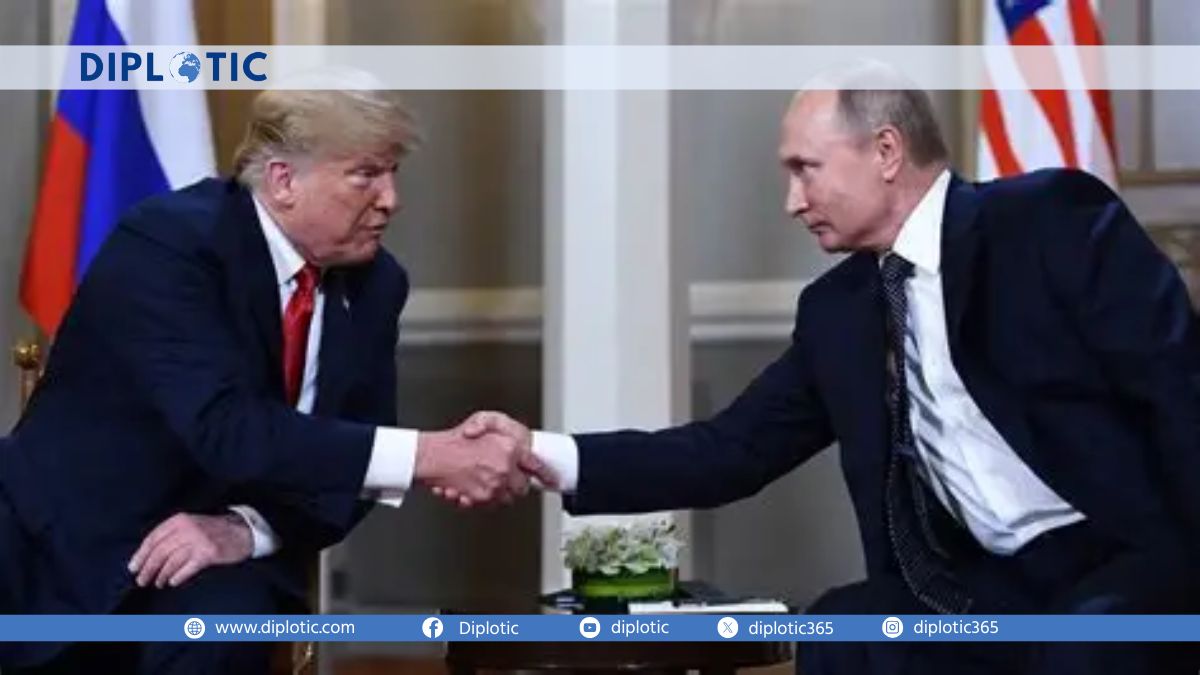
Alaska’s Symbolism and the Reframing of Conflict
The decision to hold the Trump-Putin summit in Alaska was not simply about geography. It was a deliberate staging, meant to tell the world that the conversation was not limited to Ukraine but rather touched on the future of global power structures. Alaska itself carries layered symbolism. Once a Russian territory sold to the United States in 1867, it remains a living reminder of the shifting balance of power between Moscow and Washington. Its cultural and historic connections still echo, from Orthodox churches built by Russian settlers to the remnants of military cooperation during World War II. Holding a summit here suggested that the two powers were reopening a discussion that stretches far beyond Europe.
Western media had largely framed the summit as a “ceasefire meeting” between Russia and Ukraine. Commentators debated endlessly whether Trump might offer concessions, or if Putin would settle for a land swap or recognition of territorial claims. Yet this narrow framing overlooked the real weight of the event. The Alaska venue signaled that the conversation was about long-term architecture: the possibility of reshaping Eurasian security, challenging NATO’s role, and testing whether the post-Cold War order still holds.
In fact, the symbolism of Alaska ties back to older, even forgotten projects of integration. At one point in the twentieth century, Soviet and American engineers considered linking Asia and North America through a tunnel under the Bering Strait, a literal bridge between civilizations. While that plan faded, its memory lingers as a metaphor for the idea that these two powers—often at odds—are destined to negotiate terms of coexistence. Europe was the unspoken audience. The message from Alaska was that Washington and Moscow could still decide matters that Europe would only have to accept.
Putin’s demands at the summit made this explicit. He called for an end to NATO’s eastward expansion, relief from sanctions, and recognition of Russia’s insistence on a “holistic Eurasian security architecture.” He did not push for a fragile ceasefire but for a broader peace process anchored in the Istanbul settlement. His rejection of the Kellogg plan—an American-designed framework—was a reminder that Moscow insists on dictating the terms of its own security. Trump, for his part, seemed willing to echo this call, noting afterward that “ceasefire agreements often do not hold up” and that only a comprehensive process could bring stability.
The fact that this language was used in Alaska was not accidental. It was a stage, and like many stages in history, the setting itself was a message that the old map of alliances may no longer be reliable.
The Historical Weight of Russian-American Encounters
To understand why this summit matters, one must look backward. Russia and the United States have a complex history that is neither purely antagonistic nor purely cooperative. In the eighteenth century, Russia quietly supported the American War of Independence by opposing British naval power. During the nineteenth century, while Europe carved up colonial empires, the two countries found themselves far apart geographically yet close enough in interest to complete the Alaska Purchase. That deal, often remembered as America’s bargain, was equally a moment of Russian pragmatism, as the empire sought to reduce exposure on its Pacific frontier.
The Cold War froze these interactions into stark hostility. The United States and the Soviet Union became locked in a contest that defined global politics for half a century. Nuclear brinkmanship, proxy wars, and ideological battles from Vietnam to Afghanistan shaped generations. Yet even in that period of rivalry, there were moments when pragmatism forced dialogue. The Helsinki Accords of 1975 were one such moment, where despite fierce ideological opposition, both sides recognized that security could not be maintained without structured dialogue.
This history matters because Alaska revives that tradition of pragmatic negotiation. It is not about friendship. It is about necessity. Both Russia and the United States know that global leadership cannot be asserted without some understanding of the other. With China rising as a third pole in world politics, both Moscow and Washington have an incentive to avoid open-ended entanglement that weakens them. The United States may no longer afford unending wars in distant lands, and Russia, despite its resilience under sanctions, understands the strain of permanent conflict.
Even the rhetoric used at the summit reflects echoes of this past. Putin’s call for a Eurasian security framework resembles earlier Russian proposals dating back to Mikhail Gorbachev’s “common European home” idea. The American refusal to fully dismiss the Istanbul framework mirrors earlier pragmatic calculations during détente. The Alaska meeting was therefore less about innovation and more about reviving old logics of great-power negotiation. To Europe, this is unsettling, for it recalls an older pattern where Washington and Moscow discuss the continent’s future without asking Europe’s consent. For Ukraine, it is alarming, as it suggests its sovereignty may be treated as negotiable.
Europe’s Silence and the Strain on Western Unity
The most striking outcome of the Alaska summit is not what was said publicly but what followed. Within hours, U.S. Secretary of State Marco Rubio met with European leaders, including Britain’s David Lammy and the EU’s foreign policy chief Kaja Kallas. These meetings were officially described as coordination talks, but the absence of detail spoke louder than words. For months, Europe’s position had been clear: unconditional support for Ukraine until victory. Yet after Alaska, the mood shifted. Officials have become noticeably careful, choosing silence over reaffirming their earlier pledges.
This silence points to a fracture. European states have spent years portraying the Ukraine war as a moral battle for democracy against authoritarian aggression. Billions in aid, unprecedented sanctions, and the rearming of NATO were justified on this basis. But with the United States now entertaining a negotiated settlement based on the Istanbul framework, Europe faces a dilemma. Does it continue a maximalist stance even if Washington recalibrates, or does it quietly adjust to a peace process that could leave Russia with substantial leverage?
The European predicament is worsened by domestic realities. Economies across the continent are struggling with inflation, energy insecurity, and declining industrial competitiveness. Populations are showing fatigue, questioning the wisdom of indefinite military and financial commitments. If Washington signals that compromise is acceptable, European leaders will struggle to maintain a hard line. For countries like Poland and the Baltic states, this could feel like betrayal. For Germany and France, it may feel like an overdue recognition of limits.
The summit has also reopened debates about Western hegemony itself. For decades, Europe has assumed that the United States would anchor its security without fail. Alaska suggests otherwise. By choosing a symbolic site with historical ties to Russia, Trump showed Europe that Washington’s strategic calculus extends beyond Brussels. This is consistent with an American tradition of strategic flexibility, noted in accounts of U.S. foreign policy that emphasize interests over ideology, such as those documented in the Britannica entry on the Cold War order.
The question is whether Europe can adapt. If the Alaska summit is a sign of a U.S.-Russia reset, Europe risks being sidelined in decisions that directly affect its security. The silence after the summit is therefore not just diplomacy. It is a signal of unease, an acknowledgment that the old certainties of Western unity may no longer hold.
A Future Negotiated in Alaska?
The ultimate test of the Alaska summit lies in what follows. Neither Putin nor Trump presented a detailed plan, but both acknowledged that ceasefires without addressing root causes are fragile. That recognition sets the stage for a prolonged process, where negotiations may revolve not only around Ukraine but also around the wider balance of power in Eurasia.
Ukraine itself remains the most uncertain factor. President Zelenskyy’s decree forbids direct talks with Russia, making him legally bound to resist negotiation. Yet his capacity to hold this position depends entirely on Western backing. If Washington begins to pressure for compromise, Kyiv will face impossible choices: either resist and risk isolation, or concede and risk political collapse at home. This tension makes Ukraine’s future precarious, regardless of battlefield developments.
For Russia, Alaska was a victory in symbolism. Putin presented himself as a statesman offering peace rather than war, positioning Moscow as a rational actor seeking long-term stability. Whether one believes this narrative or not, it has gained ground. For Trump, the summit provided a platform to showcase his brand of deal-making diplomacy. He cast himself as the leader who could do what others could not: talk to Moscow without fear.
But the real weight of Alaska lies beyond individuals. It represents a rebalancing. If the United States is prepared to explore a Eurasian security settlement, it means recognizing limits to Western dominance. For Europe, it means confronting a new reality in which its voice is weaker than it imagined. And for the rest of the world, it suggests that the Ukraine war—once portrayed as a moral crusade—may be treated as a bargaining chip in a larger negotiation.
History offers many examples of such rebalancing moments. The Yalta Conference of 1945 was one, shaping the postwar order. The Helsinki Accords were another, offering stability without resolving every conflict. Alaska may not yet rise to that level, but it could mark the beginning of a new phase in which the balance of power is redrawn. The irony is that this moment of global importance was staged not in Brussels, Berlin, or Kyiv, but in a territory that was once Russian soil. For those who know history, that fact alone is enough to question whether the summit was about peace—or about reminding the world that power, like land, can always change hands.




