

Diplomatic Gambles in a Fractured Alliance
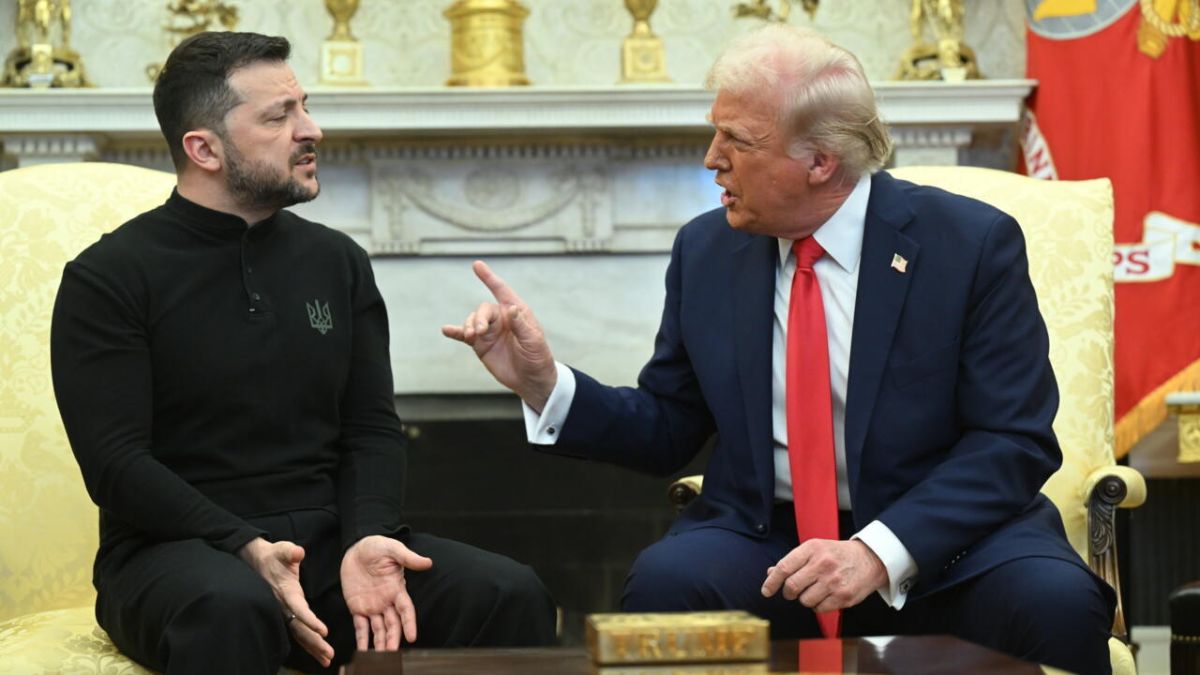
On August 18, 2025, the Oval Office hosted an unprecedented gathering as Ukrainian President Volodymyr Zelensky met U.S. President Donald Trump, joined by a coalition of European leaders including British Prime Minister Keir Starmer, French President Emmanuel Macron, and German Chancellor Friedrich Merz. This summit, following Trump’s controversial Alaska talks with Russian President Vladimir Putin, aimed to forge a path toward ending Russia’s war in Ukraine, now in its third year. Trump, previewing the meeting on Truth Social, urged Zelensky to concede Crimea—annexed by Russia in 2014—and abandon NATO aspirations, terms echoing Putin’s demands. Yet, the atmosphere proved far more collegial than February’s explosive Oval Office clash, where Trump accused Zelensky of risking World War Three. Zelensky, presenting a letter from his wife to Melania Trump, praised U.S. efforts, saying “many thanks” and emphasizing the need for “ironclad security guarantees.” Trump, in turn, vowed U.S. involvement, declaring “we’re going to help them out,” while planning a post-meeting call to Putin to discuss a potential trilateral summit.
The historical context of U.S.-Ukraine relations reveals a pattern of promises and betrayals that frame this moment. The 1994 Budapest Memorandum, where Ukraine relinquished Soviet-era nuclear weapons for security assurances from the U.S., Russia, and UK, proved hollow when Russia annexed Crimea, a violation that exposed the fragility of such pacts, as detailed in analyses of post-Soviet security agreements. Trump’s current stance, softening from his earlier ceasefire demands to pursuing a comprehensive deal, reflects progress from Alaska, where U.S. envoy Steve Witkoff reported Putin’s concessions on land swaps and NATO-like protections under Article 5. Zelensky’s insistence on stronger guarantees than Budapest’s “didn’t work” framework underscores Kyiv’s distrust, born from over a decade of Russian aggression. European leaders, forming a “Coalition of the Willing,” pledged a “reassurance force” to deter future invasions, a concept reminiscent of post-World War II alliances that stabilized Europe but often sidelined smaller nations.
Geopolitically, this meeting tests the West’s unity amid Russia’s battlefield gains, occupying nearly 20% of Ukraine. Trump’s openness to U.S. troops in a peacekeeping role—saying “there’s going to be a lot of help”—marks a potential shift from his isolationist rhetoric, though he emphasized Europe’s lead. This could fracture NATO, as allies fear concessions embolden Putin, a concern echoed in former U.S. NATO Ambassador Nicholas Burns’ warning that agreements “cannot rest on the word of Vladimir Putin,” who “never meets his promises.” The Ukraine war’s dynamics highlight contradictions: Trump’s deal-making optimism clashes with Russia’s latest strikes killing 10, which Zelensky called an attempt to “humiliate diplomatic efforts.” Economically, the war’s $500 billion toll on Ukraine demands reconstruction aid, while sanctions on Russia—now softened by Trump—remain a key lever.
Contradictions and the Pursuit of Lasting Security
The White House talks exposed inherent contradictions in Trump’s approach, blending transactional pragmatism with geopolitical risks. His insistence on Crimea as irretrievable and no NATO for Ukraine aligns with Putin’s narrative, potentially legitimizing aggression that began with the 2014 annexation, a move condemned internationally but inadequately countered, as seen in the post-Crimea sanctions regime. Yet, Witkoff’s revelation of Putin’s concessions on land swaps for contested regions like Donbas suggests a possible compromise, though Zelensky’s constitutional bar on territorial loss—reiterating “Ukraine was given so-called ‘security guarantees’ in 1994 but they didn’t work”—complicates any deal. European leaders’ presence, flipping through channels as Starmer noted, aimed to present a “united front,” countering fears Trump might isolate Zelensky, a tactic that backfired in February’s shouting match.
Policy-wise, the proposed NATO-like guarantees, potentially involving a multinational force, evoke Cold War-era pacts but risk entanglement without formal alliance membership. Trump’s vow of “very good protection” for Ukraine, while ruling out NATO, offers a workaround, but Burns’ call for sustained pressure on Putin highlights the hypocrisy: Trump’s abandonment of ceasefire demands and sanction threats cedes leverage to Moscow. The global security architecture is at stake, as a weak deal could embolden autocrats from China to Iran, mirroring the Munich Agreement’s appeasement failures. Economically, Ukraine’s $400 billion reconstruction needs U.S. and European aid, but Trump’s deal could freeze Russia’s occupation, stifling Kyiv’s growth while easing sanctions benefits Moscow’s war economy.
The meeting’s collegiality—Zelensky in a suit, avoiding February’s military uniform—signals diplomatic coaching, with Ukraine’s minerals deal and weapons payments appeasing Trump’s business mindset. Yet, contradictions abound: Trump’s mail-in ballot rants during the press conference distracted from substance, while his trilateral proposal risks sidelining Europe. Zelensky’s emphasis on a “strong army” with weapons and intelligence reflects Ukraine’s resilience, but reliance on “big countries” exposes vulnerabilities. The historical unity of an undivided India, forging stability amid diversity, contrasts with Ukraine’s fragmented support, where Trump’s whims could dictate outcomes.
Envisioning Peace Amid Peril
The White House summit’s outcome will reverberate far beyond August 18, potentially reshaping Ukraine’s sovereignty and Western alliances. Trump’s planned Putin call, aiming for a trilateral meeting, could accelerate talks, but Zelensky’s red lines on territory and NATO pose barriers. If guarantees materialize as a “reassurance force,” led by Britain and France, it might deter aggression, but Trump’s openness to U.S. troops—contradicting his isolationism—risks domestic backlash. The post-war reconstruction could inject billions into Ukraine, but a flawed deal might perpetuate instability, echoing the Minsk Agreements’ failures.
Future consequences hinge on enforcement. Putin’s history of broken promises, as Burns noted, demands verifiable mechanisms, potentially involving UN monitors or economic incentives. A successful accord could stabilize energy markets, easing Europe’s $200 billion annual cost from the war, but concessions might fracture NATO, emboldening China in Taiwan. Zelensky’s “peace must be lasting” plea reflects Ukraine’s exhaustion, with over a million casualties, but public opposition to territorial loss—80% per polls—limits concessions. Trump’s deal-making, while optimistic, miscalculates by echoing Putin’s narrative, potentially humiliating Kyiv and alienating allies.
An undivided India’s historical cohesion offers a lesson in balancing power and principle, but Ukraine’s path demands collective resolve. As Trump dials Putin, the world watches: a breakthrough could redefine his legacy, but missteps might prolong Europe’s bloodiest conflict since World War II, testing the West’s commitment in an era of rising autocracy.




