

The Fragile Boundary Between Politics and Monetary Power
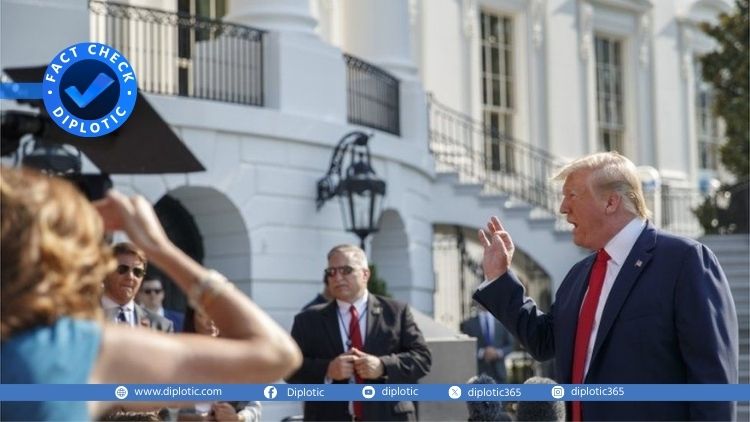
The United States built its modern central banking system on a principle of independence. The Federal Reserve was designed to operate beyond the reach of political pressure so that short-term electoral interests could not distort long-term economic stability. This separation of power was not accidental. After the crises of the early 20th century, policymakers saw that a central bank vulnerable to the whims of political leaders would be unable to guard against inflation, financial collapse, or speculative shocks. Yet more than a century later, that fragile boundary is under new strain. President Donald Trump’s open threats to dismiss Federal Reserve Chair Jerome Powell and Governor Lisa Cook mark an escalation in a battle that is not only institutional but global in consequence.
Trump’s attacks are not entirely without precedent. Presidents have always tried to pressure the Fed when interest rates cut against their political agendas. Richard Nixon leaned on Arthur Burns to keep rates low ahead of the 1972 election, a move that fueled runaway inflation. Lyndon Johnson once summoned Fed Chair William McChesney Martin to his Texas ranch, physically shoving him against the wall to press for looser policy. Yet in all these cases, the system ultimately survived because the Fed remained formally insulated by law and defended by the courts. The Supreme Court has held that Fed governors can only be dismissed for gross misconduct, a deliberately high bar to shield them from the mood swings of presidents. Trump, however, is testing whether those guardrails can hold when a president is determined to bulldoze them.
What makes this moment more dangerous is not only the domestic stakes but the ripple effects across the world economy. The United States remains the anchor of the global financial system. Its interest rates guide flows of capital into emerging markets, shape currency values, and influence investment decisions from Frankfurt to Jakarta. Any move that makes the Fed look like a tool of partisan politics raises doubts about the reliability of that anchor. Christine Lagarde, the head of the European Central Bank, warned this week that if U.S. monetary policy became subject to the dictates of one individual, the consequences would be “very worrying” for both America and its trading partners. The fear is not abstract. Markets price stability into every transaction. If they begin to price uncertainty instead, the cost will be borne globally.
A Global Economy on Edge
This crisis of credibility arrives at a delicate moment. The world economy has been struggling to find balance after years of pandemic disruption, inflationary surges, and uneven recoveries. Supply chains have been reconfigured, energy markets unsettled, and capital flows redirected. In this fragile environment, even small tremors from Washington can trigger disproportionate responses. The possibility that the Fed might lose its independence introduces a form of risk that investors have not had to consider for generations.
The Federal Reserve does not act in isolation. Central banks coordinate implicitly and explicitly through networks of swaps, agreements, and shared strategies during times of crisis. In 2008, during the global financial meltdown, the Fed’s cooperation with the ECB and other institutions was decisive in preventing systemic collapse. That level of trust rests on the assumption that the Fed acts as a professional body, not as an instrument of presidential ambition. If that assumption falters, coordination falters too. A Fed forced to follow the White House line could refuse cooperation with foreign counterparts or delay responses that do not align with the president’s political timing.
Europe faces its own instability at the same time. France is confronting a possible government collapse as Prime Minister François Bayrou faces a no-confidence vote in parliament. Lagarde herself pointed out that political crises inside the eurozone often spill directly into market volatility. A weakened French government could undermine confidence in European fiscal policy, while a politicized Federal Reserve would erode faith in U.S. monetary discipline. Together, these twin uncertainties risk producing a feedback loop of distrust in global markets. It would be the worst possible convergence: a fragile Europe and a compromised Fed feeding each other’s instability.
To grasp the stakes, it helps to recall the consequences of past breakdowns in credibility. When U.S. policymakers abandoned the gold standard in 1971, the dollar’s dominance faced deep skepticism. Only through decades of consistent, disciplined central banking did the Federal Reserve rebuild global confidence in its stewardship of the dollar. That reputation is not indestructible. It was built slowly but can be lost quickly. If Washington begins to resemble a state where the central bank bends to political winds, investors may begin to hedge away from the dollar. Alternatives like the euro, the Chinese yuan, or even gold could find new appeal. The shift would not be immediate, but credibility once shaken is hard to restore.
The Future of Central Bank Independence
The fight over the Fed is, at its heart, a fight over the architecture of modern capitalism. Independent central banking is a relatively recent innovation in the long history of finance. According to the overview of central banking history in the Encyclopaedia Britannica, most early banks operated under direct government control, often serving as instruments of war finance and fiscal necessity. Only in the late 20th century did independence become the consensus model, embraced as a safeguard against both inflation and political abuse. That model is now facing its first existential test in the United States, the very country that championed it most strongly after World War II.
If Trump succeeds in bending the Fed, it will not only reshape U.S. monetary policy but also send a signal to other governments. Leaders in Turkey, India, and parts of Latin America have already pressured their central banks with mixed results. A weakened Fed would embolden them, offering a precedent that political leaders can overrule technocrats when convenient. The irony is sharp: the United States has long lectured other nations about the virtues of strong, independent institutions. Now it risks demonstrating the opposite.
There is another danger, subtler but equally corrosive. Once the perception takes hold that monetary policy is a partisan instrument, every policy choice becomes suspect. If the Fed raises rates, critics will claim it is punishing the president’s base. If it cuts rates, others will see it as electioneering. The institution’s credibility rests not only on legal independence but on broad belief in its neutrality. Without that belief, policy effectiveness shrinks. Inflation expectations become unanchored, borrowing costs rise, and investment retreats.
The irony is that undermining the Fed may not even deliver the political benefits Trump seeks. Short-term rate cuts could stimulate consumption, but if markets respond with higher long-term yields, the effect would cancel out. Investors demand compensation for risk, and political interference is the ultimate risk premium. In trying to seize control of monetary levers, Trump could find those levers less responsive than he imagines. The history of central banking is full of moments when political leaders overplayed their hand and were humbled by markets. The pattern could repeat itself in dramatic fashion.
A Precarious Global Moment
The coming months will show whether institutional guardrails hold. The courts may block Trump from dismissing Powell or Cook. Congress could reassert its oversight role. Markets themselves could push back by penalizing political interference. But the deeper question is whether the United States, in this polarized era, can still sustain the discipline that once made its economic leadership credible.
This is not only about Washington. The international system has been built around the assumption that the dollar and the Federal Reserve represent stability. If that assumption collapses, the global order of trade, investment, and finance will face a profound shock. Some economists argue that the system is already overdue for diversification, pointing to efforts by the BRICS countries to establish alternatives. But a world where the Fed is no longer trusted would be less a planned transition and more a chaotic unraveling. As Britannica’s overview of monetary history notes, the stability of the global system has always depended on the credibility of its leading institutions. If the Fed falters, the vacuum may not be filled quickly or peacefully.
The lesson of history is clear. Institutions built slowly can be broken quickly. The question is whether the United States, under a president determined to bend them, can resist that fate.




