

The Paradox of Empathy in High-Stakes Negotiations
In August 2025, as U.S. President Donald Trump navigates a complex geopolitical landscape, a former FBI hostage negotiator, Chris Voss, has ignited a provocative debate by labeling empathy as Trump’s “secret weapon.” Speaking to the New York Times, Voss, whose career centered on defusing life-or-death crises, argued that Trump’s deal-making prowess, first articulated in his 1987 book The Art of the Deal, hinges on a tactical application of empathy—a term rarely associated with the polarizing leader. “Let’s talk about empathy as a skill, not an emotional characteristic,” Voss stated, emphasizing its role in broadening perspective and fostering reason. This redefinition challenges the conventional view of empathy as a soft, emotional trait, instead framing it as a calculated tool that can shift the dynamics of any negotiation, from hostage standoffs to international summits.
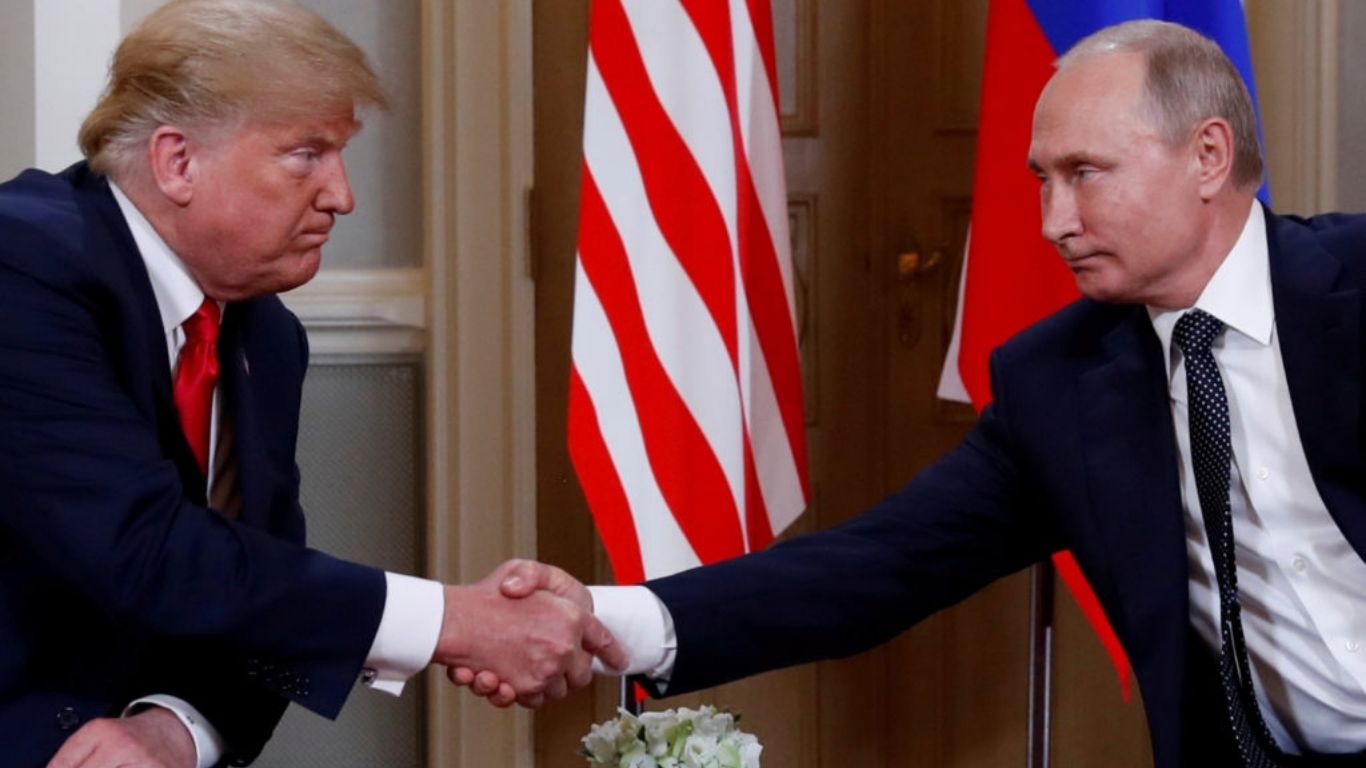
The historical context of empathy in diplomacy reveals its dual nature. During the Cold War, leaders like John F. Kennedy employed empathetic rhetoric to de-escalate tensions, notably during the 1962 Cuban Missile Crisis, where understanding Soviet motivations helped avert catastrophe. Yet, empathy has often been weaponized, as seen in the propaganda strategies of authoritarian regimes that feigned concern to manipulate public opinion. Voss’s concept of “tactical empathy”—articulating an opponent’s perspective without endorsing it—echoes these historical precedents but strips the term of moral connotations. He argues it is a neutral skill, effective 93 percent of the time in hostage negotiations, but its success depends on the user’s intent. In Trump’s hands, this approach could either forge breakthroughs or deepen distrust, especially in negotiations like the August 15 Anchorage summit with Russia’s Vladimir Putin over the Russia-Ukraine war.
Trump’s critics, who associate him with divisiveness, recoil at the notion of his empathy. Yet, Voss’s framing suggests a strategic mindset rooted in understanding adversaries to outmaneuver them. The 2016 presidential campaign, where Hillary Clinton was criticized for advocating empathy in international negotiations, illustrates the term’s fraught perception, as Voss noted: “She gets barbecued for it as if it’s weakness.” By rebranding it as “tactical,” Voss aligns empathy with the calculated pragmatism of military strategies like “tactical breathing,” distancing it from softness. This redefinition raises questions about Trump’s approach: is his empathy genuine or a calculated ploy? The geopolitical stakes of his negotiations, particularly with Putin, suggest that tactical empathy could either secure a ceasefire or risk concessions that undermine Ukraine’s sovereignty.
The Double-Edged Sword of Influence
The notion of empathy as a tool rather than a virtue reframes Trump’s deal-making in a broader context of power and manipulation. Voss’s analogy—“Similar to a knife, in one person’s hand it’s a murder weapon, and in another, it’s a scalpel”—captures the ethical ambiguity of tactical empathy. In diplomacy, this duality is evident in historical examples like the 1972 Nixon-Mao summit, where mutual understanding of strategic interests led to a thaw in U.S.-China relations, despite ideological divides. Trump’s application, however, faces scrutiny given his transactional style, evident in his past negotiations like the Abraham Accords, where economic incentives trumped deeper ideological reconciliation. The Anchorage summit, aimed at resolving the Russia-Ukraine conflict, tests whether Trump’s empathy can navigate Putin’s intransigence or if it will serve as a veneer for concessions that favor Russian interests.
The domestic and international implications of this approach are profound. At home, Trump’s use of empathetic rhetoric—such as framing himself as a champion of “forgotten” Americans—has historically galvanized supporters but alienated opponents, creating a polarized perception of his intentions. Internationally, his reliance on personal rapport, as seen in his 2018 summit with North Korea’s Kim Jong-un, often prioritizes optics over substance, a risk in the current Ukraine talks. Ukrainian President Volodymyr Zelenskyy’s exclusion from the summit amplifies fears that Trump’s empathy might prioritize deal-making over principles like territorial integrity. The ongoing war’s toll—hundreds of thousands dead and millions displaced—demands a resolution that balances empathy with accountability, yet Voss’s framework suggests that even well-intentioned tactics can falter against an unyielding adversary like Putin.
The broader geopolitical landscape complicates this dynamic. Russia’s battlefield gains since 2023, coupled with economic resilience despite sanctions, give Putin leverage to resist compromise. Trump’s empathetic approach, if perceived as weakness, could embolden authoritarian leaders, signaling that tactical concessions yield diplomatic rewards. Conversely, a successful deal could validate Voss’s thesis, positioning empathy as a cornerstone of modern diplomacy. The challenge lies in execution: empathy that fails to secure tangible outcomes risks being labeled manipulation, undermining trust in both Trump and the U.S. as a global mediator. The summit’s outcome, whether a ceasefire or a stalemate, will test whether tactical empathy can bridge divides or merely mask strategic miscalculations in a world fraught with competing interests.
The Future of Empathy in a Fractured World
Envisioning the legacy of tactical empathy requires examining its potential to reshape global negotiations and its inherent risks. Voss’s assertion that empathy is a “highly evolved application of emotional-intelligence analysis” suggests a paradigm shift, where leaders prioritize understanding over confrontation. Historically, empathetic diplomacy has yielded mixed results: the 1993 Oslo Accords, for instance, fostered dialogue between Israel and Palestine but faltered on implementation, as detailed in analyses of peace processes. Trump’s application, if successful, could redefine U.S. foreign policy, particularly in conflicts where emotional intelligence outmaneuvers traditional brinkmanship. Yet, the Anchorage summit’s exclusion of Ukraine and Trump’s pre-summit call with Belarusian President Alexander Lukashenko, a Putin ally, raise concerns about whose interests his empathy serves.
The future hinges on whether tactical empathy can deliver sustainable outcomes. A deal that halts Russia’s aggression without ceding Ukrainian territory could validate Voss’s framework, earning Trump accolades and potentially a Nobel Peace Prize, as speculated in discussions of his diplomatic ambitions. However, empathy misapplied—say, by prioritizing personal rapport over strategic clarity—could embolden adversaries, as seen in Neville Chamberlain’s 1938 Munich Agreement, which misjudged Hitler’s intentions. The Ukraine crisis, with its global ramifications for energy markets and NATO cohesion, demands precision. Failure to secure a robust agreement could erode U.S. credibility, especially given the absence of seasoned diplomats in Trump’s administration, a gap that limits the institutional support needed for complex negotiations.
Ultimately, tactical empathy’s legacy depends on its wielder. Trump’s history of leveraging personal connections, from business deals to summits, suggests a knack for reading adversaries, but his transactional approach risks short-term gains at the expense of long-term stability. Voss’s knife analogy encapsulates this tension: in skilled hands, empathy can heal; in reckless ones, it can wound. As the world watches Anchorage, the question is not whether Trump employs empathy but whether it serves as a scalpel for peace or a weapon for manipulation, shaping the trajectory of a conflict that defines the 21st-century geopolitical order.




