In a stunning escalation that has redrawn the map of Middle Eastern security, Israel unleashed its most audacious military operation against Iran since the end of the Iran-Iraq War. Codenamed “Rising Lion,” this campaign marks a historic turning point, targeting the very heart of Iran’s military and nuclear establishment and sending ripples through global markets and diplomatic circles.
What Happened: The Night Iran Changed
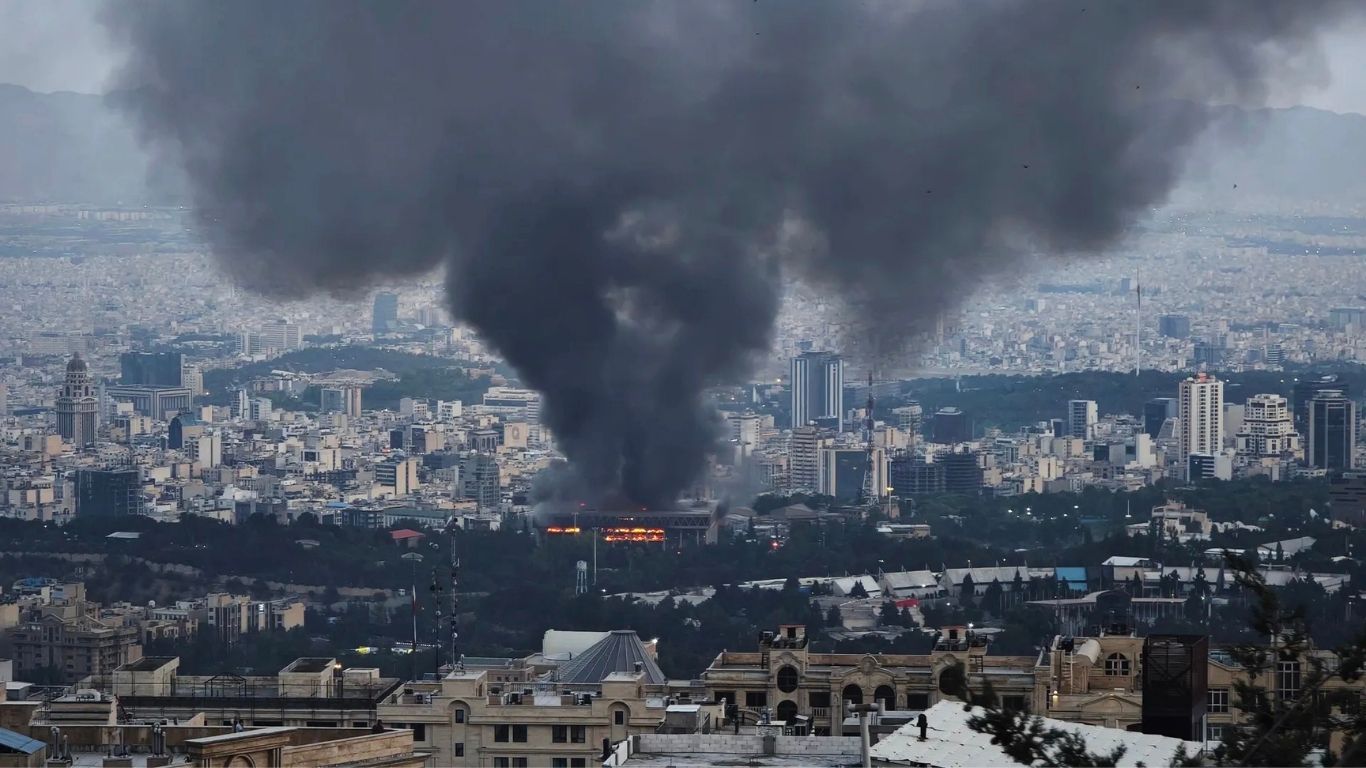
At approximately 3:30 am local time on Friday, the skies over Tehran erupted in a barrage of explosions. Israeli drones and stealth jets, pre-positioned and meticulously coordinated, struck dozens of high-value targets, including nuclear facilities, military command centers, and the homes of Iran’s top nuclear scientists. The Natanz nuclear site a cornerstone of Iran’s nuclear program, was among the critical facilities hit, with the International Atomic Energy Agency (IAEA) confirming damage and expressing grave concerns over potential radioactive contamination.
The operation unfolded in two synchronized phases:
Drone Swarms: Israeli commandos had infiltrated Iran months earlier, planting explosive drones to cripple air defense and communications, sowing chaos before the main assault.
Precision Airstrikes: Over 200 Israeli fighter jets, including F-35 Adirs, launched standoff munitions against more than 100 targets, decapitating Iran’s military leadership and disrupting command structures1.
Targeted Killings
In a parallel covert campaign, dubbed “Operation Narnia,” Israeli agents deployed a classified weapon to assassinate nine of Iran’s leading nuclear scientists as they slept, striking at the core of Iran’s nuclear ambitions. Among the dead were:
Fereydoon Abbasi-Davani: Nuclear scientist and former head of Iran’s Atomic Energy Organization.
Abdulhamid Minouchehr and Ahmadreza Zolfaghari: Senior faculty at Shahid Beheshti University’s Faculty of Nuclear Engineering.
IRGC Chiefs: Hossein Salami (IRGC Commander), Mohammad Bagheri (Chief of Staff), Gholam Ali Rashid (Major-General), and Amir Ali Hajizadeh (Aerospace Force Commander).
Civilian casualties were also reported, with state media confirming the deaths of women and children in residential areas hit during the strikes.
Iran’s Response
Iran retaliated swiftly, launching around 100 drones and several missile barrages at Israel and U.S. targets in the region. Most were intercepted, but some reached southern Israel, causing fatalities and marking the first Israeli deaths since the conflict’s escalation. Iran’s missile capability, however, has been significantly degraded by Israeli strikes, forcing Tehran to limit the scale and range of its responses.
Global Reactions
The world’s response has been a complex mix of condemnation, anxiety, and strategic recalibration:
United States: President Donald Trump, in a dramatic move, joined Israel in striking Iranian nuclear sites, declaring Iran’s enrichment facilities “completely and totally obliterated.” Trump urged Iran to make peace or face “far greater” future attacks.
Europe: France and Germany defended Israel’s right to self-defense but urged immediate de-escalation, while the UK and UN Secretary-General Antonio Guterres expressed deep concern over attacks on nuclear installations.
Regional Powers: Saudi Arabia, Qatar, UAE, Egypt, and Turkey condemned the Israeli strikes, warning of the risk of regional conflagration.
Russia and China: Moscow condemned the U.S. and Israeli actions as “unprovoked aggression,” pledging support for Iran, while Beijing called for restraint and dialogue.
Fragile Calm or Prelude to More Chaos?
After nearly two weeks of hostilities, a U.S.-brokered ceasefire was declared, with both Israel and Iran agreeing to halt further attacks at least for now. Oil prices, which had spiked over 10% amid fears of a regional energy crisis, plummeted by 5% as markets breathed a sigh of relief. However, analysts warn that the situation remains volatile, with any breach of the ceasefire likely to reignite conflict and disrupt global energy supplies.
A New Era of Warfare and Deterrence
Operation Rising Lion has rewritten the rules of modern conflict, showcasing the devastating synergy of drone warfare, special operations, and precision airpower. Israel’s campaign not only struck a blow at Iran’s nuclear program but also aimed to destabilize its security apparatus, potentially setting the stage for internal regime change.
As the dust settles, the world watches anxiously. Will this ceasefire hold, or is the region on the brink of a broader, more destructive war? One thing is clear: the Middle East and the global order will never be the same again.