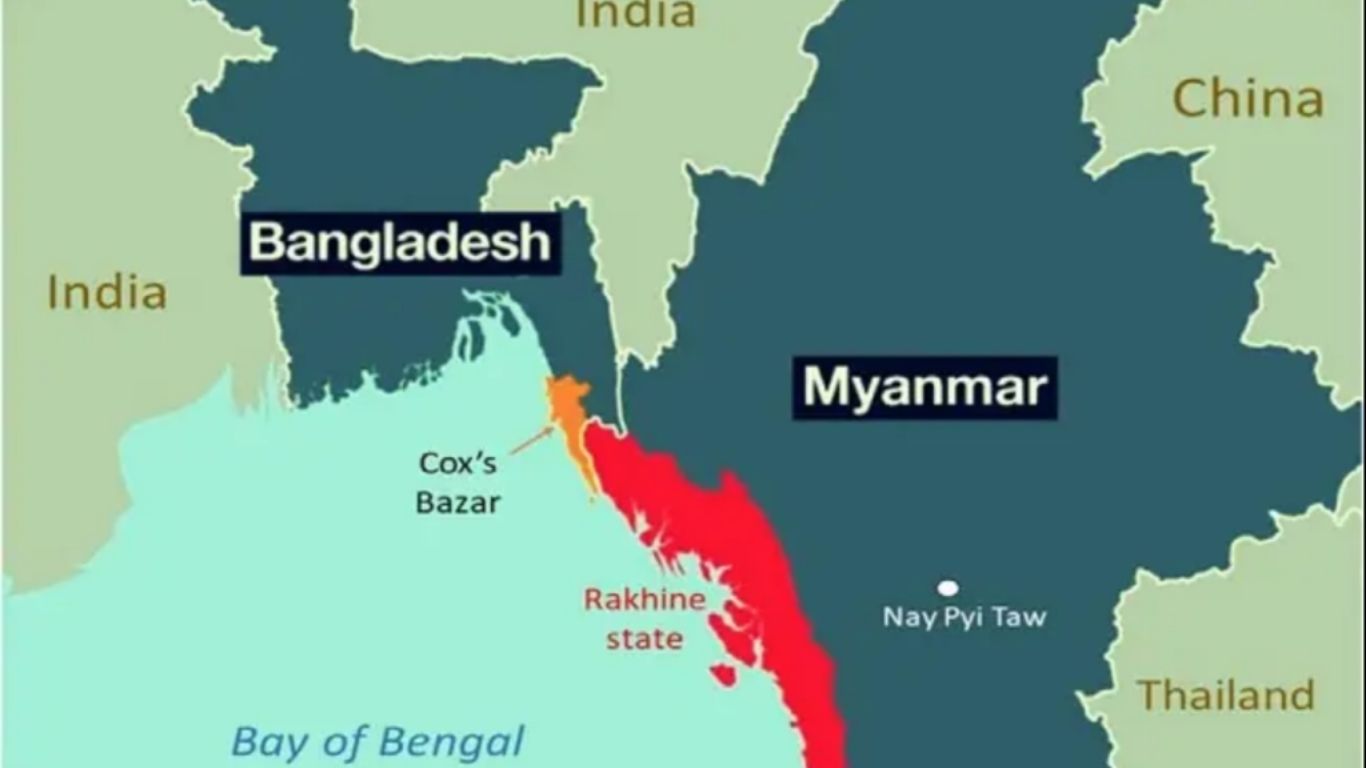
A new kind of competition is unfolding across South Asia, not over borders or battlefields, but over ports.
While China and India are busy building and operating ports abroad to expand their influence, Bangladesh is leasing or partnering with foreign powers to modernize its own coastal gateways.
This contrast has created one of the region’s most complex diplomatic equations a quiet struggle for strategic depth, access, and control over the sea lanes that shape global trade and power.
Bangladesh: Leasing Diplomacy in Motion
Bangladesh’s ports, particularly Chattogram, Payra, and Matarbari, are emerging as vital nodes in South Asia’s trade and security landscape. But as trade volumes surge, Bangladesh’s domestic port infrastructure has struggled to keep pace. To bridge this gap, Dhaka is increasingly turning to foreign operators, investors, and partnerships.
The new terminals at Chattogram have attracted interest from Singapore’s PSA, UAE’s DP World, and Chinese state-linked firms. In Payra, Chinese contractors are deeply involved; in Matarbari, Japan’s JICA is leading development under the “Yokohama Port Model.” Bangladesh’s approach is cautious yet pragmatic: “Foreign hands may operate, but sovereignty stays at home.” Still, critics argue this model could evolve into “lease diplomacy,” where economic necessity blurs the line between cooperation and dependency.
China’s Maritime Chessboard: The “String of Pearls”
For China, ports are not just about trade; they are strategic footholds. From Gwadar in Pakistan and Hambantota in Sri Lanka to Kyaukpyu in Myanmar and Djibouti in Africa,
Beijing is building a network of maritime assets known as the “String of Pearls.” This network provides China with both commercial routes and potential naval access across the Indian Ocean.
Its interest in Chattogram and Matarbari fits perfectly into that design, a potential “missing pearl” that could complete the chain. Yet, Bangladesh has so far resisted full Chinese control, balancing development needs with strategic caution.
India’s Counterplay: Access over Ownership
India’s answer to Beijing’s expansion is SAGAR (Security and Growth for All in the Region) and Project Mausam initiatives designed to reclaim maritime influence through connectivity, rather than control.
From Chabahar Port in Iran to Sittwe in Myanmar and the Western Indian Ocean, India is weaving its own network of partnerships and logistics corridors.
Through the Chattogram Transit Agreement, India now enjoys limited access to Bangladesh’s ports for its landlocked northeastern states, a strategic counter to China’s growing presence.
In short, while China builds ports, India builds access to a subtler but equally potent form of influence.
The Geopolitical Equation: A Small State’s Balancing Act
Bangladesh now sits at the intersection of great-power ambitions. Each port deal carries not just economic promise, but political weight. China brings money, Japan brings technology, India brings proximity, and the West eyes the Bay of Bengal as part of its Indo-Pacific strategy.
For Dhaka, the challenge is no longer just development. It is how to benefit from everyone without belonging to anyone.
This is the essence of Bangladesh’s new “Port Diplomacy.” Every contract, every terminal, every partnership is a move in a delicate game of balance between growth and sovereignty, opportunity and overreach.
Conclusion: Ports as Power
Chattogram and Matarbari are no longer just sites for ships and containers. They are symbols of a new kind of power struggle in the Indo-Pacific. Where ports were once gateways of commerce, they are now anchors of influence.