

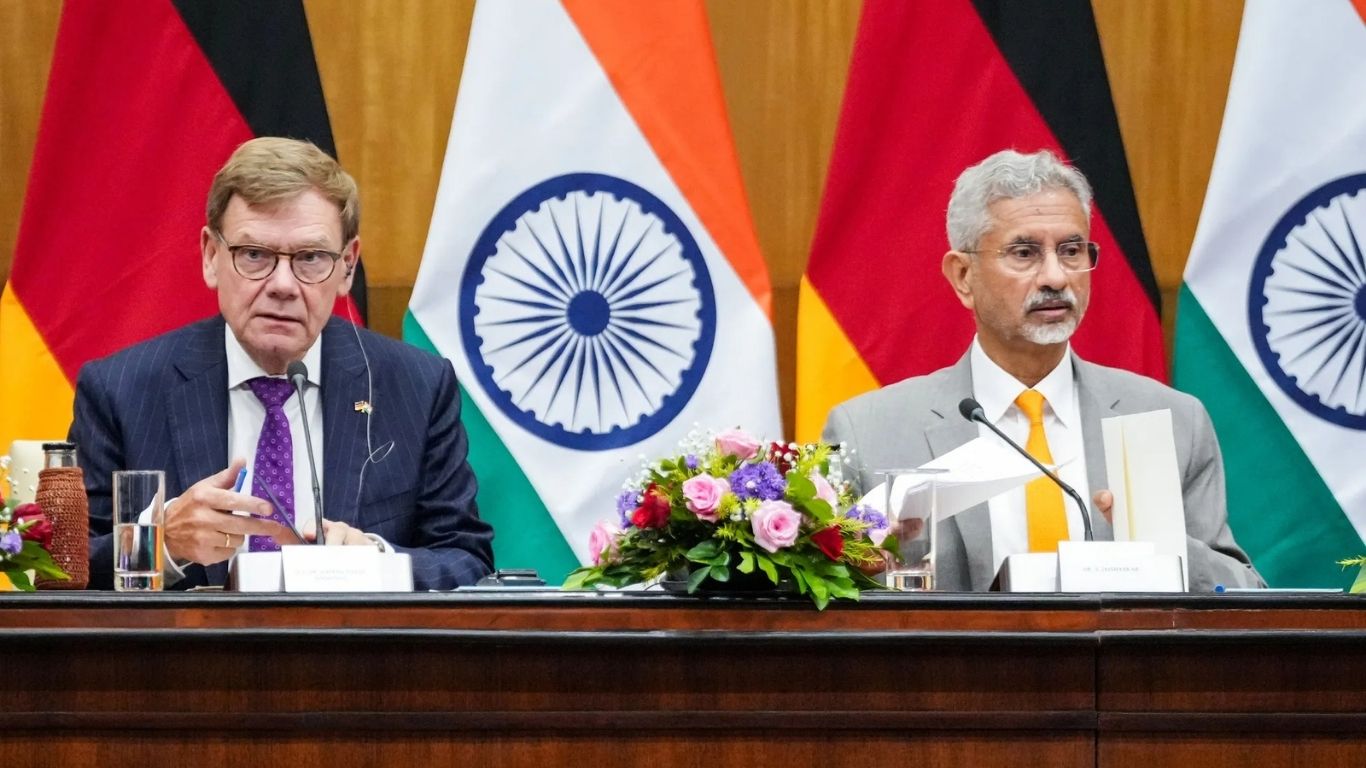
The push for a long-awaited India–EU free trade agreement (FTA) gained new momentum this week as German Foreign Minister Johann Wadephul visited Delhi, pledging stronger economic ties and signaling Germany’s readiness to help move stalled negotiations forward.
During his two-day tour of India, Wadephul emphasized that Berlin sees immense potential in closer cooperation with the world’s most populous country. Standing alongside Indian Foreign Minister Subrahmanyam Jaishankar, he highlighted the shared goal of doubling bilateral trade volume, which currently stands at just under €31 billion ($36 billion).
India’s Call for German Backing
At the joint press conference in Delhi, Jaishankar made a direct appeal for German support in Brussels, urging Wadephul to help accelerate EU trade talks.
“We are counting on your support,” Jaishankar said, noting that while discussions have advanced, progress has been hampered by differences over market access, environmental standards, and legal mechanisms.
Germany, with its strong industrial base and influential voice within the EU, is a natural partner for India in these negotiations. Given Berlin’s leadership on trade and economic policy, India sees Germany as a crucial ally in balancing competing European demands.
Sticking Points in EU–India Trade Talks
Negotiations between India and the EU have dragged on for years, with recurring disputes over market priorities. Key sticking points include:
Automobile Tariffs: The EU, led by Germany’s powerful car industry, is pushing India to cut its steep import duties on vehicles.
Agriculture and Dairy Access: Brussels wants greater access to India’s protected agricultural markets, particularly dairy a sensitive issue for Indian farmers.
Climate and Labor Standards: The EU demands stricter compliance with environmental and labor commitments, which India views as restrictive.
Dispute Resolution: India has resisted ceding too much ground on arbitration mechanisms, preferring domestic legal control.
On the other side, India is determined to protect vulnerable farmers, retain sovereignty over environmental commitments, and ensure trade terms do not harm local industries.
U.S. Tariffs Add Fresh Urgency
One factor driving both sides back to the table is the recent escalation in U.S. trade tariffs. Just last week, the Trump administration imposed a 50% tariff on Indian imports, intensifying pressure on India to diversify trade partnerships.
At the same time, the EU struck a separate deal with Washington to manage tariffs at lower levels. While the EU avoided the worst of U.S. measures, India was left exposed a reality that makes concluding an FTA with Europe even more urgent.
Sanctions and Geopolitical Tensions
Complicating the talks further are recent EU sanctions against India over its continued purchase of Russian oil, echoing Washington’s concerns. While not directly linked to trade negotiations, these sanctions have created a more complex diplomatic environment.
For New Delhi, navigating its long-standing ties with Moscow while pursuing deeper integration with Western economies is a delicate balancing act. For Berlin, supporting India means weighing commercial interests against the EU’s collective geopolitical stance.
Cultural and Economic Diplomacy
Beyond the negotiating table, Wadephul’s visit underscored Germany’s broader outreach in India. His stops included:
Mercedes-Benz R&D Center in Bengaluru, showcasing German investment in India’s auto and tech sectors.
SAP offices and the Indian Institute of Science, highlighting cooperation in digital innovation and high-tech research.
A symbolic field hockey event in Delhi with stars Moritz Fürste (Germany) and Sardar Singh (India), where Wadephul spoke of the importance of “teamplay” in politics and international relations.
These gestures reflect Berlin’s intent to deepen ties not only in trade but also in cultural, technological, and educational spheres.
Political Pressure Back in Berlin
Even as Wadephul pursued trade diplomacy in India, political debate in Berlin added another layer of complexity. Felix Banaszak, co-chair of Germany’s Green Party, urged the foreign minister to extend his trip to Pakistan to address the plight of Afghan refugees.
Over 200 Afghans deported from Pakistan are currently sheltering in Kabul, raising human rights concerns. The Greens argue that Germany has a moral obligation to expedite asylum processing for Afghans who supported German missions before 2022.
Wadephul responded by noting he had already discussed the issue with Pakistan’s Foreign Minister Muhammad Ishaq Dar, who indicated Islamabad’s willingness to cooperate if refugees could later relocate to Germany.
This pressure highlights how Germany’s foreign policy is being pulled between immediate economic goals, like trade with India, and broader humanitarian responsibilities in the region.
Why Germany Matters to India
Germany is India’s largest trading partner in the EU and a powerhouse in areas critical to India’s growth, from automobiles and machinery to renewable energy and digital solutions. Its influence in Brussels also makes it a vital partner in shaping EU policy toward India.
For India, aligning with Germany means not only advancing trade talks but also signaling to the wider EU that it is willing to compromise where possible to reach a deal.
Outlook: Can a Deal Be Reached?
While the challenges are significant, there is a clear strategic imperative for both India and the EU to finalize an agreement:
For India, a deal provides greater access to European markets and cushions the impact of U.S. tariffs.
For the EU, stronger trade ties with India diversify supply chains, reduce dependence on China, and strengthen partnerships in Asia.
The next few months will be crucial. If Germany throws its weight behind India’s concerns and helps bridge divides in Brussels, a breakthrough may finally be possible.
Conclusion: Trade, Politics, and Teamwork
The India–EU free trade negotiations reflect more than just tariffs and quotas. They embody the shifting dynamics of global trade, where nations must navigate protectionism, geopolitics, and domestic sensitivities.
As Wadephul noted during his hockey demonstration in Delhi, “Nobody can win a game unless they’re fed the right pass.” In this context, Germany’s role could be exactly that the pass India needs to score a long-sought victory in its trade ambitions with Europe.




